










Εξοπλισμός γυμναστικής στο σπίτι: Προμήθεια OEM και λιανικής πώλησης για μάρκες
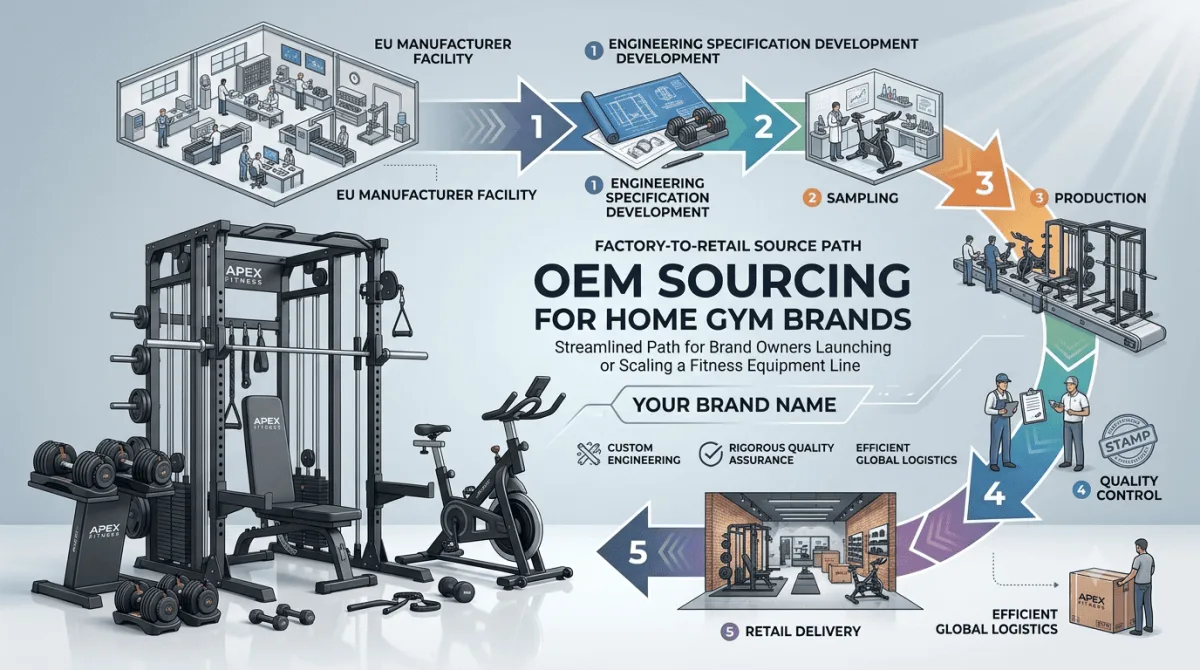
Οι μάρκες που προμηθεύονται εξοπλισμό γυμναστικής για το σπίτι επιλέγουν ανάμεσα σε τέσσερα μοντέλα. OEM (Κατασκευαστής Πρωτότυπου Εξοπλισμού) σημαίνει ότι το εργοστάσιο κατασκευάζει σύμφωνα με τις μηχανολογικές σας προδιαγραφές, χρειάζονται 4-8 εβδομάδες για δειγματοληψία, αλλά σας δίνουν ένα προϊόν που οι ανταγωνιστές δεν μπορούν να αγοράσουν. ODM (Κατασκευαστής Πρωτότυπου Σχεδιασμού) σημαίνει ότι επιλέγετε ένα υπάρχον εργοστασιακό σχέδιο και εφαρμόζετε την επωνυμία σας, χρειάζονται 1-2 εβδομάδες για δειγματοληψία με χαμηλότερο κόστος αλλά με λιγότερη διαφοροποίηση. Η ιδιωτική ετικέτα εφαρμόζει το λογότυπό σας σε ένα έτοιμο προς πώληση προϊόν με ελάχιστες αλλαγές. Μια εμπορική εταιρεία προμηθεύεται για λογαριασμό σας χωρίς να κατέχει την παραγωγή. Η αγορά εξοπλισμού γυμναστικής για το σπίτι έφτασε περίπου τα 11,8-14,3 δισεκατομμύρια το 2026 και αυξάνεται κατά 5,6-7,61-3 δισεκατομμύρια ετησίως, με τις μάρκες απευθείας στον καταναλωτή να επεκτείνονται με περίπου διπλάσιο ρυθμό από τον ρυθμό του κλάδου. Η Vacuactivu κατασκευάζει στην ΕΕ (εργοστάσιο στην Πολωνία, κεντρικά γραφεία στο Λος Άντζελες) και εκτελεί προγράμματα OEM, επομένως αυτός ο οδηγός είναι γραμμένος από την πλευρά του εργοστασίου και όχι από την οπτική γωνία ενός ουδέτερου αναλυτή.
Το κοινό αυτού του οδηγού προμήθειας εξοπλισμού γυμναστικής για το σπίτι είναι οι ιδιοκτήτες επωνυμιών που λανσάρουν ή αναβαθμίζουν μια σειρά εξοπλισμού γυμναστικής, οι διανομείς που αξιολογούν προμηθευτές και οι λιανοπωλητές που εξετάζουν επιλογές ιδιωτικής ετικέτας. Αυτός ο οδηγός απαντά σε όσα πρέπει πραγματικά να γνωρίζουν οι περισσότεροι ιδιοκτήτες επωνυμιών πριν υπογράψουν μια σύμβαση OEM: ποιο μοντέλο προμήθειας ταιριάζει στο προϊόν και το στάδιο που σας ενδιαφέρει, ποια είναι η πραγματικότητα του MOQ και του χρόνου παράδοσης σε όλες τις κατηγορίες, ποιες πιστοποιήσεις καθορίζουν την τοποθέτηση λιανικής, πώς να σκεφτείτε την προμήθεια σε επίπεδο ΕΕ έναντι Κίνας έναντι ΗΠΑ σε περιφερειακό επίπεδο χωρίς να αποκλείσετε καμία επιλογή και πού ταιριάζει το Vacuactivu (και, ειλικρινά, πού δεν ταιριάζει). Η κατηγορία αναζήτησης εξοπλισμού γυμναστικής για το σπίτι που επικεντρώνεται στον καταναλωτή οδηγεί περίπου 90.500 μηνιαίες αναζητήσεις στις ΗΠΑ ανά δεδομένα Serpstat 2026, αλλά αυτό το άρθρο γράφτηκε για την απόφαση προμήθειας B2B που βρίσκεται πίσω από αυτές τις αναζητήσεις καταναλωτών - ο ιδιοκτήτης της επωνυμίας αποφασίζει πώς να προμηθεύεται τον εξοπλισμό που οι αγοραστές καταναλωτές βλέπουν τελικά στο λιανικό εμπόριο.
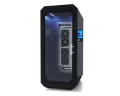
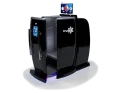
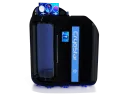
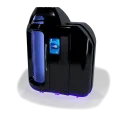
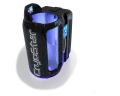
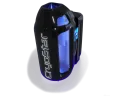
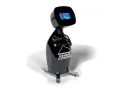
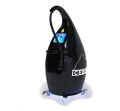
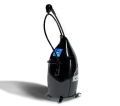
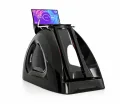
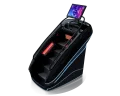
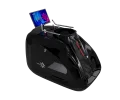
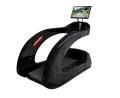
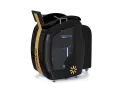
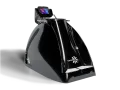
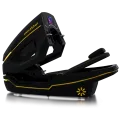
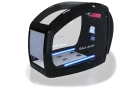
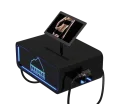
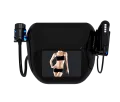
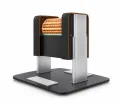
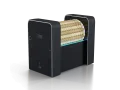
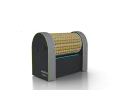
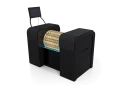
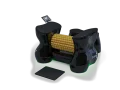
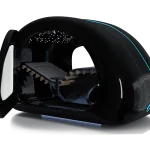
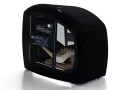
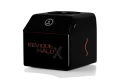
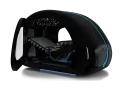
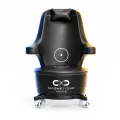
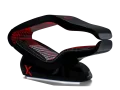
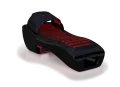
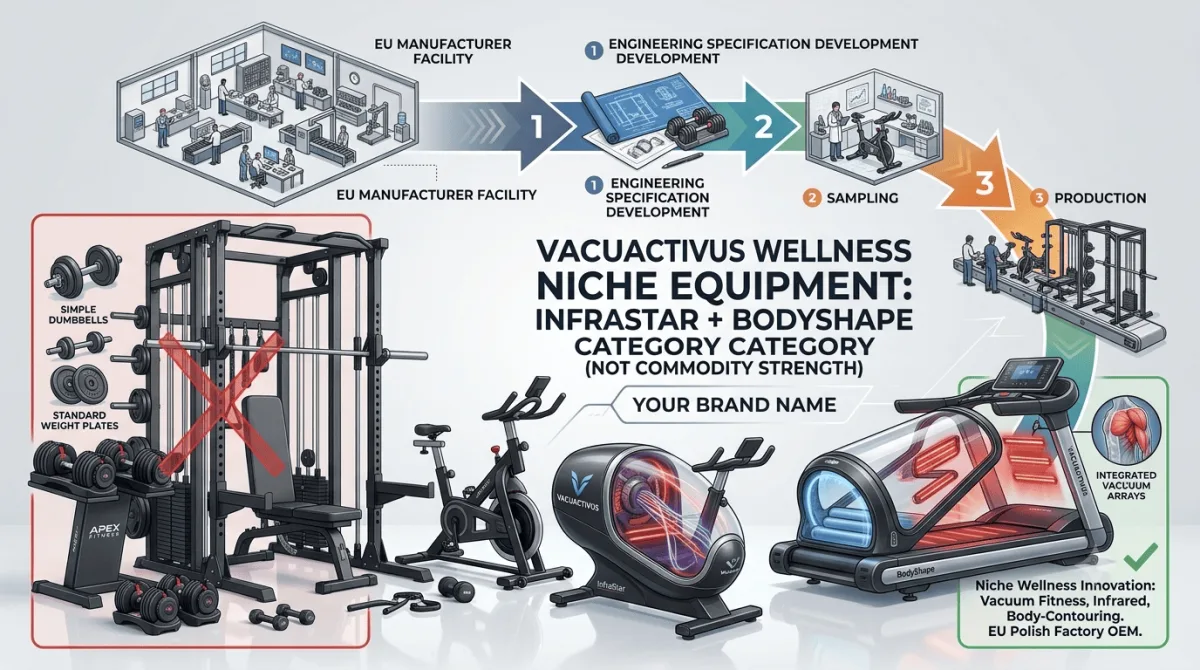
Η Vacuactivus είναι ένας κατασκευαστής της ΕΕ που παρέχει υπηρεσίες OEM, ODM και ιδιωτικής ετικέτας από το 2009 σε περισσότερες από 50 χώρες. Να είμαστε ειλικρινείς σχετικά με τη φυσική κατάσταση: Η Vacuactivus δεν είναι ένα εργοστάσιο οικιακής γυμναστικής. Δεν παράγουμε αλτήρες, δίσκους βάρους, μπάρες, power racks ή διαδρόμους, και μια μάρκα που προμηθεύεται αυτές τις κατηγορίες εξυπηρετείται καλύτερα από ένα εξειδικευμένο εργοστάσιο ενδυνάμωσης ή καρδιοαναπνευστικής άσκησης, πιθανότατα στην Ασία σε μεγάλο όγκο. Αυτό που κατασκευάζει η Vacuactivus είναι οικιακός και εμπορικός εξοπλισμός ευεξίας - η σειρά γυμναστικής με ηλεκτρική σκούπα BodyShape και το ποδήλατο υπέρυθρης ακτινοβολίας InfraStar, τα οποία συνδυάζουν την άσκηση με την τεχνολογία ηλεκτρικής σκούπας και υπέρυθρων. Αυτή είναι μια εξειδικευμένη αγορά, όχι ένας πλήρης κατάλογος οικιακής γυμναστικής. Αυτή η ειλικρινής τοποθέτηση είναι πιο χρήσιμη από ένα εργοστάσιο που ισχυρίζεται ότι κατασκευάζει τα πάντα.
Η αγορά εξοπλισμού γυμναστικής στο σπίτι το 2026
Η αγορά εξοπλισμού οικιακής γυμναστικής ανέρχεται σε περίπου 1,4 δισεκατομμύρια λίρες Αγγλίας (TP4T11,8-14,3 δισεκατομμύρια) το 2026, ανάλογα με την εταιρεία ερευνών που θα διαβάσετε – η Mordor Intelligence τον Φεβρουάριο του 2026 εκτιμά 1,4 δισεκατομμύρια λίρες Αγγλίας (TP4T11,84 δισεκατομμύρια), και η Research and Markets το 2026 την τοποθετεί σε 1,4 δισεκατομμύρια λίρες Αγγλίας (TP4T14,26 δισεκατομμύρια). Και οι δύο εταιρείες προβλέπουν ότι η αγορά θα φτάσει τα 1,4 εκατομμύρια λίρες Αγγλίας (TP4T17,06-22,99 δισεκατομμύρια) έως το 2031-2034 με σύνθετο ετήσιο ρυθμό ανάπτυξης 5,6-7,61 εκατομμύρια λίρες Αγγλίας (TP3T). Η Βόρεια Αμερική κατέχει πάνω από 37,1 εκατομμύρια λίρες Αγγλίας (TP3T) στην παγκόσμια αγορά εξοπλισμού οικιακής γυμναστικής, με τις ΗΠΑ μόνο να προβλέπονται σε 1,4 εκατομμύρια λίρες Αγγλίας (TP4T3T) το 2026, σύμφωνα με το Fortune Business Insights. Η περιοχή Ασίας-Ειρηνικού συνεισφέρει περίπου 1,4 δισεκατομμύρια λίρες Αγγλίας (TP4T2,66 δισεκατομμύρια), περίπου 19,691 εκατομμύρια λίρες Αγγλίας (TP3T) των παγκόσμιων εσόδων στην κατηγορία εξοπλισμού οικιακής γυμναστικής. Για λόγους σύγκρισης, η ευρύτερη αγορά εξοπλισμού γυμναστικής (γυμναστήριο για το σπίτι και επαγγελματικό) ανέρχεται σε περίπου 1 TP4T19,07 δισεκατομμύρια το 2026. Όποιος εισέρχεται στην αγορά εξοπλισμού γυμναστικής για το σπίτι ή οικιακού εξοπλισμού γυμναστικής επωφελείται από το να βασίζει τις αποφάσεις κυκλοφορίας σε αυτούς τους πραγματικούς αριθμούς και όχι σε υποθέσεις σχετικά με το μέγεθος του κλάδου.
Τρία διαρθρωτικά στοιχεία διαμορφώνουν τις αποφάσεις προμήθειας για όποιον εισέρχεται στην κατηγορία εξοπλισμού γυμναστικής στο σπίτι. Πρώτον, ο έξυπνος και συνδεδεμένος εξοπλισμός γυμναστικής για χρήση στο σπίτι αναμένεται να κατέχει περίπου 541,3 τόνους μερίδιο αγοράς στην κατηγορία το 2026, σύμφωνα με την ανάλυση Future Market Insights του Απριλίου 2026, η οποία ανεβάζει τον πήχη της μηχανικής για όποιον εισέρχεται με ένα βασικό μηχανολογικό προϊόν. Δεύτερον, η μεσαία τιμολογιακή κατηγορία αντιπροσωπεύει περίπου 461,3 τόνους εσόδων από την αγορά εξοπλισμού γυμναστικής στο σπίτι, πράγμα που σημαίνει ότι ο όγκος βρίσκεται στη μέση και όχι στα άκρα premium ή budce - μια χρήσιμη άγκυρα για τις μάρκες εξοπλισμού γυμναστικής στο σπίτι που τοποθετούν μια σειρά προϊόντων. Αυτή η συγκέντρωση μεσαίας βαθμίδας έχει σημασία για τα προγράμματα εξοπλισμού γυμναστικής OEM που στοχεύουν στην περιοχή όγκου και όχι στα άκρα premium ή budce. Τρίτον, οι μάρκες γυμναστικής απευθείας από τον καταναλωτή (DTC) αναπτύσσονται με περίπου διπλάσιο ρυθμό από τον ρυθμό του κλάδου, σύμφωνα με τη συλλογή στατιστικών στοιχείων του ChestPressMachine 2026, και οι φορείς εκμετάλλευσης γυμναστηρίων παρακάμπτουν όλο και περισσότερο τους διανομείς για να αγοράζουν απευθείας από το εργοστάσιο σε τιμή 20-401,3 τόνους κάτω από την τιμολόγηση του καναλιού λιανικής. Οι μάρκες γυμναστικής της DTC που προμηθεύονται εξοπλισμό γυμναστικής για οικιακή χρήση για κανάλια απευθείας στον καταναλωτή συνήθως ξεκινούν με ODM ή ιδιωτική ετικέτα με χαμηλές δεσμεύσεις ελάχιστης ποσότητας παραγγελίας και στη συνέχεια μεταφέρουν τα SKU breakdown σε προγράμματα εξοπλισμού γυμναστικής OEM μόλις επικυρωθεί η ζήτηση. Οι καθιερωμένοι στον χώρο του εξοπλισμού γυμναστικής για οικιακή χρήση περιλαμβάνουν τις Johnson Health Tech, Technogym, Peloton, BowFlex και Icon Health. Η Technogym λάνσαρε τη συλλογή Sand Stone που στοχεύει σε premium οικιακά γυμναστήρια τον Φεβρουάριο του 2026 και η Peloton συγχωνεύτηκε με την Precor σε μια ενοποιημένη εμπορική μονάδα τον Μάρτιο του 2026. Η γραμμή μεταξύ εξοπλισμού γυμναστικής επαγγελματικής ποιότητας και οικιακής χρήσης για οικιακή χρήση γίνεται θολή, καθώς οι αγοραστές premium κατοικιών απαιτούν εμπορική ανθεκτικότητα και αυτή η σύγκλιση είναι το σημείο όπου οι μάρκες γυμναστικής της DTC βρίσκουν τιμολογιακή ισχύ έναντι των παραδοσιακών εμπορικών σημάτων εξοπλισμού γυμναστικής για οικιακή χρήση στο λιανικό εμπόριο. Όταν οι μάρκες γυμναστικής της DTC κλιμακώνουν τα SKU εξοπλισμού γυμναστικής για οικιακή χρήση σε σημείο όπου μια εργοστασιακή σχέση αποδίδει σε οικονομικά στοιχεία ανά μονάδα, η μετάβαση από τις δεσμεύσεις ελάχιστης ποσότητας παραγγελίας ιδιωτικής ετικέτας σε επενδύσεις σε εργαλεία εξοπλισμού γυμναστικής OEM γίνεται το στρατηγικό ερώτημα.
| Μετρικός | Εικόνα | Πηγή |
|---|---|---|
| Αγορά εξοπλισμού γυμναστικής για το σπίτι το 2026 | $11,84 δισεκατομμύρια | Mordor Intelligence Φεβρουάριος 2026 |
| Εκτίμηση εναλλακτικής αγοράς 2026 | $14,26 δισεκατομμύρια | Έρευνα και Αγορές 2026 |
| Πρόβλεψη αγοράς 2031-2034 | $17,06-22,99 δισεκατομμύρια | Mordor Intelligence + ChestPressMachine |
| Σύνθετος ετήσιος ρυθμός ανάπτυξης (CAGR) 2026-2034 | 5.6-7.6% (ποικίλλει ανάλογα με την εταιρεία) | Mordor 7.59% + Έρευνα και Αγορές 5.6% |
| Μερίδιο Βόρειας Αμερικής | 37%+ της παγκόσμιας αγοράς | Πολλαπλές εταιρείες 2026 |
| Αγορά των ΗΠΑ 2026 | $4,32 δισεκατομμύρια | Επιχειρηματικές Πληροφορίες Fortune 2026 |
| Μετοχή Ασίας-Ειρηνικού | $2,66 δισεκατομμύρια / 19,69% παγκοσμίως | Επιχειρηματικές Πληροφορίες Fortune 2026 |
| Μερίδιο έξυπνου εξοπλισμού 2026 | 54% κατηγορίας | Μελλοντικές πληροφορίες αγοράς Απρίλιος 2026 |
| Μεσαία τιμολογιακή κατηγορία μετοχών | 46% εσόδων | Μελλοντικές πληροφορίες αγοράς Απρίλιος 2026 |
| Ρυθμός ανάπτυξης μάρκας DTC | 2x συντελεστής κλάδου | ChestPressMachine 2026 |
| Άμεση εξοικονόμηση από το εργοστάσιο έναντι εξοικονόμησης λιανικής | 20-40% κάτω από το κανάλι λιανικής πώλησης | Συναίνεση στον κλάδο 2026 |
Τέσσερις τρόποι προμήθειας: OEM, ODM, ιδιωτική ετικέτα, εμπορική εταιρεία
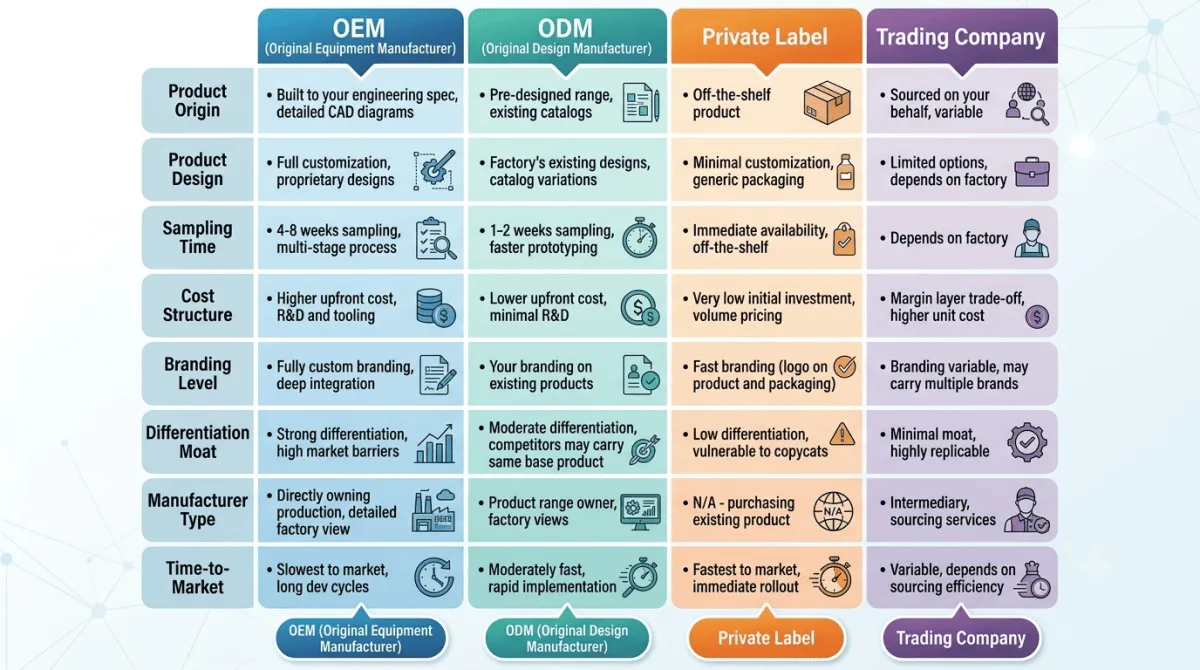
OEM (Κατασκευαστής Πρωτότυπου Εξοπλισμού) σημαίνει ότι ο κατασκευαστής εξοπλισμού γυμναστικής παράγει εξοπλισμό σύμφωνα με τις προδιαγραφές μηχανικής σας, με την επωνυμία σας. Είστε υπεύθυνος για τον σχεδιασμό και την επένδυση σε εργαλεία. Ο κατασκευαστής χειρίζεται την παραγωγή, τον ποιοτικό έλεγχο και συχνά τη συσκευασία, ενώ εσείς είστε υπεύθυνος για την επωνυμία, το μάρκετινγκ και τη διανομή. Η δειγματοληψία εξοπλισμού γυμναστικής OEM διαρκεί 4-8 εβδομάδες, επειδή το εργοστάσιο αναπτύσσει κάτι νέο σύμφωνα με τις προδιαγραφές σας. Το αποτέλεσμα είναι η ουσιαστική διαφοροποίηση: οι ανταγωνιστές δεν μπορούν να αγοράσουν το προϊόν σας από τον ίδιο κατασκευαστή εξοπλισμού γυμναστικής. Το κόστος είναι υψηλότερο ως αρχική επένδυση και μεγαλύτερος χρόνος για την κυκλοφορία στην αγορά. ODM (Κατασκευαστής Πρωτότυπου Σχεδιασμού) σημαίνει ότι ο κατασκευαστής εξοπλισμού γυμναστικής έχει ήδη σχεδιάσει και κατασκευάσει μια σειρά προϊόντων. Επιλέγετε από αυτά τα υπάρχοντα σχέδια, εφαρμόζετε την επωνυμία και την οπτική σας ταυτότητα και λαμβάνετε ολοκληρωμένο εξοπλισμό που φέρει την ταυτότητά σας. Η δειγματοληψία εξοπλισμού γυμναστικής ODM διαρκεί 1-2 εβδομάδες, το αρχικό κόστος είναι χαμηλότερο και ο κίνδυνος παραγωγής ελαχιστοποιείται επειδή ο σχεδιασμός έχει δοκιμαστεί στην αγορά. Το συμβιβασμό που αξίζει να αναφερθεί ξεκάθαρα στον οδηγό ODM του NTAIFitness Μαΐου 2026: οι ανταγωνιστικές μάρκες ενδέχεται να διαθέτουν σχεδόν πανομοιότυπο εξοπλισμό από τον ίδιο κατασκευαστή εξοπλισμού γυμναστικής. Πολλές μάρκες εξοπλισμού οικιακής γυμναστικής λανσάρουν προϊόντα με ODM για να δοκιμάσουν τη ζήτηση της αγοράς και στη συνέχεια μεταβαίνουν σε OEM για κατηγορίες breakdown, μόλις εδραιωθεί η ζήτηση και το κεφάλαιο της επωνυμίας.
Ο εξοπλισμός γυμναστικής ιδιωτικής ετικέτας επικαλύπτεται σε μεγάλο βαθμό με τον ODM, αλλά συνεπάγεται ακόμη ελαφρύτερη προσαρμογή: το λογότυπό σας εφαρμόζεται σε ένα έτοιμο προς πώληση προϊόν από τον κατασκευαστή του εξοπλισμού γυμναστικής, μερικές φορές με αλλαγή χρώματος ή μια μικρή αισθητική προσαρμογή. Είναι ο ταχύτερος και πιο αποδοτικός από άποψη κεφαλαίου τρόπος για να λανσάρετε ή να επεκτείνετε μια σειρά εξοπλισμού γυμναστικής ιδιωτικής ετικέτας. Η MOQ εξοπλισμού γυμναστικής ιδιωτικής ετικέτας είναι συνήθως το χαμηλότερο από τα μοντέλα προμήθειας, καθώς εφαρμόζει την επωνυμία σας σε ένα υπάρχον προϊόν χωρίς μηχανική εργασία. Μια εμπορική εταιρεία προμηθεύεται για λογαριασμό σας χωρίς να κατέχει την παραγωγή - η εμπορική εταιρεία συγκεντρώνει παραγγελίες από πολλά εργοστάσια, διαχειρίζεται τη διαδικασία προμήθειας και χειρίζεται τα έγγραφα εξαγωγής. Οι εμπορικές εταιρείες έχουν νόμιμους ρόλους στην προμήθεια εξοπλισμού γυμναστικής: συγκεντρώνουν μικρές παραγγελίες που θα εμπίπτουν κάτω από τις MOQ μεμονωμένων εργοστασίων, διαχειρίζονται την προμήθεια πολλαπλών εργοστασίων για μάρκες που επιθυμούν ποικιλία σε έναν κατάλογο και χειρίζονται την εφοδιαστική εξαγωγών για αγοραστές χωρίς παρουσία στην Κίνα ή την ΕΕ. Το συμβιβασμό είναι ένα επίπεδο περιθωρίου κέρδους και λιγότερο άμεσος έλεγχος στην κλιμάκωση της ποιότητας όταν προκύπτουν προβλήματα. Ούτε το ODM ούτε η ιδιωτική ετικέτα ούτε η εμπορική εταιρεία είναι εγγενώς κατώτερα από τον OEM - το καθένα ταιριάζει σε διαφορετικά στάδια μάρκας, θέσεις κεφαλαίου και στρατηγικές κατηγορίας.
| Παράγοντας | ΚΑΕ | ODM | Ιδιωτική ετικέτα | Εμπορική Εταιρεία |
|---|---|---|---|---|
| Ποιος σχεδιάζει το προϊόν | Παρέχετε τις τεχνικές προδιαγραφές | Το εργοστάσιο διαθέτει προσχεδιασμένη γκάμα από την οποία μπορείτε να επιλέξετε | Το εργοστάσιο πουλάει έτοιμα προϊόντα με το λογότυπό σας | Πηγές εμπορικών εταιρειών από εργοστάσια τρίτων |
| Χρόνος δειγματοληψίας | 4-8 εβδομάδες (ανάπτυξη + πρωτότυπο) | 1-2 εβδομάδες (εμπορική επωνυμία + οπτική προσαρμογή) | Ημέρες έως 1 εβδομάδα (εφαρμογή λογότυπου) | Εξαρτάται από το εργοστάσιο – η εμπορική εταιρεία προσθέτει χρόνο συντονισμού |
| Προκαταβολικό κόστος | Υψηλότερο (εργαλεία + μηχανική) | Μεσαίο (επωνυμία + προσαρμογή φωτισμού) | Χαμηλότερη (μόνο επωνυμία) | Κόστος προϊόντος + περιθώριο κέρδους εμπορικής εταιρείας |
| MOQ (τυπική) | Υψηλότερη (απόσβεση εγκατάστασης) | Μέσο (υπάρχοντα εργαλεία) | Χαμηλότερο (υφιστάμενο προϊόν) | Εξαρτάται από το υποκείμενο εργοστάσιο |
| Διάκριση | Υψηλό – οι ανταγωνιστές δεν μπορούν να αγοράσουν το προϊόν σας | Χαμηλή – οι ανταγωνιστικές μάρκες ενδέχεται να διαθέτουν σχεδόν πανομοιότυπες μονάδες | Πολύ χαμηλό – πανομοιότυπο προϊόν με διαφορετικό λογότυπο | Εξαρτάται από το μοντέλο που χρησιμοποιείται από κάτω |
| Ιδιοκτησία Πνευματικής Ιδιοκτησίας | Έχετε δικό σας σχεδιασμό + εργαλεία | Το εργοστάσιο κατέχει το σχέδιο, εσείς κατέχετε το branding + την αγορά | Το εργοστάσιο κατέχει τα πάντα εκτός από το λογότυπό σας | Η εμπορική εταιρεία δεν κατέχει πνευματική ιδιοκτησία. Το υποκείμενο εργοστάσιο κατέχει. |
| Πρόσβαση σε ποιοτικό έλεγχο | Άμεση σχέση με το εργοστάσιο | Άμεση σχέση με το εργοστάσιο | Άμεση σχέση με το εργοστάσιο | Επίπεδο διαχωρισμού μέσω εμπορικής εταιρείας |
| Καλύτερο για | Κατηγορίες breakdown, προϊόντα με ταυτότητα επωνυμίας, μεγαλύτερος όγκος | Γρήγορη είσοδος στην αγορά, δοκιμή ζήτησης, επέκταση καταλόγου | Ταχύτερη έναρξη, ελάχιστο κεφάλαιο, δοκιμή αγοράς ή DTC | Μικρές παραγγελίες, προμήθεια από πολλά εργοστάσια, χωρίς παρουσία Κίνας/ΕΕ |
MOQ, Χρόνοι Παράδοσης και Τι Χρειάζονται Πραγματικά τα Εργοστάσια από Εσάς
Η ελάχιστη ποσότητα παραγγελίας (MOQ) ποικίλλει περισσότερο ανά κατηγορία προϊόντος παρά ανά κατασκευαστή εξοπλισμού γυμναστικής. Τα αξεσουάρ και τα μικρά είδη έχουν χαμηλά ελάχιστα όρια, επειδή το κόστος εγκατάστασης είναι ελάχιστο. Ο εξοπλισμός με κινητήρα με ηλεκτρονικά, κινητήρες ή προσαρμοσμένα εργαλεία έχει υψηλότερα ελάχιστα όρια, επειδή αυτό το κόστος εγκατάστασης πρέπει να αποσβεστεί σε όλη τη διάρκεια της παραγωγής. Αντί να ζητάτε από έναν προμηθευτή εξοπλισμού γυμναστικής την MOQ του συνοπτικά, περιγράψτε την αγορά-στόχο σας, τον τύπο αγοραστή, το επίπεδο τιμής και την προσδοκώμενη ποσότητα για το πρώτο έτος. Η απάντηση στην MOQ αλλάζει και με τις τέσσερις εισόδους σύμφωνα με τον οδηγό κυκλοφορίας της επωνυμίας ιδιωτικής ετικέτας PowerBaseFit από την Kloe Du. Οι χρόνοι παράδοσης ακολουθούν το μοντέλο προμήθειας: δειγματοληψία ODM 1-2 εβδομάδες, ανάπτυξη και δειγματοληψία OEM 4-8 εβδομάδες, στη συνέχεια παραγωγή και μεταφορά. Σχεδιάστε αντίστροφα από την ημερομηνία κυκλοφορίας λιανικής, όχι προς τα εμπρός από το πρώτο email του εργοστασίου σας. Μια επωνυμία που στοχεύει σε κυκλοφορία λιανικής τον Ιανουάριο, δουλεύοντας αντίστροφα μέσω της παραγωγής (4-6 εβδομάδες), του χρόνου παράδοσης πιστοποίησης (2-4 εβδομάδες όταν απαιτείται) και της μεταφοράς (2-6 εβδομάδες ανάλογα με τη διαδρομή) εξετάζει τη δέσμευση δειγματοληψίας OEM έως τον Ιούνιο ή τον Ιούλιο του προηγούμενου έτους.
Τι πρέπει να προετοιμάσετε πριν ζητήσετε προσφορά από έναν προμηθευτή εξοπλισμού γυμναστικής: αρχεία λογότυπου σε διανυσματική μορφή (SVG ή AI, όχι μόνο PNG), αναφορές χρωμάτων σε κωδικούς Pantone ή RAL αντί για προσεγγίσεις οθόνης, προδιαγραφές συσκευασίας-στόχου και χαρτοκιβωτίων, συμπεριλαμβανομένων των παραμέτρων ετοιμότητας για λιανική πώληση, φωτογραφίες παραδειγμάτων προϊόντων που δείχνουν την αισθητική σας κατεύθυνση και την προσδοκώμενη ποιότητα φινιρίσματος, τη χώρα-στόχο σας και τον τύπο αγοραστή, την πρώτη κατηγορία προϊόντος σας και το σχέδιο επέκτασης δεύτερου σταδίου, και αν χρειάζεστε μόνο δείγμα, μια μικτή παραγγελία σε πολλαπλά SKU ή μια πλήρη δέσμευση κοντέινερ. Ξεκινήστε με μία στοχευμένη κατηγορία πριν επεκταθείτε σε έναν κατάλογο. Μια πρώτη γραμμή που είναι εύκολο να εξηγηθεί και εύκολη στην πώληση χτίζει τη σχέση επαναλαμβανόμενης παραγγελίας που κάνει τη δεύτερη γραμμή φθηνότερη σε όρους μονάδας και ταχύτερη σε χρόνο παράδοσης. Η συνέπεια της μάρκας είναι κάτι περισσότερο από ένα λογότυπο σε μια μηχανή: τα σταθερά προϊόντα, η συσκευασία και η επικοινωνία με την πάροδο του χρόνου είναι αυτά που καθιστούν μια μάρκα εξοπλισμού γυμναστικής ιδιωτικής ετικέτας και όχι μια σειρά από μεμονωμένες παραγγελίες που δεν συσσωρεύουν ποτέ την αφοσίωση των πελατών ή την εμπιστοσύνη των λιανοπωλητών.
Πιστοποιήσεις: Τι χρειάζεται ο εξοπλισμός οικιακής γυμναστικής για να εισέλθει στο λιανικό εμπόριο
Οι αγοραστές λιανικής και οι αγορές ζητούν τεκμηρίωση πριν ζητήσουν τιμολόγηση, επομένως η πιστοποίηση αποτελεί μια πύλη και όχι μια τελική πινελιά στη διαδικασία κυκλοφορίας. Για την αγορά της ΕΕ, η σήμανση CE είναι υποχρεωτική και το σχετικό πρότυπο προϊόντος για τον εξοπλισμό γυμναστικής είναι η σειρά EN 957 που καλύπτει τις απαιτήσεις ασφάλειας του σταθερού εξοπλισμού προπόνησης ανά κατηγορία. Η RoHS περιορίζει τις επικίνδυνες ουσίες σε ηλεκτρικά και ηλεκτρονικά εξαρτήματα. Το REACH καλύπτει τις χημικές ουσίες σε υλικά που χρησιμοποιούνται σε εξοπλισμό γυμναστικής για εφαρμογές οικιακής γυμναστικής. Το ISO 9001 πιστοποιεί το σύστημα διαχείρισης ποιότητας του κατασκευαστή του εξοπλισμού γυμναστικής και όχι το ίδιο το προϊόν, το οποίο έχει σημασία για την δέουσα επιμέλεια του αγοραστή κατά τον έλεγχο ενός πιθανού προμηθευτή εξοπλισμού γυμναστικής. Για την αγορά των ΗΠΑ, η εμπλοκή του FDA εξαρτάται από τους ισχυρισμούς σας: ο γενικός εξοπλισμός γυμναστικής στο σπίτι δεν είναι συσκευή του FDA, αλλά ο εξοπλισμός ευεξίας που κάνει θεραπευτικούς ισχυρισμούς μπορεί να εμπίπτει στο πεδίο εφαρμογής της συσκευής και το ISO 13485 εφαρμόζεται όπου απαιτούνται πρότυπα κατασκευής ιατρικών συσκευών.
Ρωτήστε οποιονδήποτε υποψήφιο κατασκευαστή εξοπλισμού γυμναστικής για πραγματικές αναφορές εργαστηριακών δοκιμών τρίτων με αριθμούς και πεδίο εφαρμογής πιστοποιητικών, όχι εικόνες πιστοποιητικών. Ένας προμηθευτής εξοπλισμού γυμναστικής που δηλώνει ότι είναι πιστοποιημένος με ISO χωρίς να προσκομίζει τον αριθμό και το πεδίο εφαρμογής του πιστοποιητικού αποτελεί κόκκινη σημαία που αξίζει να επισημανθεί για παρακολούθηση. Η τεκμηρίωση ευθύνης προϊόντος έχει σημασία για την τοποθέτηση λιανικής, καθώς οι λιανοπωλητές προωθούν την ευθύνη προς τα πάνω στις συμβάσεις τους - η τελική ευθύνη για ένα ελάττωμα προϊόντος βαρύνει την επωνυμία και τον κατασκευαστή, και οι συμφωνίες λιανικής συνήθως απαιτούν αποζημίωση και ασφάλιση από την πλευρά της επωνυμίας. Ενσωματώστε το κόστος πιστοποίησης στα οικονομικά της μονάδας σας από την αρχή, όταν αξιολογείτε προσφορές για εξοπλισμό γυμναστικής OEM ή εξοπλισμό γυμναστικής ιδιωτικής ετικέτας. Η συμμόρφωση με την αναβάθμιση μετά από έναν αποτυχημένο έλεγχο λιανικής είναι η δαπανηρή διαδικασία που καταναλώνει τόσο χρήματα όσο και ημερολογιακό χρόνο. Οι απαιτούμενες πιστοποιήσεις ποικίλλουν επίσης ανά κατηγορία προϊόντος: ένα προϊόν μηχανικής αντοχής εξοπλισμού γυμναστικής OEM έχει διαφορετικές δοκιμές από έναν διάδρομο γυμναστικής ODM με τροφοδοσία ή μια έξυπνη συνδεδεμένη συσκευή εξοπλισμού γυμναστικής ιδιωτικής ετικέτας με ενσωμάτωση εφαρμογών.
ΕΕ εναντίον Κίνας εναντίον ΗΠΑ: Επιλογή Περιοχής Παραγωγής
Κάθε περιοχή ταιριάζει σε συγκεκριμένες περιπτώσεις χρήσης για τις μάρκες εξοπλισμού γυμναστικής στο σπίτι και η ειλικρινής απάντηση εξαρτάται από το προϊόν, τον όγκο και την αγορά-στόχο σας. Η Κίνα προσφέρει την βαθύτερη αλυσίδα εφοδιασμού για την κατασκευή εξοπλισμού γυμναστικής, την ευρύτερη επιλογή εργοστασίων σε όλες τις κατηγορίες και το χαμηλότερο κόστος μονάδας σε όγκο, ιδιαίτερα για κατηγορίες προϊόντων όπως αλτήρες, πάγκοι, ράφια και αξεσουάρ, όπου η αγορά εξοπλισμού γυμναστικής οικιακής χρήσης έχει καθιερώσει πρότυπα προμήθειας. Τα μειονεκτήματα είναι οι μεγαλύτεροι χρόνοι μεταφοράς στις δυτικές αγορές, η έκθεση σε δασμούς για τους εισαγωγείς των ΗΠΑ και η πραγματικότητα ότι πολλοί αγοραστές εξοπλισμού γυμναστικής στο σπίτι προμηθεύονται από τα ίδια εργοστάσια, γεγονός που περιορίζει τη διαφοροποίηση. Η Ευρώπη προσφέρει μικρότερους χρόνους μεταφοράς στις αγορές της ΕΕ, τη συμμόρφωση με την CE ενσωματωμένη στη διαδικασία κατασκευής εξοπλισμού γυμναστικής αντί να προστίθεται εκ των υστέρων, την ισχυρότερη πρακτική πνευματικής ιδιοκτησίας εντός των δικαιοδοσιών της ΕΕ και τις ευκολότερες επισκέψεις σε εργοστάσια για μάρκες με έδρα την ΕΕ. Τα μειονεκτήματα είναι το υψηλότερο κόστος μονάδας και η στενότερη κάλυψη κατηγοριών, καθώς τα εργοστάσια της ΕΕ τείνουν να ειδικεύονται αντί να προσφέρουν όλα όσα μπορεί να θέλει μια μάρκα εξοπλισμού γυμναστικής οικιακής χρήσης σε έναν κατάλογο. Η αμερικανική κατασκευή προσφέρει τους μικρότερους εγχώριους χρόνους μεταφοράς για την αγορά εξοπλισμού γυμναστικής οικιακής χρήσης των ΗΠΑ, καμία έκθεση σε δασμούς εισαγωγής και η τοποθέτηση "Made-in-USA" που προσφέρει premium αξία για ορισμένα τμήματα καταναλωτών. Τα μειονεκτήματα είναι το υψηλότερο κόστος μονάδας και η περιορισμένη διαθεσιμότητα εργοστασίου σε πολλές κατηγορίες εξοπλισμού γυμναστικής για οικιακές γυμναστικές εγκαταστάσεις.
Μια εξέλιξη για το 2026 που αξίζει να προγραμματιστεί στην προμήθεια εξοπλισμού γυμναστικής για το σπίτι: Οι αλλαγές στην δασμολογική πολιτική των ΗΠΑ έχουν αυξήσει την πολυπλοκότητα των προμηθειών σύμφωνα με την ανάλυση της Έρευνας και των Αγορών 2026, ωθώντας σε μεγαλύτερη εστίαση στην περιφερειακή συναρμολόγηση και τη διαφοροποιημένη προμήθεια σε πολλές μάρκες εξοπλισμού γυμναστικής. Πολλές μάρκες εξοπλισμού γυμναστικής για το σπίτι δίνουν πλέον προτεραιότητα στην τοπική ή περιφερειακή παραγωγή για να διαχειριστούν τη σταθερότητα του κόστους και να διαπραγματευτούν ισχυρότερους όρους προμηθευτών, αντί να συγκεντρώνουν όλο τον όγκο σε μία χώρα και να εκθέτουν ολόκληρη τη σειρά σε μια ενιαία αλλαγή δασμολογικού καθεστώτος. Η διπλή προμήθεια μιας κατηγορίας εξοπλισμού γυμναστικής σε δύο περιοχές κοστίζει περισσότερο ανά μονάδα και αγοράζει ανθεκτικότητα που αποδίδει όταν μετατοπίζεται η δομή κόστους μιας περιοχής. Αυτός είναι ο λόγος για τον οποίο οι περιφερειακοί συμβιβασμοί έχουν σημασία για τον σχεδιασμό της επωνυμίας εξοπλισμού γυμναστικής για οικιακή χρήση: μια μάρκα που επικεντρώνεται σε ένα εργοστάσιο σε μία μόνο περιοχή το 2019 και θα είχε επωφεληθεί από τη διαφοροποίηση στις δασμολογικές αλλαγές 2024-2026 έμαθε το μάθημα ανθεκτικότητας με τον δύσκολο τρόπο. Η περιφερειακή διαφοροποίηση είναι μια στρατηγική απόφαση, όχι μια άσκηση βελτιστοποίησης κόστους, και ισχύει είτε προμηθεύεστε εξοπλισμό γυμναστικής OEM είτε εξοπλισμό γυμναστικής ODM είτε διαμορφώσεις εξοπλισμού γυμναστικής ιδιωτικής ετικέτας.
Πού ταιριάζει το Vacuactivu (και πού όχι)
Η ειλικρινής τοποθέτηση έχει μεγαλύτερη σημασία από την στιλπνότητα μάρκετινγκ όταν μια μάρκα αξιολογεί την καταλληλότητα προμηθευτή εξοπλισμού γυμναστικής. Η Vacuactivus είναι ένας κατασκευαστής εξοπλισμού γυμναστικής στην ΕΕ με παραγωγή στην Πολωνία και έδρα στο Λος Άντζελες, που λειτουργεί από το 2009 σε περισσότερες από 50 χώρες, εκτελώντας προγράμματα OEM και ιδιωτικής ετικέτας για μάρκες. Για να είμαστε άμεσοι σχετικά με το τι δεν είναι η Vacuactivus: δεν είμαστε ένα εργοστάσιο οικιακής γυμναστικής. Δεν παράγουμε αλτήρες, δίσκους βάρους, μπάρες, power racks ή διαδρόμους, και μια μάρκα που προμηθεύεται αυτές τις κατηγορίες προϊόντων εξυπηρετείται καλύτερα από έναν εξειδικευμένο κατασκευαστή εξοπλισμού γυμναστικής δύναμης ή καρδιοαγγειακής άσκησης, πιθανότατα στην Ασία σε όγκο όπου το βάθος της αλυσίδας εφοδιασμού και τα πλεονεκτήματα του κόστους μονάδας είναι καθοριστικά. Η σύσταση μιας ανταγωνιστικής κατηγορίας για μια συγκεκριμένη ανάγκη είναι πιο χρήσιμη για μια μάρκα από το να προσποιείται ότι κατασκευάζει τα πάντα. Αυτό που κατασκευάζει η Vacuactivus είναι οικιακός και εμπορικός εξοπλισμός ευεξίας: η σειρά γυμναστικής με κενό BodyShape και το ποδήλατο υπέρυθρης ακτινοβολίας InfraStar, τα οποία συνδυάζουν την άσκηση με την τεχνολογία κενού και υπέρυθρων με τρόπους που δεν το κάνουν τα εμπορεύματα με εξοπλισμό δύναμης. Αυτή είναι μια εξειδικευμένη θέση, όχι ένα εργοστάσιο οικιακής γυμναστικής πλήρους καταλόγου.
Οι μάρκες που η Vacuactivus εντάσσει ως συνεργάτης OEM είναι αυτές που εισέρχονται στον τομέα της ευεξίας στο σπίτι και όχι στην ισχυρή παρουσία των προϊόντων – μάρκες απευθείας στον καταναλωτή που βασίζονται στην αποκατάσταση, τη διαμόρφωση του σώματος ή την προπόνηση ευεξίας, και οι διανομείς προσθέτουν ένα διαφοροποιημένο προϊόν σε μια σειρά που καλύπτει ήδη τα βασικά μέσω άλλων προμηθευτών. Εάν ο οδικός χάρτης προϊόντων σας εμπίπτει σε αυτόν τον τομέα, ένας συνεργάτης OEM της ΕΕ με ενσωματωμένη συμμόρφωση CE και μια εξειδικευμένη βάση μηχανικών έχει νόημα. Εάν χρειάζεστε 5.000 ρυθμιζόμενους αλτήρες για την κυκλοφορία ενός εξοπλισμού γυμναστικής ιδιωτικής ετικέτας, θα σας το πούμε και θα σας κατευθύνουμε αλλού αντί να προσποιούμαστε ότι υπάρχει η κατάλληλη επιλογή. Οι λεπτομέρειες εξειδίκευσης της Vacuactivus βρίσκονται στην ιστοσελίδα μας. Σελίδα υπηρεσιών κατασκευής OEM για συνεργασίες με εξοπλισμό ευεξίας ιδιωτικής ετικέτας. Το Κατηγορία εξοπλισμού γυμναστικής με ηλεκτρική σκούπα BodyShape και το Ποδήλατο γυμναστικής κενού InfraStar με υπέρυθρες ακτίνες ειδικά για το ποδήλατο γυμναστικής κενού InfraStar με υπέρυθρες ακτίνες Δείξτε τα συγκεκριμένα παραδείγματα προϊόντων που καθορίζουν την εξειδικευμένη αγορά προϊόντων wellness Vacuactivus OEM και όχι την κατηγορία ισχύος των προϊόντων που δεν εξυπηρετούμε.
Προειδοποιητικά σημάδια κατά την αξιολόγηση ενός προμηθευτή εξοπλισμού γυμναστικής
Μερικά πρακτικά σημάδια διαχωρίζουν έναν προμηθευτή εξοπλισμού γυμναστικής που θα απαντήσει ακόμα στα email σας στο τρίτο έτος από έναν που δεν θα το κάνει. Πρώτη προειδοποιητική σημαία: δεν υπάρχουν αριθμοί πιστοποιητικών ή πεδίο εφαρμογής όταν ζητείται τεκμηρίωση ISO 9001, CE ή EN 957 – μόνο εικόνες πιστοποιητικών ή προφορικοί ισχυρισμοί. Ένας σοβαρός κατασκευαστής εξοπλισμού γυμναστικής παράγει τον αριθμό πιστοποιητικού και το πεδίο εφαρμογής κατόπιν αιτήματος εντός ωρών, όχι εβδομάδων. Δεύτερον: δεν υπάρχει προθυμία να συζητηθεί η MOQ στο πλαίσιο της πραγματικής αγοράς και του όγκου σας, μόνο ένας σταθερός αριθμός που δεν αλλάζει ποτέ. Ένας προμηθευτής με σταθερό MOQ χωρίς συζήτηση στα συμφραζόμενα σας λέει κάτι για το πώς θα λειτουργήσει η σχέση με τον εξοπλισμό γυμναστικής OEM. Τρίτον: μια τιμή που αναφέρεται πριν από οποιαδήποτε συζήτηση για τις προδιαγραφές, την αγορά ή τη συσκευασία, που συνήθως σημαίνει ένα προϊόν καταλόγου με το λογότυπό σας αντί για γνήσια ιδιωτική ετικέτα ή ανάπτυξη εξοπλισμού γυμναστικής ODM. Τέταρτον: δεν υπάρχει δέσμευση ανταλλακτικών ή δομή υποστήριξης εγγύησης τεκμηριωμένη γραπτώς – κάτι που γίνεται το πρόβλημά σας μετά την άφιξη του πρώτου κύματος λιανικής επιστροφής από τους πελάτες ένα χρόνο μετά την κυκλοφορία.
Πέμπτον: καμία διατύπωση προστασίας πνευματικής ιδιοκτησίας ή προθυμία για Συμφωνία Μη Διαθέσιμης Πνευματικής Ιδιοκτησίας (NDA) κατά τη διάρκεια των συζητήσεων ανάπτυξης εξοπλισμού γυμναστικής OEM. Οποιοσδήποτε κατασκευαστής εξοπλισμού γυμναστικής αντιστέκεται στα τυπικά έγγραφα NDA και προστασίας πνευματικής ιδιοκτησίας πριν από την κοινοποίηση του σχεδιασμού, σηματοδοτεί τον τρόπο με τον οποίο θα αντιμετωπιστούν οι προδιαγραφές μηχανικής σας μετά την έναρξη της σχέσης. Έκτον: μια εμπορική εταιρεία που παρουσιάζεται ως το εργοστάσιο, ανιχνεύσιμη ζητώντας τη διεύθυνση παραγωγής και ζητώντας έλεγχο εργοστασίου ή βιντεοσκόπηση. Οι εμπορικές εταιρείες έχουν νόμιμους ρόλους, αλλά η συγκάλυψη των λειτουργιών της εμπορικής εταιρείας ως άμεσες σχέσεις με το εργοστάσιο αποτελεί ρήξη εμπιστοσύνης που επηρεάζει κάθε επόμενη απόφαση. Έβδομο: απροθυμία να παρασχεθεί δείγμα ή να επαναληφθεί το αρχικό δείγμα με βάση τα σχόλιά σας - ένα άκαμπτο εργοστάσιο που δεν επιθυμεί να επαναλάβει είναι ένα άκαμπτο εργοστάσιο καθ' όλη τη διάρκεια της παραγωγής. Όγδοο: πίεση για ένα γεμάτο εμπορευματοκιβώτιο στην πρώτη παραγγελία χωρίς βήματα δείγματος συν μικτής παραγγελίας ενδιάμεσα. Καμία από αυτές τις κόκκινες σημαίες δεν αποκλείει αυτόματα μεμονωμένα - ένας μικρός κατασκευαστής εξοπλισμού γυμναστικής μπορεί πραγματικά να έχει μια σταθερή MOQ λόγω οικονομικών της γραμμής παραγωγής - αλλά ένας προμηθευτής εξοπλισμού γυμναστικής που εμφανίζει πολλές κόκκινες σημαίες ταυτόχρονα σας λέει πώς θα εξελιχθεί ολόκληρη η σχέση. Για βαθύτερη πρακτική καθοδήγηση σχετικά με την αξιολόγηση της προμήθειας, ανατρέξτε στο Προμήθεια εξοπλισμού άσκησης για γυμναστική - Οδηγός κατόχου μάρκας B2B για κατασκευαστές στην ΕΕ το 2026 συνοδευτικό άρθρο που καλύπτει το γενικό πλαίσιο προμηθειών σε μεγαλύτερο βάθος από αυτόν τον οδηγό ειδικά για γυμναστήρια στο σπίτι.
Συχνές ερωτήσεις
Ε1. Ποια είναι η διαφορά μεταξύ του εξοπλισμού γυμναστικής OEM και ODM;
Εξοπλισμός γυμναστικής OEM σημαίνει ότι το εργοστάσιο κατασκευάζει εξοπλισμό σύμφωνα με τις προδιαγραφές μηχανικής σας υπό την επωνυμία σας: εσείς κατέχετε τον σχεδιασμό και την επένδυση σε εργαλεία, η δειγματοληψία διαρκεί 4-8 εβδομάδες και οι ανταγωνιστές δεν μπορούν να αγοράσουν το προϊόν σας. Εξοπλισμός γυμναστικής ODM σημαίνει ότι το εργοστάσιο έχει ήδη σχεδιάσει μια γκάμα προϊόντων. Επιλέγετε από υπάρχοντα σχέδια, εφαρμόζετε την επωνυμία σας και παραλαμβάνετε εξοπλισμό που φέρει την ταυτότητά σας. Η δειγματοληψία ODM διαρκεί 1-2 εβδομάδες με χαμηλότερο αρχικό κόστος και χαμηλότερο κίνδυνο παραγωγής, αλλά οι ανταγωνιστικές μάρκες μπορεί να διαθέτουν σχεδόν πανομοιότυπο εξοπλισμό από τον ίδιο κατασκευαστή εξοπλισμού γυμναστικής. Πολλές μάρκες εξοπλισμού οικιακής γυμναστικής ξεκινούν με ODM για να δοκιμάσουν τη ζήτηση της αγοράς και στη συνέχεια μεταβαίνουν σε OEM για κατηγορίες ξεχωρίσματος μόλις εδραιωθεί η ζήτηση και το κεφάλαιο της επωνυμίας. Η επιλογή είναι μια ανταλλαγή διαφοροποίησης έναντι ταχύτητας, όχι ποιότητας - τόσο ο OEM όσο και ο ODM παράγουν ποιοτικό προϊόν όταν ο προμηθευτής εξοπλισμού γυμναστικής είναι ικανός.
Ε2. Πώς μπορώ να ξεκινήσω τη δική μου μάρκα εξοπλισμού γυμναστικής;
Ξεκινήστε με μια στοχευμένη κατηγορία προϊόντων και μια καθορισμένη αγορά αντί για έναν ευρύ κατάλογο που εκτείνεται σε πολλαπλές κατηγορίες. Ορίστε τη χώρα-στόχο σας, τον τύπο αγοραστή και το επίπεδο τιμής πριν επιλέξετε μοντέλα από έναν κατασκευαστή εξοπλισμού γυμναστικής, καθώς οι εργοστασιακές απαντήσεις σχετικά με την ποσότητα προϊόντος (MOQ) και την τιμολόγηση αλλάζουν και με τις τρεις εισόδους. Προετοιμάστε αρχεία λογότυπων σε διανυσματική μορφή, αναφορές χρωμάτων σε κωδικούς Pantone ή RAL, προδιαγραφές συσκευασίας-στόχου, συμπεριλαμβανομένων των παραμέτρων που είναι έτοιμες για λιανική πώληση, και φωτογραφίες παραδειγμάτων προϊόντων που δείχνουν την αισθητική σας κατεύθυνση. Επιλέξτε ένα μοντέλο προμήθειας: εξοπλισμό γυμναστικής ιδιωτικής ετικέτας ή ODM για την ταχύτερη και πιο αποδοτική από άποψη κεφαλαίου κυκλοφορία, εξοπλισμό γυμναστικής OEM όταν χρειάζεστε ένα προϊόν που οι ανταγωνιστές δεν μπορούν να αγοράσουν. Υπολογίστε το κόστος πιστοποίησης (CE και EN 957 για λιανική πώληση στην ΕΕ, RoHS και REACH για υλικά και ηλεκτρονικά) στα οικονομικά της μονάδας από την αρχή, καθώς οι αγοραστές λιανικής ζητούν τεκμηρίωση πριν από την τιμολόγηση. Στη συνέχεια, σχεδιάστε προς τα πίσω από την ημερομηνία κυκλοφορίας σας στη λιανική, επιτρέποντας 1-2 εβδομάδες για δειγματοληψία ODM ή 4-8 εβδομάδες για ανάπτυξη OEM συν παραγωγή και μεταφορά.
Ε3. Ποιο είναι το MOQ για εξοπλισμό γυμναστικής ιδιωτικής ετικέτας;
Η ΜΟΠ για εξοπλισμό γυμναστικής ιδιωτικής ετικέτας ποικίλλει περισσότερο ανά κατηγορία προϊόντος παρά ανά κατασκευαστή εξοπλισμού γυμναστικής. Τα αξεσουάρ και τα μικρά είδη έχουν χαμηλά ελάχιστα, επειδή το κόστος εγκατάστασης είναι ελάχιστο. Ο εξοπλισμός με κινητήρα με ηλεκτρονικά, κινητήρες ή προσαρμοσμένα εργαλεία έχει υψηλότερα ελάχιστα, επειδή το κόστος εγκατάστασης αποσβένεται σε όλη τη διάρκεια παραγωγής. Η ιδιωτική ετικέτα συνήθως έχει τη χαμηλότερη ΜΟΠ από τα μοντέλα προμήθειας, καθώς εφαρμόζει την επωνυμία σας σε ένα υπάρχον προϊόν χωρίς μηχανική εργασία. Αντί να ζητάτε από έναν προμηθευτή εξοπλισμού γυμναστικής την ΜΟΠ του συνοπτικά, περιγράψτε την αγορά-στόχο σας, τον τύπο αγοραστή, το επίπεδο τιμής και την προσδοκώμενη ποσότητα για τον πρώτο χρόνο - ένας σοβαρός κατασκευαστής εξοπλισμού γυμναστικής θα σας δώσει έναν ρεαλιστικό αριθμό σε αυτό το πλαίσιο. Ένας προμηθευτής που προσφέρει μια σταθερή ΜΟΠ χωρίς συζήτηση σας λέει κάτι για το πώς θα λειτουργήσει στην πράξη η σχέση με τον εξοπλισμό γυμναστικής OEM ή την ιδιωτική ετικέτα.
Ε4. Πόσο μεγάλη είναι η αγορά εξοπλισμού γυμναστικής για το σπίτι;
Η αγορά εξοπλισμού οικιακής γυμναστικής κυμαίνεται περίπου στα 11,8-14,3 δισεκατομμύρια λίρες το 2026, ανάλογα με την εταιρεία έρευνας και τον ορισμό της αγοράς. Η Mordor Intelligence, τον Φεβρουάριο του 2026, εκτιμά 11,84 δισεκατομμύρια λίρες το 2026, ενώ η Research and Markets 2026 τοποθετεί την αγορά εξοπλισμού οικιακής γυμναστικής στα 14,26 δισεκατομμύρια λίρες το 2026. Οι προβλέψεις φτάνουν τα 17,06-22,99 δισεκατομμύρια λίρες το 2031-2034 με σύνθετο ετήσιο ρυθμό ανάπτυξης 5,6-7,61 λίρες το 2026. Η Βόρεια Αμερική κατέχει πάνω από 37,1 εκατομμύρια λίρες το 2031-2034 στην παγκόσμια αγορά εξοπλισμού οικιακής γυμναστικής, με τις ΗΠΑ από μόνες τους να προβλέπονται στα 14,32 δισεκατομμύρια λίρες το 2026, σύμφωνα με το Fortune Business Insights, και η περιοχή Ασίας-Ειρηνικού συνεισφέρει περίπου 2,66 δισεκατομμύρια λίρες το 2026 ή 19,691 εκατομμύρια λίρες το 2020 στα παγκόσμια έσοδα. Για λόγους σύγκρισης, η ευρύτερη αγορά εξοπλισμού γυμναστικής, συμπεριλαμβανομένου του εμπορικού εξοπλισμού, ανέρχεται σε περίπου 1,4 δισεκατομμύρια λίρες Αγγλίας (TP4T19,07 δισεκατομμύρια) το 2026. Ο έξυπνος και συνδεδεμένος εξοπλισμός γυμναστικής για οικιακή χρήση αναμένεται να κατέχει περίπου το 54,1 τρισεκατομμύριο λίρες Αγγλίας (TP3T) του μεριδίου της κατηγορίας το 2026, σύμφωνα με την ανάλυση του Future Market Insights του Απριλίου 2026, και η μεσαία τιμολογιακή κατηγορία αντιπροσωπεύει περίπου το 46,1 τρισεκατομμύριο λίρες Αγγλίας (TP3T) των εσόδων της αγοράς οικιακού εξοπλισμού γυμναστικής.
Ε5. Ποιες πιστοποιήσεις χρειάζονται τα όργανα γυμναστικής στο σπίτι;
Για την αγορά της ΕΕ, η σήμανση CE είναι υποχρεωτική για τον εξοπλισμό γυμναστικής στο σπίτι και το σχετικό πρότυπο προϊόντος είναι η σειρά EN 957 που καλύπτει τις απαιτήσεις ασφάλειας του σταθερού εξοπλισμού προπόνησης. Η RoHS περιορίζει τις επικίνδυνες ουσίες σε ηλεκτρικά και ηλεκτρονικά εξαρτήματα που χρησιμοποιούνται σε εξοπλισμό γυμναστικής για εφαρμογές οικιακής γυμναστικής και το REACH καλύπτει τις χημικές ουσίες στα υλικά. Το ISO 9001 πιστοποιεί το σύστημα διαχείρισης ποιότητας του κατασκευαστή του εξοπλισμού γυμναστικής και όχι το ίδιο το προϊόν, το οποίο έχει σημασία για την δέουσα επιμέλεια του αγοραστή κατά τον έλεγχο ενός προμηθευτή εξοπλισμού γυμναστικής. Για την αγορά των ΗΠΑ, η εμπλοκή του FDA εξαρτάται από τους ισχυρισμούς: ο γενικός εξοπλισμός γυμναστικής στο σπίτι δεν είναι συσκευή του FDA, αλλά ο εξοπλισμός ευεξίας που κάνει θεραπευτικούς ισχυρισμούς μπορεί να εμπίπτει στο πεδίο εφαρμογής της συσκευής, όπου ισχύει το ISO 13485. Πάντα να ζητάτε από έναν υποψήφιο κατασκευαστή εξοπλισμού γυμναστικής πραγματικές εκθέσεις εργαστηριακών δοκιμών τρίτων με αριθμούς και πεδίο εφαρμογής πιστοποιητικών, όχι εικόνες πιστοποιητικών. Οι λιανοπωλητές προωθούν την ευθύνη για το προϊόν προς τα πάνω, επομένως η πιστοποίηση αποτελεί πύλη για την τοποθέτηση στο λιανικό εμπόριο και όχι ένα τελικό βήμα στη διαδικασία κυκλοφορίας.
Ε6. Πρέπει να προμηθευτώ εξοπλισμό γυμναστικής από την Κίνα ή την Ευρώπη;
Εξαρτάται από το προϊόν, τον όγκο και την αγορά σας - και οι δύο περιοχές έχουν νόμιμες περιπτώσεις χρήσης για τις μάρκες εξοπλισμού γυμναστικής στο σπίτι. Η Κίνα προσφέρει την πιο βαθιά αλυσίδα εφοδιασμού κατασκευής εξοπλισμού γυμναστικής, την ευρύτερη επιλογή εργοστασίων και το χαμηλότερο κόστος μονάδας σε όγκο, ειδικά για κατηγορίες προϊόντων όπως αλτήρες, πάγκοι, ράφια και αξεσουάρ στον τομέα του οικιακού εξοπλισμού γυμναστικής. Οι συμβιβασμοί περιλαμβάνουν μεγαλύτερους χρόνους μεταφοράς, έκθεση σε δασμούς για τους Αμερικανούς εισαγωγείς και την πραγματικότητα ότι πολλοί αγοραστές εξοπλισμού γυμναστικής στο σπίτι προμηθεύονται από τα ίδια εργοστάσια, περιορίζοντας τη διαφοροποίηση. Η Ευρώπη προσφέρει μικρότερους χρόνους μεταφοράς στις αγορές της ΕΕ, συμμόρφωση με την CE ενσωματωμένη στη διαδικασία κατασκευής εξοπλισμού γυμναστικής αντί για ανακαίνιση, ισχυρότερη πρακτική πνευματικής ιδιοκτησίας και ευκολότερες επισκέψεις σε εργοστάσια, με υψηλότερο κόστος μονάδας και στενότερη κάλυψη κατηγορίας, καθώς τα εργοστάσια της ΕΕ τείνουν να ειδικεύονται αντί να προσφέρουν πλήρεις καταλόγους. Μια σκέψη για το 2026: Οι αλλαγές στην δασμολογική πολιτική των ΗΠΑ έχουν αυξήσει την πολυπλοκότητα των προμηθειών ανά Έρευνα και Αγορές, ωθώντας πολλές μάρκες προς την περιφερειακή συναρμολόγηση και τη διαφοροποιημένη προμήθεια αντί να συγκεντρώνουν τον όγκο σε μία χώρα. Η διπλή προμήθεια κοστίζει περισσότερο ανά μονάδα και αυξάνει την ανθεκτικότητα των αγορών.
Ε7. Πόσο χρόνο χρειάζεται για την ανάπτυξη εξοπλισμού γυμναστικής OEM;
Η δειγματοληψία εξοπλισμού γυμναστικής OEM διαρκεί συνήθως 4-8 εβδομάδες, επειδή ο κατασκευαστής εξοπλισμού γυμναστικής αναπτύσσει κάτι νέο σύμφωνα με τις προδιαγραφές σας, συμπεριλαμβανομένου του τρισδιάστατου σχεδιασμού, της επανάληψης πρωτοτύπου και των εργαλείων όπου απαιτείται. Η δειγματοληψία εξοπλισμού γυμναστικής ODM διαρκεί 1-2 εβδομάδες, καθώς ο σχεδιασμός υπάρχει ήδη και η εργασία αφορά την επωνυμία και την οπτική προσαρμογή σε μια δοκιμασμένη στην αγορά μονάδα. Και τα δύο χρονοδιαγράμματα προηγούνται της παραγωγής και της μεταφοράς, τα οποία προσθέτουν τις δικές τους εβδομάδες ανάλογα με το μέγεθος της παραγγελίας, την ουρά αναμονής στο εργοστάσιο και τη διαδρομή αποστολής (LTL φορτίο για μικρότερες παραγγελίες ή πλήρες εμπορευματοκιβώτιο για μεγαλύτερες παραγγελίες). Η πρακτική προσέγγιση σχεδιασμού για τις μάρκες εξοπλισμού γυμναστικής στο σπίτι είναι να εργάζονται προς τα πίσω από την ημερομηνία κυκλοφορίας λιανικής πώλησης και όχι προς τα εμπρός από το πρώτο email του εργοστασίου: επιτρέψτε τουλάχιστον έναν κύκλο αναθεώρησης δείγματος, χρόνο παράδοσης πιστοποίησης εάν το προϊόν σας χρειάζεται αναφορές δοκιμών και μεταβλητότητα φορτίου. Οι μάρκες που συμπιέζουν τη φάση δειγματοληψίας για να επιτύχουν μια επιθετική ημερομηνία κυκλοφορίας συνήθως πληρώνουν για αυτό στο πρώτο κύμα επιστροφής από τους πελάτες λιανικής.
Ε8. Πώς προμηθεύονται τον εξοπλισμό τους οι μάρκες γυμναστικής της DTC;
Οι μάρκες fitness απευθείας στον καταναλωτή, οι οποίες αναπτύσσονται με περίπου διπλάσιο ρυθμό από τον ρυθμό του κλάδου σύμφωνα με τα στατιστικά στοιχεία του ChestPressMachine 2026, ξεκινούν κυρίως με εξοπλισμό γυμναστικής ODM ή ιδιωτικής ετικέτας για να φτάσουν στην αγορά γρήγορα με περιορισμένο κεφάλαιο και στη συνέχεια μεταφέρουν επιλεγμένα προϊόντα σε OEM μόλις μια κατηγορία αποδειχθεί στον τομέα του οικιακού εξοπλισμού γυμναστικής. Το μοντέλο DTC παρακάμπτει τις παραδοσιακές περιθώρια κέρδους λιανικής και χτίζει μια άμεση σχέση με τον πελάτη, η οποία αλλάζει τα μαθηματικά της προμήθειας: το περιθώριο κέρδους που θα πήγαινε σε ένα κανάλι λιανικής μπορεί να χρηματοδοτήσει καλύτερα εξαρτήματα, ταχύτερη επανάληψη ή πρόσθετη πιστοποίηση. Οι φορείς εκμετάλλευσης γυμναστηρίων και οι μάρκες DTC αγοράζουν όλο και περισσότερο απευθείας από το εργοστάσιο παρά μέσω διανομέων, σε τιμή 20-40% κάτω από την τιμολόγηση του καναλιού λιανικής. Το πρακτικό μοτίβο προμήθειας DTC για εξοπλισμό γυμναστικής στο σπίτι είναι μια εστιασμένη πρώτη κατηγορία, ODM για την επικύρωση της ζήτησης, στη συνέχεια επένδυση OEM στα προϊόντα που γίνονται η ταυτότητα της μάρκας, με το υπόλοιπο του καταλόγου να παραμένει ODM ή ιδιωτική ετικέτα για τη διατήρηση της κεφαλαιακής αποδοτικότητας. Αυτό το μοτίβο ισχύει για τον εξοπλισμό γυμναστικής για χρήση στο σπίτι, όπου οι μάρκες DTC ανταγωνίζονται τις παραδοσιακές μάρκες καναλιών λιανικής στην τιμή συν τα χαρακτηριστικά άμεσης σχέσης.
συμπέρασμα
Η προμήθεια εξοπλισμού γυμναστικής για το σπίτι περιορίζεται σε τέσσερα μοντέλα με ξεχωριστούς συμβιβασμούς. Ο εξοπλισμός γυμναστικής OEM κατασκευάζεται σύμφωνα με τις προδιαγραφές σας για διαφοροποίηση σε 4-8 εβδομάδες δειγματοληψίας και υψηλότερο κόστος κεφαλαίου. Ο εξοπλισμός γυμναστικής ODM εφαρμόζει την επωνυμία σας σε υπάρχοντα εργοστασιακά σχέδια σε 1-2 εβδομάδες δειγματοληψίας και χαμηλότερο κόστος, αλλά με την ειλικρινή πραγματικότητα ότι οι ανταγωνιστές μπορεί να διαθέτουν την ίδια μονάδα. Ο εξοπλισμός γυμναστικής ιδιωτικής ετικέτας εφαρμόζει το λογότυπό σας σε έτοιμα προϊόντα με την ταχύτερη ταχύτητα και τη χαμηλότερη MOQ. Μια εμπορική εταιρεία προμηθεύεται για λογαριασμό σας, συγκεντρώνοντας μικρές παραγγελίες και κάλυψη πολλαπλών εργοστασίων με το κόστος ενός περιθωρίου κέρδους. Η αγορά εξοπλισμού γυμναστικής για το σπίτι ανέρχεται σε περίπου 11,8-14,3 δισεκατομμύρια το 2026, αυξανόμενη κατά 5,6-7,61 TP3T ετησίως, με τις μάρκες γυμναστικής DTC να επεκτείνονται με περίπου διπλάσιο ρυθμό από τον βιομηχανικό και τις αγορές απευθείας από το εργοστάσιο σε 20-401 TP3T κάτω από τις τιμές των καναλιών λιανικής. Ο έξυπνος εξοπλισμός θα αποτελεί το 541,3% της κατηγορίας έως το 2026, και η μεσαία τιμολογιακή βαθμίδα θα αντιστοιχεί σε 461,3% έσοδα – χρήσιμα σημεία αναφοράς για την τοποθέτηση της επωνυμίας οικιακού εξοπλισμού γυμναστικής.
Η πιστοποίηση είναι μια πύλη, όχι ένα τελικό βήμα: CE και EN 957 για το λιανικό εμπόριο στην ΕΕ, RoHS και REACH για υλικά και ηλεκτρονικά, ISO 9001 για το σύστημα ποιότητας του κατασκευαστή εξοπλισμού γυμναστικής και FDA ή ISO 13485 όπου οι ισχυρισμοί ευεξίας διεισδύουν στο πεδίο των συσκευών. Περιφερειακή επιλογή περίπτωσης χρήσης: Κίνα για κατηγορίες ισχύος εμπορευμάτων σε όγκο, ΕΕ για κατασκευή εξειδικευμένου και εγγενούς εξοπλισμού γυμναστικής CE, ΗΠΑ για εγχώριες μεταφορές και τοποθέτηση Made-in-USA. Η Vacuactivus είναι ένας κατασκευαστής εξοπλισμού γυμναστικής στην ΕΕ στον τομέα της ευεξίας - η ηλεκτρική σκούπα γυμναστικής BodyShape συν το ποδήλατο υπέρυθρης κενού InfraStar - και δεν είναι ένα εργοστάσιο οικιακής γυμναστικής. Για βαθύτερες πρακτικές οδηγίες σχετικά με το πλαίσιο προμήθειας, ανατρέξτε στο Οδηγός προμήθειας εξοπλισμού γυμναστικής για το 2026 . Για τα βασικά στοιχεία του OEM, ανατρέξτε στο Επισκόπηση εμπορικών σημάτων B2B κατασκευαστών πρωτότυπου εξοπλισμού OEM εισαγωγικό άρθρο ή ο κατασκευαστής εξοπλισμού γυμναστικής Γιατί οι μάρκες επιλέγουν το Vacuactivus OEM Άρθρο τοποθέτησης Vacuactivus για μάρκες που αξιολογούν την εφαρμογή.


