


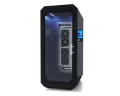
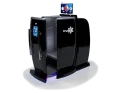
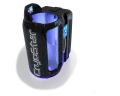
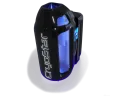

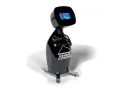
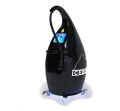
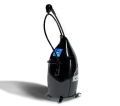

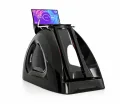
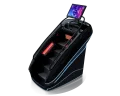
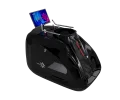
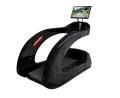
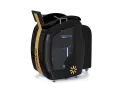
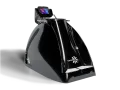

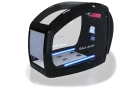

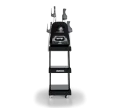
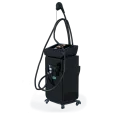
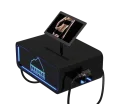
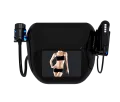

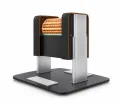
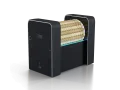
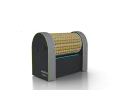
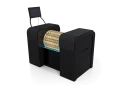
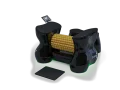
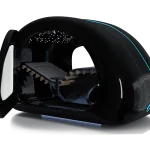
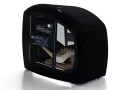
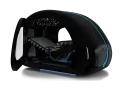

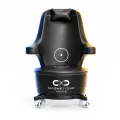
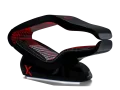







Walk for thirty minutes inside a capsule. Vacuum pulls blood into your thighs and glutes. Six infrared lamps warm the tissue from the inside out. You step out lighter, glowing, somewhere between a workout and a spa session. That’s a vacu cryo infrared treadmill in one paragraph – and it’s the reason boutique studios in Charlotte, Wheaton, Los Angeles, Milan and Madrid keep selling out 30-minute slots months in advance.
VACUACTIVUS has been engineering this category for over fifteen years. We build the vacuum infrared treadmills, vacu bikes, InfraStepper and HotCRYO yoga capsule that wellness operators use as the centerpiece of a low-impact, results-driven body-shape program. You’ll also see the equipment called a bodyshape treadmill in some markets – same machine, same purpose, different naming convention. This page is for the people thinking about adding that kind of equipment to a studio, gym or medspa – not for first-time clients. We’ll cover what the technology actually does, why it works for B2B economics, how it compares to a regular treadmill, and how to pick the right unit.
What a Vacu Cryo Infrared Machine Actually Does
The short version: a vacuum infrared treadmill is a sealed capsule with a treadmill, a bike or a stepper inside. A pump pulls air out so atmospheric pressure around the lower body drops – usually adjustable from 0 to 30 mbar – and the client walks, pedals or steps as normal. While they do, infrared lamps heat the legs, hips and abdomen. That’s the engine.
Here’s why those two technologies in one box matter. Vacuum pressure forces blood into the areas it normally has trouble reaching – thighs, buttocks, abdomen, the back of the upper arms. More blood in those tissues means more oxygen, more nutrient delivery, more lymphatic drainage and more fat available to burn during exercise. Some operators market the effect as “zero gravity” or “anti-gravity training” because the vacuum reduces effective body weight on the legs – same physics, different language. Infrared heat raises core temperature and accelerates the metabolic side of the equation. Both effects compound. Studios that run these vacuum exercise machines commercially see roughly three to four times the calorie burn per session compared with the same client walking on a regular treadmill at the same pace – operators we work with quote anywhere from 1,000 to 1,200 calories in a 30-minute session, which lines up with what Charlotte’s MG Body Space, Wheaton’s Lux Body Space and Cosmo Contour & Spa publish on their service pages.
And the kicker: the client doesn’t have to run. Walking briskly is enough. Which brings us to the part operators care most about.
Why It Sells: Low Impact, Not Low Effort
The reason vacu cryo infrared keeps booking sessions out months ahead is that it reaches a client that normal cardio can’t. Someone in their fifties with chronic knee pain isn’t getting on a Peloton. Someone with a herniated disc isn’t running on a treadmill. Someone forty pounds overweight isn’t doing HIIT at a gym where everyone else is in shape. But they will walk inside a capsule for half an hour, sweat heavily, see their thigh circumference drop over a course of treatments, and book the next package.
This is a low impact treadmill in the most literal sense – feet on a moving belt, gentle pace, no joint pounding. Pair that with a vacu bike for clients who want zero spine load at all, and a studio suddenly has a service menu that works for everyone from athletes to seniors to post-pregnancy clients. The “joint-friendly” angle isn’t marketing fluff. It’s the actual reason the equipment converts.
One studio owner in Italy told us last year that her two best months ever came after she stopped advertising “weight loss” and started advertising “back-friendly cardio”. Same machine. Different audience. We see that pattern a lot.
Who’s Actually Buying This Equipment
Looking at our shipping data and at the public-facing studios using VACUACTIVUS and competitor machines in the US, a few clear buyer profiles emerge. None of them look like a typical gym.
Body-shape and contour studios. Small footprint, two to six vacu cryo infrared units, membership-driven, 30 to 45 minutes per session, lower-body transformation as the headline service. This is the highest-margin model – a studio with four treadmills and one bike can run thirty-plus sessions a day on a single staff member. Bee InfraGlow in Charlotte, Lux Body Space in Wheaton, MG Body Space in Charlotte – same template, different cities.
Medical spas and aesthetic clinics. These places already sell cryolipolysis, lymphatic massage and red light. A vacu infrared treadmill or InfraStar bike rounds out the “do something active in the same building” piece. It also gives them a service to sell as a package add-on after a cellulite or coolsculpting treatment, which significantly boosts average ticket size.
Rehabilitation and longevity centers. The recumbent vacu bike (the InfraStar Bike, in our line) is genuinely spine-safe – no compression, no impact, lying or semi-reclined position. Physio clinics use it for clients recovering from back surgery or chronic lower-back conditions. Longevity studios pair it with red light, hyperbaric, and recovery capsules in a structured biohacking protocol.
Premium gyms and wellness hotels. Larger venues add one or two units as a differentiator – something the gym across the street can’t offer. The InfraStepper and the HotCRYO yoga capsule both fit this slot well because they bring a “what is this thing” curiosity factor that pulls walk-in interest.
The Three Things That Make a Commercial Unit Different
If you’re shopping at this category seriously, you’ve probably noticed there’s a wide price band. Compact units start around $5,000 from no-name Asian manufacturers. Premium European-built equipment from the established names runs $12,000 to $25,000 for a treadmill and up to $35,000+ for a top-end multi-therapy capsule with cryo and a 32-inch entertainment screen. The gap is real, and three things explain it.
First, the vacuum pump. A cheap pump pulls maybe 10 mbar and dies after eight months of commercial use. A serious commercial pump runs 0–30 mbar adjustable, holds pressure steady through an entire session and goes years between service. If a studio’s pump dies for two weeks, that’s two weeks of missed memberships – the savings on a cheap unit evaporates on the first failure.
Second, the infrared. Body Lab Studios specs Philips infrared lamps in their VacuTherm unit and they’re not wrong to. Six lamps at 150W each, full-spectrum IR-A, IR-B and IR-C, that’s the configuration that actually penetrates subcutaneous tissue and delivers the metabolic effect. Anything less is a heating mat with marketing.
Third, the build. The belt has to support 400 pounds – VACUACTIVUS treadmills go to 180 kg / 400 lb for exactly the audience that needs them most. The capsule has to seal properly thirty times a day. The control panel has to be intuitive enough that a part-time staff member can run a busy Saturday. None of this matters until something breaks. Then it matters a lot.
Vacu Treadmill vs Vacu Bike – Which One First
If you’re opening with a single unit, the choice between a vacu treadmill and a vacu bike depends almost entirely on your target client.
The treadmill burns more – it’s an upright weight-bearing exercise, calories are higher, the workout feels like a workout, and the post-session glow is more dramatic. Clients see thigh and waist reduction faster. The downside: it loads the spine a little, even at walking pace, and clients with significant back issues will struggle.
The recumbent vacu bike – InfraStar Bike, in our range – is the spine-safe answer. Client is lying back, no axial load, same vacuum and infrared technology applied to the same problem areas. Calorie burn is slightly lower per session, but session length is more flexible and the client demographic is broader. For a rehab clinic, a physio practice, or any studio targeting clients over fifty, this is usually the right opener.
Most successful studios end up with both – start with whichever fits your audience, add the other within twelve months, then layer in an InfraStepper or HotCRYO yoga capsule as a third-tier offering once memberships are full.
The Numbers: What Operators Charge, What It Earns
This is the part we can’t publish a perfect table for – every market is different. But here’s the math we see most often in the US.
Single 30-minute vacu cryo infrared session retails for $40 to $75 depending on city and positioning. A 10-session package usually goes for $350 to $600. A monthly membership with unlimited sessions runs $150 to $250. Studios with four units running ten sessions a day each, six days a week, at an average $50 per session, gross around $52,000 a month before staffing and rent. Take that with a grain of salt – your numbers will be your numbers – but the order of magnitude is real, and it’s the reason this category exists at all.
For a B2B buyer the calculation is usually straightforward: even at the higher end of equipment cost, a single vacu cryo infrared treadmill pays itself off in 9 to 14 months at modest utilization, then prints money for another six to eight years.
Vacu Cryo Infrared Equipment Pricing
Here’s how the category breaks down by configuration. Real numbers depend on options, branding and shipping region – these are the B2B planning ranges we quote most often.
| Equipment Type | Indicative B2B Price Range (USD) |
|---|---|
| InfraStepper – infrared stepper capsule | $7,500 – $11,000 |
| InfraStar Bike – recumbent vacu infrared bike | $9,000 – $14,000 |
| InfraStar S Bike / Sole – 2nd-gen vacu infrared bikes | $11,000 – $16,000 |
| VacuStar Treadmill – standard vacuum infrared treadmill | $13,000 – $18,000 |
| InfraRunick Treadmill – infrared running machine | $11,000 – $15,000 |
| VacuStar Dream Treadmill – top-end capsule w/ cryo + 32″ screen | $22,000 – $35,000 |
| HotCRYO – yoga & pilates infrared capsule | $14,000 – $22,000 |
Prices indicative for B2B planning. Leasing and financing available for qualifying operators. OEM and private-label production available on minimum quantities – talk to us about your branding requirements.
What Makes the VACUACTIVUS Approach Different
Most operators looking at this category compare two or three suppliers. Honestly, the technology in each is broadly similar – vacuum pump, infrared lamps, treadmill or bike, control screen. The differences live in the details that only matter once the equipment is in daily commercial use.
We’ve been building this category since 2000. Our headquarters is in Los Angeles, our manufacturing is European, and we ship to studios in 50+ countries – including most of the US studios you’ll see on the first page of Google for “infrared vacuum treadmill near me”. A lot of them are running our equipment under their own private-label branding. That’s by design: we manufacture, you operate, your brand stays on the front. If you’re opening a new studio and want machines that don’t say VACUACTIVUS on the side, we’ll quote you on OEM from the first conversation.
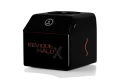
The product line covers the whole spectrum – entry-level InfraStepper through to the top-end VacuStar Dream Treadmill with integrated cryotherapy, ozone, aromatherapy and a 32-inch screen. Most studios start with a VacuStar Treadmill or an InfraStar Bike and add from there. Studios with a longevity focus often layer in cryotherapy chambers, red light therapy and a Revique HaloX longevity capsule to build a full biohacking offer.
Common Questions We Get from B2B Buyers
Is this really a low impact treadmill? Yes – clients walk at moderate pace, no running, no high-impact mechanics. For absolute zero spine load, choose the recumbent InfraStar Bike instead.
How is it different from a regular treadmill? Vacuum + infrared. A regular treadmill gives you a workout. A vacu cryo infrared treadmill gives you a workout, plus targeted blood flow to your problem areas, plus elevated core temperature, plus lymphatic drainage – all in a 30-minute session that feels easier than the calories burned would suggest.
Will clients with back pain be able to use it? The bike, absolutely – that’s actually its strongest sales angle. The treadmill, depends on severity; most mild back issues are fine because the pace is gentle, but acute or post-surgical cases should start with the bike.
Is it FDA-approved? Vacu infrared cardio equipment is classified as fitness equipment, not a medical device. CE compliance is standard. We can provide all certifications relevant to your jurisdiction on request.
How much space do I need? A single treadmill capsule needs about 8′ × 4′ floor footprint plus ceiling clearance for the door. A recumbent bike runs slightly larger horizontally but lower vertically. We send a fit-out diagram with every quote.
What’s the lead time? Stock units ship in two to four weeks. Custom OEM configurations or capsule colorways run six to ten weeks. Installation and staff training are included on US deliveries.
Where to Start
If you’re seriously evaluating vacu cryo infrared equipment for a studio, gym or medspa, the next step is a conversation – not a brochure. Every operator we work with has a different audience, a different rent structure, a different competitive landscape. The right machine depends on those things, not on a feature list. Send us a note about your space, your target client and your timeline, and we’ll come back with a configuration and pricing that fits the actual business you’re building.
Sales: sale@vacuactivus.com +1 (310) 894-8799 or use the contact form on this page. Worldwide shipping, leasing and OEM available.
Bio haking treadmills and bikes
What is low impact exercise equipment and who is it for?
Low impact exercise equipment includes treadmills and bikes designed to reduce stress on the joints, knees, and spinewhile still providing effective cardiovascular training. It is ideal for seniors, beginners, rehabilitation patients, and longevity-focused users, as well as wellness and medical facilities
What are the benefits of low impact treadmills and bikes?
Low impact treadmills and bikes help improve circulation, endurance, metabolism, and fat burning while minimizing joint strain. When combined with infrared heat and vacuum technology, they also support recovery, detox, and biohacking-based wellness programs.
How are infrared and vacuum treadmills different from standard cardio machines?
Infrared and vacuum treadmills use infrared heat to increase blood flow and metabolic activation, while vacuum technology enhances circulation and supports fat reduction in the lower body. This makes workouts more efficient compared to traditional treadmills or bikes.
Are low impact treadmills and bikes suitable for rehabilitation and medical use?
Yes. These machines are widely used in rehabilitation clinics, physiotherapy centers, wellness clinics, and medspasdue to their controlled intensity, safety, and joint-friendly design. They are suitable for post-injury recovery and supervised medical fitness programs.
What should I consider when buying low impact treadmills and bikes for a business?
Important factors include technology features (infrared, vacuum), space requirements, power needs, maintenance costs, warranty, manufacturer support, and ROI potential. Choosing commercial-grade equipment ensures durability and consistent performance in professional environments.


