












Five years ago, red light therapy was a niche modality known mostly to athletes, dermatologists and biohackers. Today, “red light therapy bed” is searched twelve thousand times a month in the United States. Every wellness studio worth visiting in Los Angeles, New York, Miami and Austin has at least one bed. Most of them have two. The reason the category exploded so fast is simple: it’s the easiest, most profitable wellness service to add to an existing business. Clients pay $50 to $150 per twenty-minute session. The bed runs unattended. One staff member can manage four rooms at once. And the science behind the treatment – photobiomodulation – has matured enough that it’s now a legitimate clinical tool, not just a wellness trend.
Cryonick Wellness Technology Factory builds red light therapy equipment for B2B operators – full-body red light therapy beds, red light therapy devices and red light loungers designed for commercial duty cycles, fast client turnover and the kind of throughput that pays a wellness business back inside a year. Operators searching the US market for a “red light therapy bed for sale”, “infrared bed for sale”, “red light chair”, “red light therapy chair”, “red light therapy booth” or “red light panel” usually land on either the consumer-grade panel makers (Joovv, Hooga, Mito) or the premium commercial bed brands (Prism Light Pod, LIT Method, Precor RedFuzion, Red Light Wellness). This page is for the operators considering whether to add red light to their facility, or replace an underperforming first-generation unit. We’ll cover what red light therapy actually does, the gap between consumer gadgets and commercial equipment, what to look for on a spec sheet, real US red light therapy bed price ranges and what the unit economics look like in a working studio.
What Red Light Therapy Actually Is
Red light therapy – also called photobiomodulation, low-level laser therapy or LED light therapy depending on which clinical paper you’re reading – uses specific wavelengths of red and near-infrared light to trigger cellular responses in the body. The wavelengths that matter are 630 to 660 nanometers (visible red) and 810 to 850 nanometers (near-infrared). Some premium beds add 633nm, 810nm or 940nm for targeted protocols. The light penetrates skin and surface tissue, gets absorbed by the mitochondria inside cells, and increases ATP production – the cellular fuel your body runs on.
What that means in practical terms: cells repair faster, inflammation drops, collagen production increases, blood circulation improves, and the body’s recovery systems generally work better for hours after a session. The benefits of red light therapy and the benefits of a red light therapy bed extend to faster muscle recovery, reduced joint pain, smoother skin, better sleep quality, mood improvement, and – if clients stay consistent with sessions – visible aesthetic improvements over four to eight weeks. You’ll also see the equipment marketed as an “infrared bed” or “infrared device” when the near-infrared (NIR) wavelengths are the main selling point – same physics, different naming convention.
None of this is woo. Photobiomodulation has decades of published research behind it, FDA Class II clearance pathways for specific clinical applications, and clinical adoption in chiropractic, sports medicine, dermatology and rehabilitation. The reason a wellness business invests in a red light therapy bed isn’t novelty – it’s that the modality genuinely works, and clients book it on repeat.
PEMF Therapy: The Other Half of This Category
The “PMEF” in this category’s name points at the other technology most operators pair with red light: pemf therapy, known in full as pulsed electromagnetic field therapy pemf. Where red and near-infrared light work through photobiomodulation at the cellular surface, pulsed electromagnetic frequency therapy pemf uses low-frequency magnetic pulses to reach deeper into tissue, supporting circulation, cellular energy production and recovery from a different physiological angle. Some clinical literature simply calls it pulsed electromagnetic therapy pemf, dropping the “field” or “frequency” wording – same modality, different phrasing across research papers and marketing copy. Operators comparing pemf devices against light-only equipment usually ask the same first question: does the space and client base justify the added technology, or is a dedicated light bed enough on its own.
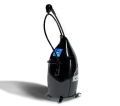
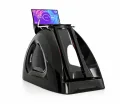
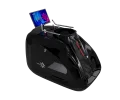
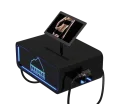
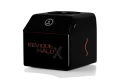
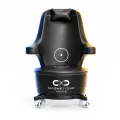
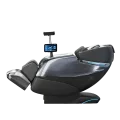
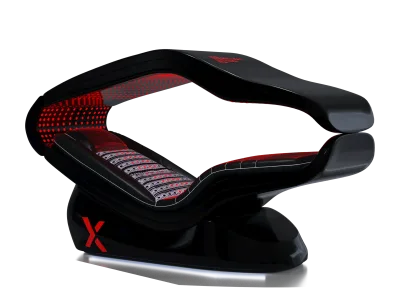
Our RedLight Couch PEMF HaloX combines both technologies – red and near-infrared light plus PEMF – as two of its multiple modalities in a single commercial couch, which is why studios adding a red light bed increasingly ask whether a combination PEMF unit makes more sense than a light-only bed for their space. If your client base includes an athletic recovery or physical therapy segment, PEMF is usually the deciding factor.
Red Light Therapy Beds vs Panels vs Chambers
Before you spend money, understand what you’re actually buying. The red light therapy market has three product categories and they’re not interchangeable.
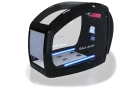
Red light therapy beds. Full-body horizontal units, similar in shape to a tanning bed but emitting only therapeutic red and near-infrared light – no UV, no skin damage. Client lies down, the canopy closes, fifteen minutes later the session ends. This is the workhorse format for commercial facilities. Highest throughput, easiest to staff, best client experience. Commercial red light beds typically run 10,000 to 43,000 LEDs and deliver 30 to 100 milliwatts per square centimeter of irradiance at the treatment surface.
Red light therapy panels. Vertical or wall-mounted LED arrays the client stands or sits in front of. Hooga, Mito Red Light, MitoPRO, Joovv and similar brands dominate the red light therapy panel market at consumer and prosumer tiers ($369 to $3,000). Panels work, but they’re not really a commercial product – clients have to position themselves, sessions take longer to cover the body, and the unit economics don’t scale the way a bed does. The best red light therapy panel options work well for clinics adding targeted protocols on top of an existing bed, but rarely as a standalone commercial offering.
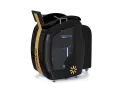
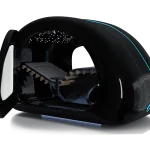
Red light chambers, pods, chairs and booths. Enclosed cabin-style units where the client sits or reclines inside a 360° LED environment – sometimes marketed as a red light therapy chamber, sometimes as a red light therapy chair, sometimes as a red light therapy booth depending on the form factor. Higher equipment cost, premium positioning, often paired with infrared sauna or other modalities. Our Revique HaloX™ longevity capsule integrates 360° red and near-infrared light therapy as one of six modalities, which is the format most longevity studios end up adding once they’ve maxed out their standard red light bed bookings.
Cryonick Wellness Technology Factory focuses on the bed and chamber formats – that’s where commercial unit economics actually work. We don’t build entry-level consumer panels because the market is already saturated with cheap imports, and the margin doesn’t support the kind of service relationship our B2B clients expect.
The InfraCouch Red Light: What’s on This Page
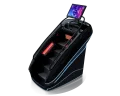
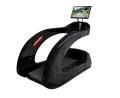
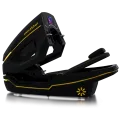
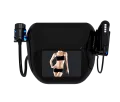
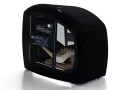
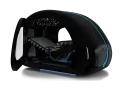
The product anchoring this category is the InfraCouch Red Light – our commercial red light therapy bed designed for medical spas, chiropractic clinics, recovery studios, fitness centers and high-end wellness facilities. Modern tanning-bed silhouette without any UV exposure. The client undresses to their comfort level, lies down on a contoured surface, and the canopy closes around them for a fifteen-to-twenty-minute session.
Inside the canopy: a dual-wavelength LED array delivering 660nm red and 850nm near-infrared light across the full body surface, soft vibration massage built into the surface for nervous-system relaxation, ambient music and an option to bring personal headphones, and a control interface that runs preset session protocols staff can launch with one tap. The bed doesn’t generate significant heat – clients can meditate or drift to sleep during a session, which is exactly what most of them do.
From an operator’s point of view, the InfraCouch was engineered for unattended commercial operation. Auto-shutoff at session end, simple cleaning protocol between clients, durable surface materials, no consumables to track and no UV-tube replacements that traditional tanning-bed conversions require. It’s designed to be the bed a studio buys once and runs for ten years.
What Separates a Commercial Bed from a $4,000 Import
Three things separate professional commercial red light beds from consumer or knock-off units flooding the market. None of them are obvious from a brochure – they show up in year two and three of operation.
Actual irradiance at the surface. A spec sheet that says “100 mW/cm²” sometimes measures right at the LED, sometimes at six inches, sometimes under conditions that don’t match real client use. Honest manufacturers publish irradiance measured at the treatment surface – the distance the client’s skin actually sits from the LEDs. Cheap imports inflate numbers by measuring at the diode. The therapeutic dose your clients receive depends on the real number, not the marketing number. Ask every vendor specifically: “How was irradiance measured and at what distance?”
LED quality and lifespan. Premium commercial LEDs run 50,000 to 100,000 rated hours – decades of commercial use at typical session volumes. Bargain LEDs degrade visibly within 18 months under daily commercial duty. The bed still turns on, the marketing still says “10,000 LEDs”, but the dose delivered to clients drops 30 to 50 percent. We use industrial-grade LEDs rated for the kind of daily commercial cycles a real studio generates.
What happens when something breaks. A commercial red light bed is a capital asset and its value depends on uptime. Buying from a manufacturer means a real warranty, parts that ship within a week, technicians who answer the phone, and software updates that keep the bed current. Buying from a no-name import means scrap value when the controller dies.
Who’s Actually Buying Red Light Therapy Beds
The buyer mix has shifted dramatically over the past three years. Five years ago this was chiropractor and dermatologist territory. Now the search “red light therapy beds for sale” returns hundreds of thousands of results, and the buyer profiles look completely different from where the category started.
Recovery and wellness studios. Boutique studios built specifically around red light, cryotherapy, IV drips and contrast therapy. Usually two to four red light beds running fifty-plus sessions a day across the floor. This is the highest-volume buyer profile and the model competitors like LIT Method, Restore Hyper Wellness, Prism Light and Red Light Lounge have built into national chains.
Medical spas and aesthetic clinics. Red light fits perfectly next to injectables, lasers and facials, part of the same beauty industry upsell logic as most cryo and body-shaping add-ons. Same client demographic, same booking patterns, same retention dynamics. Most medspas add a bed about twelve months after opening, once core aesthetic services are profitable.
Chiropractic and physical therapy clinics. The clinical buyer. Red light therapy beds with FDA Class II clearance can be billed as adjunct therapy in some protocols, and the photobiomodulation evidence for joint pain, neuropathy and soft-tissue recovery is strong enough that established practitioners now consider a bed standard equipment.
Fitness clubs, recovery zones and CrossFit gyms. Premium gyms add a red light bed to differentiate from the gym across the street. It also gives existing members a reason to book extra appointments and renews lapsed memberships at a higher price tier.
Tanning salons rebranding to wellness. A surprisingly large segment. Tanning beds have been declining for fifteen years; tanning-salon operators with existing real estate, existing client lists and existing infrastructure are converting to red light therapy beds as the next-generation service. The conversion economics work, and the regulatory situation is dramatically simpler than UV tanning. The search-volume reality matches this trend – “red light therapy tanning bed” gets thousands of US searches a month from clients who’ve heard about the technology and are looking for it near them. Operators converting from UV tanning to red light therapy generally retain 60-80% of their existing client list and dramatically expand their addressable market.
Wellness hotels, residential developers and corporate wellness suites. Premium amenity buyers. One or two beds in the spa, used as a signature offering. ROI here is brand differentiation rather than per-session revenue.
What B2B Operators Charge – and Earn
This is the part operators care about most. Per-session retail in the US currently runs $30 to $150 for a single 15-to-20-minute red light therapy bed session – most studios cluster between $50 and $75. Ten-session packages run $400 to $1,200. Monthly unlimited memberships typically sit at $150 to $300. A bed running ten sessions a day, six days a week, at $60 average, grosses about $14,400 a month before staffing and rent.
Take that order-of-magnitude. Specific numbers depend on your city, your positioning and your existing client base – a studio in Manhattan charging $150 per session and running fifteen sessions a day generates dramatically more than that. A clinic in a tier-three market at $40 per session generates less. What’s consistent across markets: payback on a commercial red light therapy bed (RLT) in the $15,000 to $30,000 range typically lands between six and twelve months at moderate utilization. After that, the bed prints money for the remaining eight to twelve years of its commercial life.
That math is why the category is growing so fast. It’s not exotic equipment – it’s the easiest hardware payback in modern wellness.
Red Light Therapy Bed Pricing
One of the most common questions B2B buyers ask is straightforward: how much is a red light therapy bed (RLT), and how much does a red light bed cost in actual B2B configurations? The honest answer is that red light therapy bed cost spans a wide range – from a few thousand dollars for a basic residential-rated bed to fifty thousand or more for a top-tier multi-wavelength commercial system. The category also has a healthy used red light therapy bed for sale market for operators looking to reduce upfront investment. Here are realistic B2B planning ranges:
| RLT Equipment Tier | Indicative B2B Price (USD) |
|---|---|
| Entry-level imported red light bed (2 panels, 600W, residential-rated) | $2,500 – $5,000 |
| Mid-range red light bed (3-4 panels, 1,000-1,500W, light commercial) | $5,500 – $9,500 |
| Premium commercial bed (full-body, dual wavelength, FDA Class II) | $15,000 – $35,000 |
| Top-tier commercial (43,000+ LEDs, 5-6 wavelengths, multi-room control) | $35,000 – $65,000 |
| InfraCouch Red Light by VACUACTIVUS | Contact for B2B quote |
| Red light therapy chamber / integrated longevity capsule | $45,000 – $95,000 |
Indicative B2B ranges. Specific InfraCouch pricing depends on configuration, OEM branding requirements and shipping region. Premium named competitors – Prism Light Pod, Precor RedFuzion Pro Max, Red Light Wellness Miracle 9600, LIT Method Lumé, Trifecta Light Pro 450, Airvida Aura – sit in the $25,000 to $60,000 commercial range. The InfraCouch typically lands at or below those equivalent units while shipping with the spec sheet that matters: dual-wavelength LED arrays, commercial-grade build, real warranty and ser
Red Light Therapy Bed Pricing
One of the most common questions B2B buyers ask is straightforward: how much is a red light therapy bed, and how much does a red light bed cost in actual B2B configurations? The honest answer is that red light therapy bed cost spans a wide range – from a few thousand dollars for a basic residential-rated bed to fifty thousand or more for a top-tier multi-wavelength commercial system. The category also has a healthy used red light therapy bed for sale market for operators looking to reduce upfront investment. Here are realistic B2B planning ranges:
Indicative B2B ranges. Specific InfraCouch pricing depends on configuration, OEM branding requirements and shipping region. Premium named competitors – Prism Light Pod, Precor RedFuzion Pro Max, Red Light Wellness Miracle 9600, LIT Method Lumé, Trifecta Light Pro 450, Airvida Aura – sit in the $25,000 to $60,000 commercial range. The InfraCouch typically lands at or below those equivalent units while shipping with the spec sheet that matters: dual-wavelength LED arrays, commercial-grade build, real warranty and service relationship.
What to Look For on a Spec Sheet
The red light bed category is full of spec-sheet noise. Five things actually matter for a B2B buying decision.
Wavelength coverage. 660nm + 850nm is the standard dual-wavelength configuration and covers most therapeutic protocols. Premium beds add 633nm, 810nm and 940nm for additional clinical applications. Independent control of each wavelength matters more than total wavelength count – a bed that runs all five together with one button is less flexible than one that lets staff blend them per protocol.
Real irradiance at the treatment surface. 30 to 100 mW/cm² is the commercial range. Anything advertised above that should be scrutinized for measurement methodology. Ask where and how the number was measured.
LED count and density. 10,000 to 30,000 LEDs is typical commercial range. Higher counts matter less than uniform distribution – a bed with 48,000 poorly positioned LEDs delivers less therapeutic dose than 20,000 well-positioned ones.
Session automation. Preset programs, one-tap session start, auto-shutoff, multi-room control. These determine whether your staff spends thirty seconds or three minutes per client between sessions, which compounds across a busy day.
FDA classification and warranty. FDA Class II cleared devices can support clinical claims in specific applications. Class I or unclassified devices restrict marketing language. Warranty length and what it actually covers is the closest proxy for build quality you’ll get before committing.
How a Red Light Therapy Session Actually Runs
The simplicity is the point. Client arrives, gets briefed by reception, enters a private treatment room with the bed. Tanning-style goggles for eye protection, undress to their comfort level, lie down on the bed surface. Staff selects a preset protocol – skin rejuvenation, pain relief, recovery, sleep prep – and starts the session. The canopy closes. Soft ambient lighting and optional music. Fifteen to twenty minutes later, the session ends, the canopy opens, the client redresses.
The whole thing runs unattended. One staff member at the front desk can manage three to five treatment rooms simultaneously, which is the operational fact that makes the unit economics work. A traditional massage room requires a full hour of therapist time per session. A red light bed delivers a comparable wellness experience and doesn’t require a therapist at all. That’s why studios scaling to multi-unit operations almost always lead with red light beds rather than manual modalities.
Common Questions B2B Buyers Ask Us
“Is this the same thing as a tanning bed?” No. A tanning bed emits UV-A and UV-B radiation specifically to trigger melanin production – which causes tanning, and over time, skin damage and cancer risk. A red light therapy bed emits only visible red and near-infrared light at wavelengths the body uses for cellular repair. Zero UV exposure. The bed looks similar from outside because the form factor – horizontal full-body LED canopy – is the most efficient way to deliver full-body therapeutic dose. But the underlying physics are completely different.
“How does this compare to Prism Light Pod or Precor RedFuzion?” Those are excellent commercial beds. Prism Light Pod runs 17,000+ LEDs at 100 mW/cm² across 360° coverage in a 15-minute session – premium specs at a premium price. Precor RedFuzion Pro Max runs 43,000 LEDs and six wavelengths with seven preset programs. Both compete in the $30K to $60K commercial tier. The InfraCouch targets the same buyer with comparable dual-wavelength performance and a more accessible B2B price point. Operators evaluating multiple commercial beds usually find us during quote-comparison and the conversation gets specific from there.
“What’s the FDA situation?” Commercial red light therapy beds operate under the FDA’s Class II medical device classification – the same regulatory tier as commercial saunas, lasers and certain clinical devices. FDA cleared (via 510(k) pathway) is the standard. FDA approved is a different, much stricter classification that applies to high-risk drugs and devices, and almost no red light bed qualifies. Don’t accept marketing that confuses the two. We provide complete documentation for clients who need specific regulatory positioning.
“How many sessions per client to see results?” Most clients feel something after one or two sessions – better sleep, less joint stiffness, a sense of being recovered. Visible aesthetic results (skin texture, fine lines, scar reduction) typically appear at the four-to-eight-week mark with consistent two-to-three sessions per week. Pain and recovery applications respond faster. This is one of the reasons membership models work so well – clients need consistency to see the results that justify continued bookings.
“What about EMF exposure?” A legitimate question more clients are asking. Quality commercial red light beds emit minimal electromagnetic field interference. Premium units (LIT Method Lumé and similar) explicitly market zero EMF/ELF performance. The InfraCouch is engineered to commercial EMF standards – we can provide measurement documentation on request.
“What about hair growth, weight loss and other claims I see online?” Photobiomodulation research supports a real but limited set of clinical applications: pain, inflammation, soft-tissue recovery, skin health, certain dermatology applications, mood. The “hair growth” and “weight loss” claims have some supportive research but the marketing often runs ahead of what the data actually shows. Our copy and your client education should stay close to what’s clinically defensible – the results clients actually experience are strong enough that you don’t need to oversell.
“What’s the installation and electrical requirement?” A standard commercial outlet on a dedicated circuit. Most premium beds run 110V in the US continental market, with 220V available for international installations. Room footprint roughly 8 feet by 4 feet for the bed plus client circulation space. We send a fit-out diagram with every B2B quote.
“Lead time?” Stock units typically arrive in 4 to 8 weeks. Custom OEM configurations or private-label branding runs 8 to 12 weeks. Installation in the US continental market is included on commercial orders.
Ready to Buy Red Light Therapy Equipment?
Ask our sales team for a current price quote if you’re ready to buy red light therapy equipment, and we’ll size it to your facility. Common questions we field: how do red light beds for sale here compare against the red light bed for sale listings from consumer brands, “is there red light equipment for sale in a smaller configuration for a single treatment room”, “are there red light devices for sale as a starter package before committing to a full bed”, and “how much does a red light therapy bed cost once shipping and installation are included”. We’re also a direct red light therapy machine manufacturer and red light bed supplier for regional distributors and private-label resellers – OEM branding is available on qualifying order volumes.
Why Source Red Light Equipment from Cryonick Wellness Technology Factory
We’ve been manufacturing commercial wellness and recovery equipment since 2000 – cryotherapy chambers, vacu-infrared training systems, lymphatic massage rollers, localized cryotherapy, longevity capsules and red light therapy beds. The reason that breadth matters: most facilities adding red light are also adding or already operating other VACUACTIVUS equipment. A single supplier, a single installation team, a single service relationship, and a matched aesthetic across the facility.
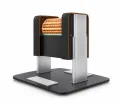
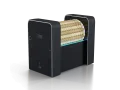
Studios building out integrated wellness centers typically pair the InfraCouch with our cryotherapy chambers, a localized cryotherapy unit, our vacu-infrared bodyshape equipment for active sessions, a RollStar lymphatic massage roller for body work, and increasingly a Revique HaloX longevity capsule as the premium flagship. Six revenue services, one supplier relationship, one matched look across the facility.
Where to Start
If you’re seriously evaluating a red light therapy bed for a wellness studio, medspa, chiropractic clinic, fitness center, tanning-salon conversion or longevity facility, the next step is a real conversation about your space, your client base and the service menu you’re building. Tell us about the facility, the existing offerings and the gap you’re filling, and we’ll come back with a configuration recommendation, transparent B2B pricing, leasing options for qualifying operators and complete installation planning.
Sales: sale@vacuactivus.com · +1 (310) 894-8799 · or use the contact form on this page. Worldwide shipping. OEM and private label available on minimum quantities.
FAQ Red Light Therapy Equipment and Pulsed Electromagnetic Field devices
How does a red light therapy bed work, and what results can I expect?
It uses low-level red and near-infrared light to stimulate cellular activity, improve circulation, and promote tissue repair. Results vary but may include better skin tone, reduced pain, and faster recovery times.
Is red light therapy safe for daily or frequent use at home?
Yes, when used according to the manufacturer’s guidelines, daily use is generally safe. However, avoid overexposure and always wear eye protection.
What certifications or standards should I look for when buying a commercial red light therapy bed?
Look for FDA registration, CE certification, and compliance with IEC safety standards.
Can red light therapy beds help with pain relief, skin care, and athletic recovery?
Yes, the technology is used in dermatology, sports medicine, and wellness centers for exactly these purposes, with research supporting its effectiveness.
How much does a red light therapy bed, couch, or chair cost?
The price of red light therapy beds, couches, or chairs typically ranges from $6,000 to $30,000, depending on size, light power, wavelength (commonly 660 nm and 850 nm), build quality, and whether the equipment is designed for commercial or professional use.
What should I look for when buying red light therapy equipment?
Key factors include wavelength accuracy (660 nm & 850 nm), light output, full-body coverage, safety certifications, ease of use, maintenance requirements, warranty, and manufacturer support. Commercial facilities should prioritize durability, reliability, and ROI potential.
Is a red light therapy bed or couch worth it for a business?
Yes. Red light therapy beds and couches are highly demand in medspas, wellness centers, recovery studios, and longevity clinics. They offer low operating costs, short session times, and strong demand for recovery, anti-aging, and pain relief treatments, making them a profitable investment.
What is PEMF equipment, and how is it used in longevity clinics?
PEMF equipment uses pulsed electromagnetic fields to support relaxation, recovery, circulation, and overall wellness. Longevity clinics commonly offer PEMF sessions through specialized chairs, couches, and full-body therapy beds as part of personalized recovery and wellness programs.
What are the potential benefits of PEMF therapy?
PEMF therapy may support muscle recovery, relaxation, better sleep, healthy circulation, and temporary relief from minor discomfort. It is a non-invasive wellness technology that can complement red light therapy, cryotherapy, and other longevity treatments.
Why should longevity clinics invest in PEMF equipment?
PEMF equipment enables longevity clinics to provide comfortable, non-invasive sessions with minimal staff involvement and no consumable costs. PEMF chairs, couches, and therapy beds can be added to memberships, recovery packages, or combined treatments, helping clinics increase client retention and recurring revenue.


