




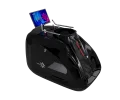
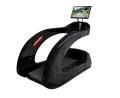
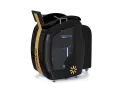
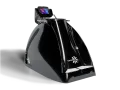

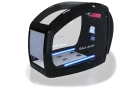

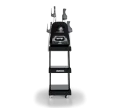
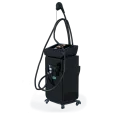
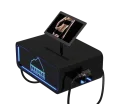



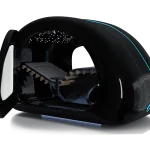






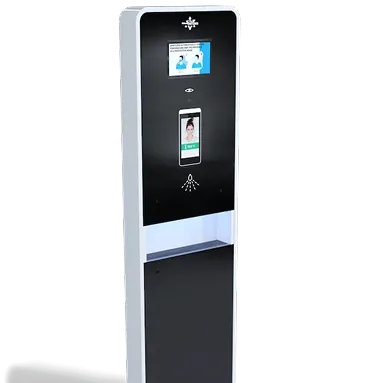
Most wellness and fitness operators we work with first ran into the MedSaniStar back in 2020 or 2021, when every facility in the US suddenly needed a contactless temperature kiosk at the front door. Five years later, the COVID-era hardware boom is over. What’s interesting is what stayed behind: the underlying technology – facial recognition, biometric access control, automated entry management, gate relay control – has matured into one of the most useful pieces of equipment a modern 24/7 wellness facility, fitness center, or corporate wellness suite can install. The same MedSaniStar that started life as a pandemic screening tool is now a serious facial recognition access control kiosk. This page covers what it actually does, what it costs, and where it fits in a current B2B wellness facility.
What the MedSaniStar Access Station Actually Is
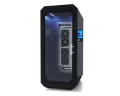
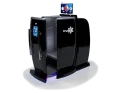
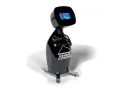
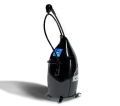
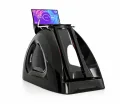
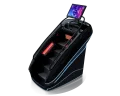
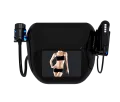
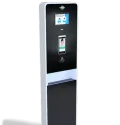
The MedSaniStar Access Station is a standalone or wall-mounted access control terminal built around an industrial-grade facial recognition camera, a touchless infrared temperature sensor, a hand sanitizer dispenser and a gate relay that controls physical entry through a door, turnstile or barrier. The unit pairs with an iCloud reporting backend and a Telegram bot for real-time alerts. The whole thing sits in a slim vertical chassis, plugs into a standard outlet and operates as a self-contained entry station.
The specifications matter because the access control kiosk market is full of consumer-grade hardware that fails under commercial duty cycles. The MedSaniStar runs on a Rockchip RK3288 quad-core processor, an 8-inch IPS LCD touchscreen, an industrial-class binocular camera with night infrared illumination and a Heimann thermal sensor. It supports a 30,000-face database with sub-second recognition at roughly 97 percent accuracy, recognizes masked faces, and authenticates from up to one meter away. The chassis is vandal-resistant – built for the kind of physical abuse a public-facing terminal takes over five years of daily use.
The Grand model adds a higher-capacity face database, full iCloud activity logging for every visitor entry, and the Telegram bot integration that messages your facility manager whenever an unrecognized face attempts access, a banned member tries to enter, or temperature thresholds get tripped. Software updates ship over the air, so the unit’s facial recognition algorithms stay current without manual firmware work.
Where This Actually Fits in 2026
The use case has shifted dramatically since the pandemic. Most operators buying the MedSaniStar today aren’t deploying it as a COVID screening tool. They’re deploying it as one of these:
24/7 unmanned gym access control and fitness center entry management. This is the largest current use case. Anytime Fitness alone opened more than 365 new locations in the US in 2025, and the entire 24/7 fitness model depends on reliable unmanned member access. Facial recognition outperforms RFID key fobs (which get loaned and cloned) and mobile credentials (which break when phone batteries die or apps crash). The MedSaniStar at the front door grants gym access only to enrolled members with current paid memberships, alerts the operator when a non-member attempts entry, and logs every entry timestamp for member usage analytics. Anytime Fitness, Snap Fitness, Planet Fitness 24/7 zones, and dozens of independent boutique 24/7 facilities all use some version of this architecture.
Wellness center and longevity studio member check-in. A more recent use case, but rapidly growing. Premium wellness facilities want their cryotherapy chamber, red light therapy bed and longevity capsule sessions reserved for paid members, not walk-ins who borrow a friend’s key. The MedSaniStar handles enrollment at the front desk, grants access at the treatment rooms, and integrates with most major gym management platforms (Mindbody, Mariana Tek, Glofox) through its API. This is why we ship a lot of these to facilities already buying our cryotherapy chambers and red light therapy beds – single supplier across the equipment stack and the access control.
Corporate wellness suites and executive lounges. Large employers increasingly build on-site wellness facilities, and they need access control that distinguishes between executive-tier and general-employee access. Facial recognition handles this without printing badges or distributing key fobs. The same kiosk also reports time and attendance data for HR, and doubles as a visitor management terminal for non-employees arriving for meetings or wellness consultations.
Hotel spa amenity access. Premium hotels limit spa access to guests on certain room rates or loyalty tiers. The MedSaniStar at the spa entrance pulls the guest list from the PMS overnight, recognizes registered guests on arrival, and gates the experience without front-desk staff handling check-in. Hospitality operators love this because it scales – one access station at the spa serves a 400-room hotel with no additional labor cost.
Salon-suite buildings and co-working wellness floors. Multi-tenant facilities where individual practitioners (estheticians, massage therapists, beauty practitioners) lease rooms inside a shared building. Each suite has its own door access, and the MedSaniStar at the building entrance grants 24/7 facility access to all active tenants. Salon Lofts, Sola Salon Studios and similar national chains use this model.
Spa and clinic hygiene amenity / disinfection station. The original use case, scaled down and reframed. Hand sanitizer dispensing combined with optional temperature screening still works well as a visible disinfection station at the entrance of a medical spa, aesthetic clinic or post-surgical recovery facility. Not a primary buying reason anymore, but a real residual benefit for the right buyer – and a meaningful client-trust signal that costs the operator nothing per session once the kiosk is installed.
What the Hardware Actually Does – In Detail
Facial recognition. The MedSaniStar enrolls a face the first time a member visits – staff captures the face image, links it to the member’s account in the management software, and the system stores the biometric template. From then on, recognition takes about one second, works in total darkness through near-infrared illumination, and tolerates basic environmental variation like changes in hair, glasses or facial hair. The 97 percent accuracy figure means about 3 false rejections per 100 entries – comparable to top-tier commercial systems from ZKTeco, Suprema and Anviz.
Mask detection. Optional behavior – the kiosk can require a mask, refuse entry without one, or simply log mask-on-or-off status for facilities that want the data without enforcement. Useful in medical spas, clinical environments and post-surgical recovery centers where staff hygiene protocols apply.
Touchless temperature reading. Heimann thermal sensor reads forehead surface temperature from up to one meter, with about 0.5°C accuracy. Reading completes in 1-2 seconds. Above-threshold readings trigger an audible alarm, a screen alert, and an optional Telegram message to the facility manager. This is the COVID-era feature that built the product – still useful but no longer the primary purchase driver.
Hand sanitizer dispensing. Motion-activated dispenser built into the kiosk housing. Holds enough liquid for several hundred dispensings before refill. Compatible with most standard commercial-grade sanitizer formulations.
Gate relay control. The most operationally important feature. The kiosk includes a dry-contact relay that controls a physical gate, turnstile, magnetic lock or electric strike. When facial recognition succeeds and temperature is within range, the relay fires and the door unlocks. When recognition fails or temperature exceeds threshold, the relay stays closed. This is what turns the MedSaniStar from a temperature display into actual access control.
iCloud reporting and Telegram bot. Every entry attempt – successful or rejected – logs to a cloud dashboard with timestamp, facial image, temperature reading and gate status. The Telegram bot pushes high-priority alerts (unrecognized face attempting entry, temperature threshold exceeded, hardware error) to the facility manager’s phone in real time. Operators with multiple locations get a unified dashboard across the whole portfolio.
How It Compares to Other Access Control Kiosks
The access control kiosk market splits into three rough segments, and the MedSaniStar sits in the middle one.
Enterprise-grade ($5,000 – $15,000). ZKTeco SF1008+ SpeedFace, Hikvision DS-K1T671, Dahua thermal terminals, Suprema FaceStation 2, Anviz FaceDeep. These are the systems large corporate offices and government buildings buy. Top-tier accuracy, long warranties, deep integration with major access control platforms, comprehensive support contracts. Overkill for most fitness and wellness facilities.
Mid-commercial ($1,500 – $4,500). ENS Security thermal kiosks, ID Wholesaler Countertop Temperature Screening Kiosk, AlphaCard kiosks, TURNSTILES.us FK1013+, Dynamic Detection Display, VIKYLIN VK-20S-PRO. This is where most facility-scale buyers cluster. Facial recognition, mask detection, temperature screening, access relay, basic cloud reporting. The MedSaniStar competes in this tier on B2B supply terms when the buyer is already operating other VACUACTIVUS equipment.
Entry-tier ($300 – $1,200). Imported thermometer kiosks, Amazon-sourced terminals, single-purpose temperature scanners without access relay. These were popular during the 2020-2021 hardware rush but most have been retired as the COVID screening use case faded. Not appropriate for any serious facility deployment.
If you’re building a 24/7 gym, a wellness center with controlled member access, or a corporate wellness suite with tiered entry permissions, you want mid-commercial tier hardware. That’s what the MedSaniStar is.
What This Costs – Honest B2B Pricing
Indicative US B2B pricing for the category:
| Equipment Tier | Indicative B2B Price (USD) |
|---|---|
| Entry-tier temperature kiosk (no access control) | $300 – $900 |
| Mid-commercial access control kiosk (face recognition + relay) | $1,500 – $4,500 |
| MedSaniStar Access Station by VACUACTIVUS | Contact for B2B quote |
| MedSaniStar Grand (expanded database + iCloud + Telegram bot) | Contact for B2B quote |
| Enterprise-grade biometric terminal (Suprema, ZKTeco premium) | $5,000 – $15,000 |
| Multi-unit fleet deployment (5+ kiosks, single facility) | Volume pricing applies |
Indicative B2B price ranges. Real MedSaniStar pricing depends on configuration (base model versus Grand), branded chassis customization, integration with your existing access control platform, gate hardware coordination and shipping region. Most quotes turn around within 48 hours.
Common Questions B2B Operators Ask Us
“Does this still make sense in 2026, after COVID?” The temperature screening feature is largely vestigial at this point – most facilities don’t use it daily anymore. The access control and facial recognition features are what justify the purchase now. The product is essentially a facial recognition access control kiosk that happens to also have temperature screening if you want it.
“How does facial recognition handle privacy regulations?” This depends heavily on jurisdiction. Illinois (BIPA), Texas, Washington and several EU jurisdictions have specific biometric privacy laws that require written consent, secure storage, defined retention periods and audit-ready deletion processes. The MedSaniStar supports configurable data retention, encrypted face template storage and consent capture at enrollment. The operational responsibility for compliance remains with the facility operator – we don’t provide legal advice on biometric data handling. Most US operators we work with retain a privacy counsel before deploying biometric access control. Consult yours.
“Does it integrate with my gym management software?” The MedSaniStar exposes a REST API for member enrollment, status checks and entry logs. We’ve shipped successful integrations with Mindbody, Mariana Tek, Glofox and several smaller platforms. For uncommon platforms, integration typically requires a few hours of development work on the gym software side – straightforward but not zero effort.
“What happens at 3 a.m. when something breaks?” The kiosk continues to log attempts locally even when cloud connectivity drops. Software resets remotely through the iCloud backend. Hardware service calls run through our US support – typical response is one business day for diagnostic, two to four business days for on-site replacement of critical components. Spare-parts kits are available for purchase if you want zero downtime risk.
“Can it work without the temperature screening?” Yes. The temperature reading can be disabled entirely, leaving a pure facial recognition access control kiosk. Most current installations run this way.
“What about regulatory or FDA classification?” The MedSaniStar is classified as commercial access control hardware – not a medical device. The temperature reading is intended for facility-management use, not diagnostic or clinical use. We provide CE documentation. FDA clearance is not applicable to this product category.
“Can I private-label this for a wellness chain?” Yes. OEM and white-label production are available on minimum quantities – branded chassis, custom welcome-screen graphics, custom audio prompts and your branding throughout the iCloud dashboard. Several US wellness chains deploy our kiosks under their own brand identity.
“What’s the installation requirement?” A standard wall location near the door you want to control, or a floor stand if wall mounting isn’t practical. Standard power outlet. Ethernet or Wi-Fi connection. Coordination with whoever installs your gate, turnstile or door strike – the relay wiring is simple but needs to be done correctly. Most installations complete in a half-day.
Why Buy the MedSaniStar from VACUACTIVUS
To be honest about it: if you’re a single-location operator buying one access control kiosk and you have no other VACUACTIVUS equipment, ZKTeco, Hikvision, Suprema or one of the larger US access control distributors will sell you a comparable product faster than we will. Facial recognition kiosks are not our core specialization – we make wellness equipment, and this product extends our facility offering rather than defining it.
The reason operators do buy the MedSaniStar from us is single-supplier consolidation across the wellness facility. If you’re also operating a cryotherapy chamber, a red light therapy bed, a longevity capsule, a localized cryotherapy unit, a RollStar massage roller, a vacu-infrared treadmill or a De-stress Lounge massage chair from us, adding the access control kiosk under the same delivery, warranty, OEM-branding and support relationship is operationally cleaner than introducing a separate access-control vendor. The product is genuinely good, but the buying argument is the consolidated supply relationship.
Where to Start
If you’re building a 24/7 gym or fitness center, a wellness studio with controlled member access, a corporate wellness suite, a hotel spa with tiered guest access, or a multi-tenant wellness building, tell us about the space, the access flow you need and the existing membership platform you operate. We’ll come back with a configuration recommendation, transparent B2B pricing, multi-unit volume terms for fleet deployments, OEM branding options and complete installation planning.
Sales: sale@vacuactivus.com +1 (310) 894-8799 or use the contact form on this page. Worldwide shipping. OEM and private label available on minimum quantities.
hygiene solution designed for body temperature screening and automatic hand disinfection
What is a disinfection access station and how does it work?
A disinfection access station is a contactless hygiene system that automatically measures body temperature and dispenses hand disinfectant at entry points. It helps control access and improve hygiene before people enter a facility.
Who should use a disinfection access station?
These stations are ideal for gyms, wellness centers, clinics, offices, hotels, schools, retail stores, and public facilitiesthat want to protect employees and visitors and maintain high hygiene standards.
Is a disinfection access station effective for COVID protection?
Yes. While it does not replace medical testing, a disinfection access station is an effective preventive measure that helps reduce health risks by identifying elevated body temperature and promoting regular hand disinfection.
Is the system safe and easy to use?
Yes. Disinfection access stations are safe, non-invasive, and easy to operate. They use infrared temperature sensorsand touchless disinfection, making them suitable for daily use without physical contact
Do disinfection access stations require special installation or maintenance?
Most systems require minimal installation and standard power supply. Routine maintenance includes refilling disinfectant and basic cleaning. No special training is required for daily operation.


