




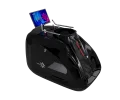
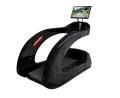
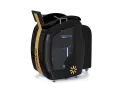
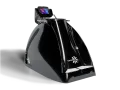


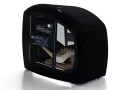
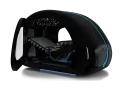




Costul echipamentului de crioterapie: cheltuieli de operare ascunse pe care majoritatea cumpărătorilor le trec cu vederea
Cheltuielile de operare ascunse pe care majoritatea cumpărătorilor de echipamente de crioterapie le omit: furnizarea de azot (doar camere cu azot, cel mai mare cost recurent), electricitatea (camere electrice, mici, dar continue), întreținerea și piesele consumabile, asigurarea, instruirea personalului, marketingul și achiziția de clienți, timpul de nefuncționare și reparațiile și valoarea de revânzare la sfârșitul duratei de viață. Acest complement al pilonului costurilor echipamentelor de crioterapie se concentrează pe ceea ce urmează achiziției, nu pe eticheta de pe etichetă.
Acest ghid prezintă CHELTUIELI OPERATIONALE ASCUNSE. Eticheta inițială (capitalul camerei, prețurile dealerului, intervalele de categorii) se află în Articolul #29 - perechea naturală pentru acest pilon de costuri. Citiți mai întâi acesta pentru contextul costurilor de capital, apoi acesta pentru imaginea TCO pe o perioadă de 5 ani de funcționare. Împreună, acestea formează imaginea totală onestă de care au nevoie cumpărătorii de crioterapie înainte de a semna o comandă de achiziție.
Public: operatori care compară camerele electrice cu cele cu azot pe baza costului total de proprietate (TCO), operatori existenți care planifică bugete de costuri multianuale și factori de decizie în domeniul finanțării/leasingului care au nevoie de estimări lunare realiste ale costurilor. Cifrele prezentate sunt acoperite, deoarece datele privind costurile operatorilor din industrie variază, mai degrabă decât sunt legate de atribuirea unor date limită specifice furnizorilor; verificați prețurile actuale de furnizare cu furnizorul local de LN2 și tarifele la utilități înainte de a finaliza bugetele.
De ce prețul de etichetă este doar jumătate din poveste
Când cumpărătorii evaluează costul echipamentelor de crioterapie, majoritatea se concentrează pe eticheta de pe aparat. Această cifră este reală, dar incompletă. Camera funcționează timp de 5-10 ani în scopuri comerciale zilnice; peste această perioadă, cheltuielile de operare recurente depășesc adesea valoarea etichetei de 2-3 ori pentru camerele cu azot și 30-50% pentru camerele electrice.
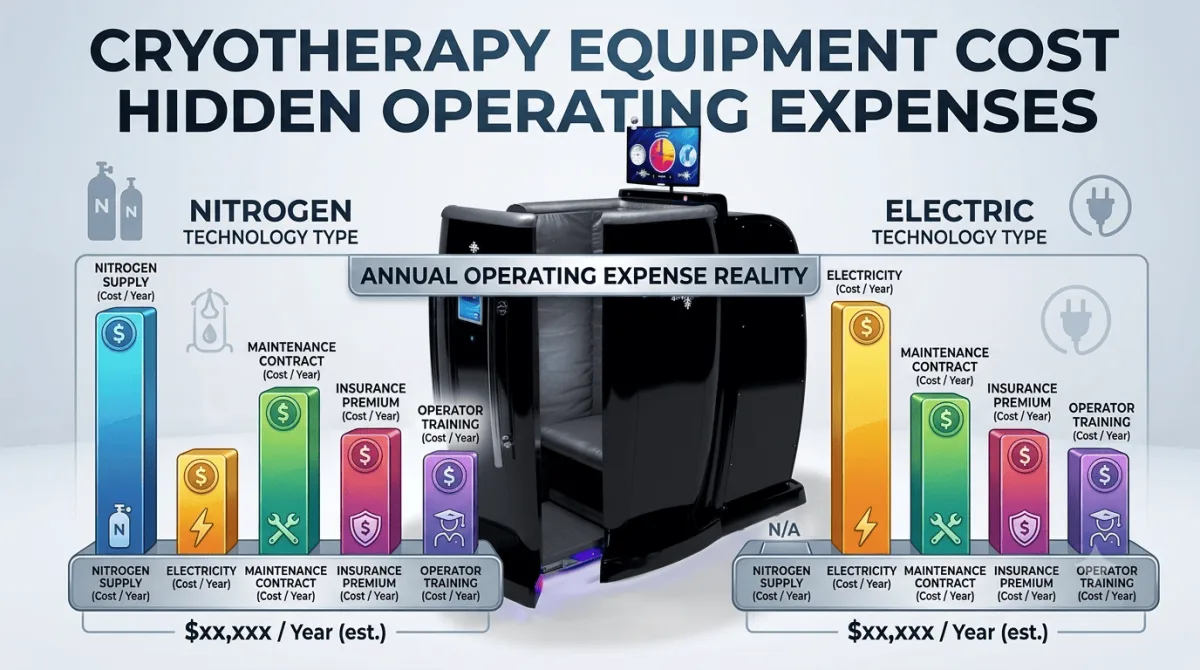
Cheltuielile ascunse se împart în categorii previzibile în ordinea mărimii tipice: furnizarea de azot (cea mai mare pentru azot, zero pentru electricitate), electricitate (mică, dar continuă), întreținere și piese consumabile, asigurare, instruirea personalului, marketing și achiziție de clienți, timp de nefuncționare și reparații și valoarea de revânzare la sfârșitul duratei de viață. Cumpărătorii care planifică pentru toate cele 8 evită șocul bugetar din al doilea an care închide jumătate din noile studiouri de crioterapie.
Cele 8 cheltuieli operaționale ascunse
Taxonomia completă a cheltuielilor de exploatare ascunse: (1) Furnizare de azot – $5.000-$12.000/an la volum moderat (10 sesiuni/zi), scalare la $36.000-$60.000/an la instalații de azot aglomerate (15-20 sesiuni/zi) per date de cost ale operatorului din industrie; zero pentru electricitate. (2) Electricitate – $1.100-$2.500/an pentru camere electrice în orele de funcționare comerciale. (3) Întreținere – $1.000-$3.000/an pentru service programat, calibrarea regulatorului, etanșări și filtre. (4) Asigurare – $1.500-$3.500/an răspundere civilă. (5) Instruirea personalului – $500-$2.000 inițial per operator plus $200-$500/an pentru reîmprospătarea cunoștințelor.
(6) Piese consumabile, inclusiv filtre, garnituri, regulatoare de presiune, supape care se uzează, de obicei $500-$1.500/an. (7) Marketing și achiziție de clienți – $500-$2.000/lună la studiouri consacrate. (8) Timp de nefuncționare și reparații, bugetați 3-5% din venitul anual ca cheltuieli neprevăzute. Al nouălea factor ascuns: valoarea de revânzare la sfârșitul duratei de viață scade rapid pentru camerele de azot intens utilizate, mai lent pentru cele electrice (piața second-hand preferă plug-and-play). Includeți toate cele 8 în costul total de proprietate pe 5 ani, nu doar eticheta cu mașina.
| Categorie de cheltuieli | Limită inferioară (anual) | High End (Anual) | Se aplică la |
|---|---|---|---|
| Alimentare cu azot (LN2) | $5.000/an (moderat 10 ședințe/zi) | $60.000/an (aglomerat 15-20 sesiuni/zi) | Numai camere cu azot |
| Electricitate | $1.100/an (utilizator unic) | $2.500/an (utilizare comercială intensă) | Camere electrice în principal |
| Serviciu de întreținere | $1.000/an (programat de bază) | $3.000/an (contract complet) | Ambele tehnologii |
| Piese consumabile | $500/an (filtre/etanșări) | $1.500/an (plus chirie dewar pentru azot) | Ambele tehnologii |
| Asigurare | $1.500/an (răspundere de bază) | $3.500/an (inclusiv asigurare profesională) | Ambele tehnologii |
| Instruirea personalului | $500/an (reîmprospătare) | $2.000/an (manipulare multi-operator + LN2) | Ambele tehnologii |
| Marketing / achiziție | $500/lună la studiouri consacrate | $2.000/lună în timpul rampei sau al noii locații | Ambele tehnologii |
| Contingență în timpul nefuncționării | 3% din veniturile anuale | 5% din veniturile anuale | Ambele tehnologii |
Furnizarea de azot: cel mai mare cost recurent
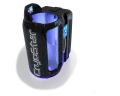
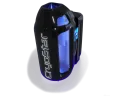
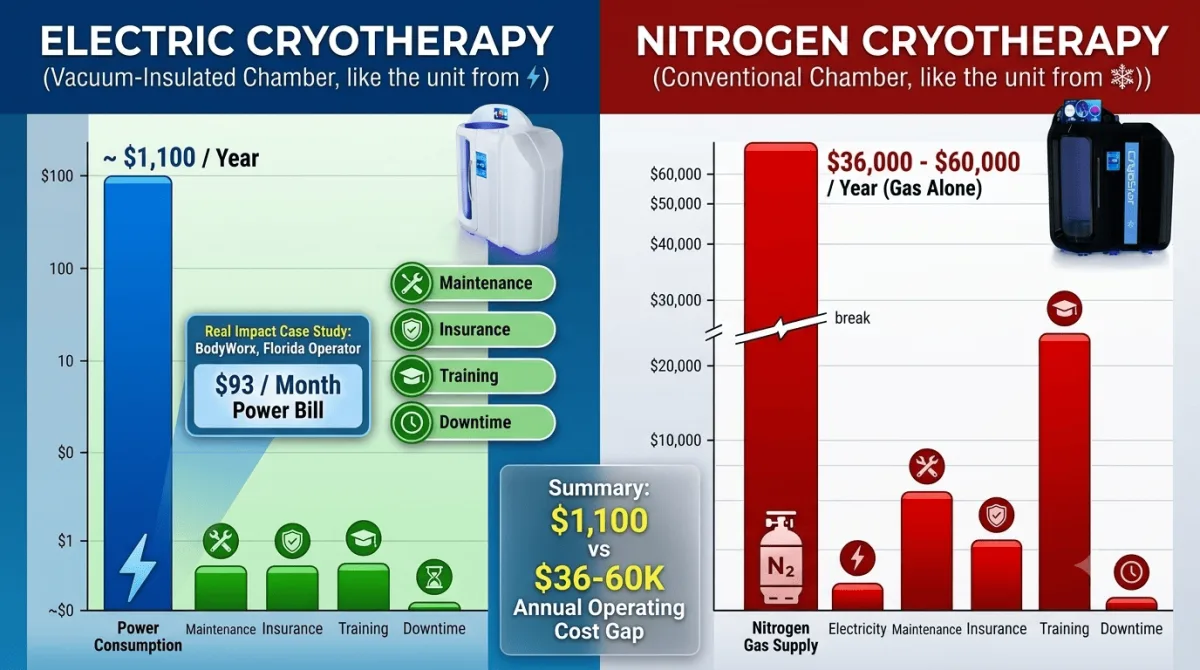
Pentru camerele de crioterapie cu azot, furnizarea de LN2 reprezintă cel mai mare cost recurent, cu un ordin de mărime. Conform specificațiilor tehnice ale fabricii Vacuactivus, CryoStar consumă ~3-5 kg per sesiune, iar modelele de azot Antarctica ~4-7 kg per sesiune. La un preț de vânzare cu amănuntul de $ 1,30/L (mult mai mic la vrac), o instalație de azot aglomerată care rulează 15-20 de sesiuni/zi consumă aproximativ $ 3.000-$ 5.000 pe lună în gaz per operator din industrie. Aceasta înseamnă $ 36.000-$ 60.000/an doar pentru linia de LN2, înainte de închirierea dewar, suprataxele pentru frecvența de livrare sau livrarea de urgență în afara orelor de program.
Costurile suplimentare legate de aprovizionarea cu azot pe care cumpărătorii le uită: închirierea vasului Dewar ($75-$200/lună per unitate), suprataxele pentru frecvența de livrare pentru ferestrele strâmte, pierderile prin scurgeri și vaporizare (de obicei 5-15% volum livrat), service-ul regulatorului de presiune și instruirea personalului privind manipularea conformă cu OSHA. Costurile totale ale lanțului de aprovizionare cu azot adaugă de obicei 15-25% la costul gazului LN2 brut. Acesta este motivul pentru care camerele electrice recuperează un capital inițial mai mare pe o perioadă de 3-5 ani, în ciuda costului mai mare: nicio linie de LN2.
Electricitatea: Numărul mic trecut cu vederea
Pentru camerele electrice de crioterapie, energia electrică este principalul consumabil de funcționare. O cameră electrică pentru un singur utilizator care funcționează în regim comercial (6-8 ore zilnic la temperatură criogenică) consumă aproximativ 3-5 kW în timpul răcirii și mai puțin în timpul mersului în gol. Consumul total este de obicei de $1.100-$2.500/an la tarifele comerciale de energie electrică din SUA ($0,10-$0,15/kWh). Exemplu real de operator: un operator de cameră electrică din Florida raportează aproximativ $93/lună per operator din analiza costurilor. Aceasta este o sumă de 30-55 de ori mai mică decât linia de LN2 la o instalație de azot comparabilă.
Camerele electrice nu necesită logistică de livrare a LN2, nu necesită închiriere dewar, nu necesită pierderi de vaporizare și nu necesită instruire conformă cu OSHA privind manipularea LN2. Factura de energie electrică crește liniar odată cu utilizarea, spre deosebire de livrarea LN2 în trepte. Pentru studiourile cu volum mare de producție, această predictibilitate justifică singură capitalul mai mare al camerei electrice în multe modele financiare.
Întreținere, asigurare și instruire: cheltuielile mici pe care cumpărătorii le uită complet
Cheltuielile pe care cumpărătorii le uită complet atunci când planifică bugetele de costuri pentru echipamentele de crioterapie: contracte de service pentru întreținere ($1.000-$3.000/an care acoperă service-ul programat, calibrarea, etanșările, filtrele, regulatoarele), piesele consumabile ($500-$1.500/an) și instruirea personalului ($500-$2.000 inițial per operator, plus $200-$500/an pentru reîmprospătarea cunoștințelor). Camerele cu azot adaugă instruire privind manipularea LN2 ($200-$500 inițial per operator) impusă de OSHA.
Asigurare pentru crioterapie: se așteaptă $1.500-$3.500/an, acoperind răspunderea civilă generală, răspunderea profesională pentru terapeut/operator, răspunderea pentru produse și răspunderea pentru spații. Unii asigurători solicită certificate de instruire semnate pentru operatori și documentație de manipulare a LN2 conformă cu OSHA pentru camerele de azot. Verificați cu brokerul de asigurări comerciale înainte de deschidere; unii asigurători exclud crioterapia sau solicită o poliță specială. Marketing: buget $500-$2.000/lună la studiourile consacrate; studiourile noi cheltuiesc mai mult în perioada de lansare.
Costul de operare pe 5 ani: Totalul real
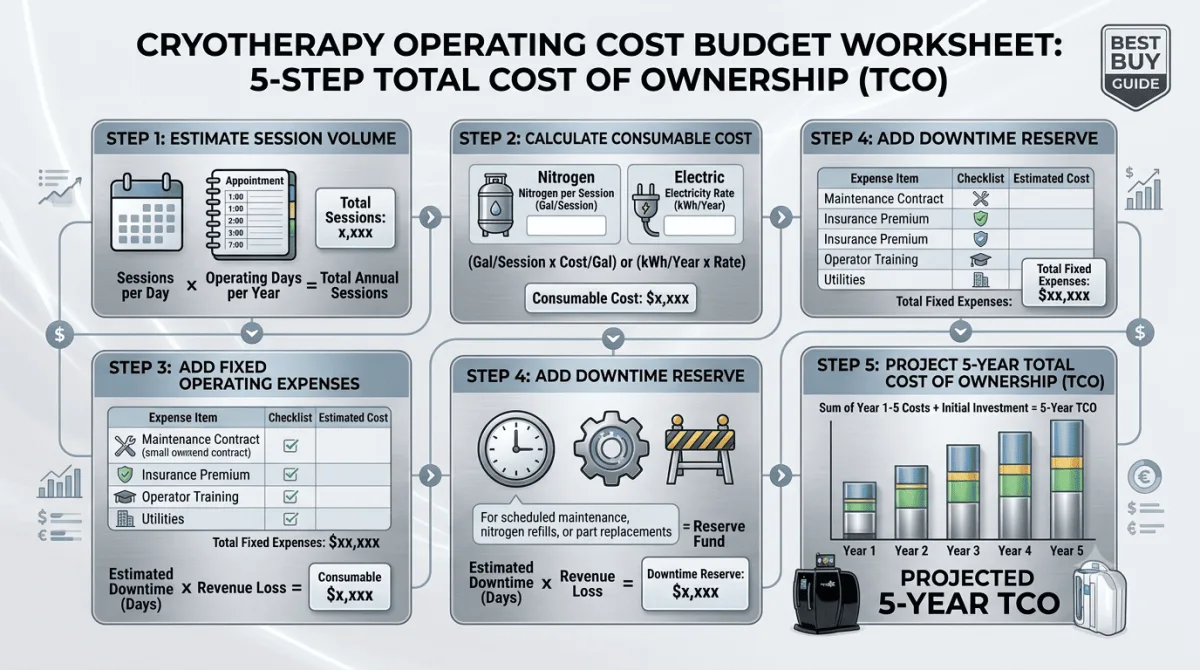
Tabloul costului total de proprietate (TCO) pe 5 ani reprezintă costurile de exploatare care se acumulează pe durata de viață productivă a mașinii. Pentru o cameră electrică cu un singur utilizator: eticheta de capital plus $5.500-$12.500 electricitate pe o perioadă de 5 ani plus $5.000-$15.000 întreținere și consumabile plus $7.500-$17.500 asigurare plus $2.500-$4.500 instruire reprezintă aproximativ $20.500-$49.500 costuri de exploatare cumulative, pe lângă eticheta mașinii.
Pentru o cameră de azot aglomerată (15-20 sesiuni/zi): eticheta de capital plus $180.000-$300.000 gaz LN2 pe o perioadă de 5 ani plus $27.000-$40.000 Dewar/livrare plus $5.000-$15.000 întreținere plus $7.500-$17.500 asigurare plus $3.500-$6.500 instruire echivalează cu aproximativ $223.000-$379.000 costuri de operare cumulative, pe lângă eticheta aparatului. Decalajul TCO pe 5 ani este dominat de linia LN2 și este factorul cel mai trecut cu vederea în deciziile de achiziție a echipamentelor de crioterapie. Consultați pilonul costului echipamentelor de crioterapie pentru perechea cost-capital.
Cum să bugetezi costurile de operare ale crioterapiei
Bugetare practică pentru construirea unui model realist de costuri de afaceri. Începeți cu linia de consumabile (LN2 pentru azot, electricitate pentru electricitate) la volumul așteptat de sesiuni. Apoi, întreținerea straturilor (2-4% de autocolant/an), asigurarea ($1.500-$3.500/an), instruirea ($1.500-$3.000 în primul an), piesele consumabile ($500-$1.500/an) și marketingul ($500-$2.000/lună pentru studiourile consacrate; mai mult în timpul creșterii producției). Stabiliți o rezervă de nefuncționare de 3-5% din venitul anual proiectat. Însumați aceste sume în proiecții lunare ale costurilor de operare.
Pentru finanțare, ambele închiriere cameră de crioterapie și achiziționarea directă au implicații: leasingul conservă capitalul de lucru, achiziționarea surprinde valoarea de revânzare la sfârșitul duratei de viață (mai mare pentru electricitate). Comparați cadrul oportunităților de afaceri pentru planificarea capitalului de pornire și explorarea catalog comercial camere de crioterapie sau echipamente de crioterapie și slăbire. Consultați și ghidul cumpărătorului B2B pentru o prezentare detaliată aferentă a aparatelor de crioterapie de vânzare.
Întrebări frecvente
Î1. Care sunt costurile ascunse ale echipamentelor de crioterapie?
Costurile de operare ascunse ale echipamentelor de crioterapie pe care majoritatea cumpărătorilor le trec cu vederea sunt: furnizarea de azot (doar camerele cu azot, cel mai mare cost recurent), electricitatea (camerele electrice), service-ul de întreținere, piesele consumabile, asigurarea, instruirea personalului, marketingul și achiziția de clienți, timpul de nefuncționare și reparațiile, precum și valoarea de revânzare la sfârșitul duratei de viață. Toate cele 8 categorii se cumulează pe parcursul a 5-10 ani de funcționare comercială și depășesc adesea prețul de listă al aparatului de 2-3 ori pentru camerele cu azot.
Î2. Cât costă funcționarea unui aparat de crioterapie?
Costul de funcționare depinde în mare măsură de tehnologie. O cameră de crioterapie electrică costă aproximativ 1.100-1.400 TP/an pentru electricitate, plus întreținere și asigurare. O cameră de crioterapie cu azot la volum mare (15-20 de ședințe/zi) costă 1.400-1.400 TP/an doar pentru gaz LN2, plus închirierea vasului Dewar, suprataxele de livrare, întreținere și asigurare. Comparați pilonul costului echipamentului de crioterapie pentru perechea cost-capital.
Î3. Care este costul lunar al azotului lichid pentru crioterapie?
Costul LN2 pentru o cameră de crioterapie cu azot este de obicei între $3.000-$5.000 pe lună, la un volum aglomerat de 15-20 de sesiuni/zi, per operator din industrie. Un volum moderat de 10 sesiuni/zi este proporțional mai mic, la $400-$1.000/lună. Se adaugă chiria pentru Dewar ($75-$200/lună per unitate), suprataxele de livrare și pierderile prin vaporizare (5-15%). Verificați prețurile actuale pentru LN2 cu furnizorul local de gaze comerciale; tarifele contractuale vrac sunt semnificativ mai mici decât cele cu amănuntul.
Î4. Crioterapia electrică sau cea cu azot sunt mai ieftine de utilizat?
Electricitatea este mult mai ieftină de utilizat decât azotul. O cameră electrică consumă $1.100-$2.500/an de electricitate, față de $36.000-$60.000/an de gaz LN2 pentru o instalație de azot aglomerată - o diferență de 30-55x doar pe linia de consumabile. Pe o perioadă de 5 ani, costul total de proprietate al electricității adaugă $20-50.000 la costuri de operare, față de $223-379.000 pentru azot aglomerat. Electricitatea câștigă TCO pentru studiourile cu volum mare de producție; azotul câștigă la un capital mai mic și un șoc termic mai puternic pentru operatorii boutique cu prețuri premium pentru sesiuni.
Î5. Ce fel de întreținere necesită o cameră de crioterapie?
Întreținerea variază în funcție de tip. Camerele cu azot necesită calibrarea regulatorului de presiune, înlocuirea garniturii, service-ul supapelor și inspecția periodică a liniei de azot liniar (LN2 - $ - 1.000-$ - 3.000/an). Camerele electrice necesită service pentru refrigerare, inspecția compresorului, înlocuirea filtrului și actualizări ale panoului de control (interval comparabil). Ambele tipuri beneficiază de un contract de service cu producătorul sau distribuitorul autorizat pentru disponibilitatea pieselor și angajamentele privind timpul de răspuns.
Î6. Cât ar trebui să bugetez pentru costurile de operare ale crioterapiei?
Buget de la consumabile în sus. Pentru o cameră electrică: planificați aproximativ $1.100-$2.500 electricitate + $1.000-$3.000 întreținere + $1.500-$3.500 asigurare + $1.500-$3.000 instruire/marketing = aproximativ $5.100-$12.000 buget anual de funcționare. Pentru o cameră de azot aglomerată: $36.000-$60.000 LN2 + $5.400-$8.000 Dewar/livrare + $1.000-$3.000 întreținere + $1.500-$3.500 asigurare = aproximativ $43.900-$74.500 buget anual de funcționare.
Î7. De ce majoritatea cumpărătorilor de crioterapie subestimează costul real?
Majoritatea cumpărătorilor subestimează costul real al echipamentelor de crioterapie, deoarece se concentrează pe prețul afișat al aparatului în timpul conversațiilor cu furnizorii și tratează costurile de operare ca pe o idee ulterioară. Producătorii și distribuitorii prezintă adesea cifrele privind costurile de capital și plata leasingului; elementele pentru furnizarea de LN2, asigurare, instruire și întreținere sunt de obicei modelate DUPĂ achiziție, mai degrabă decât în timpul evaluării. Acest model implică închiderea a jumătate din noile studiouri de crioterapie în al doilea an, când costurile de operare depășesc veniturile inițiale.
Î8. De ce asigurare aveți nevoie pentru o afacere de crioterapie?
O afacere de crioterapie are nevoie de obicei de o asigurare de răspundere civilă care să acopere operațiunile de crioterapie: răspundere civilă generală, răspundere civilă profesională pentru terapeut/operator, răspundere civilă pentru produse și răspundere civilă pentru spații comerciale. Unii asigurători solicită certificate de instruire pentru operatori semnate și documentație de manipulare a LN2 conformă cu OSHA pentru camerele de azot. Prima anuală este de obicei $1.500-$3.500/an; verificați cu un broker de asigurări comerciale înainte de deschidere, deoarece unii asigurători exclud crioterapia sau solicită o poliță specială.
Concluzie
Realitatea costurilor echipamentelor de crioterapie depășește cu mult valoarea afișată pe eticheta aparatului. Furnizarea de azot este cel mai mare cost recurent pentru camerele de azot ($36.000-$60.000/an la volum maxim), funcționând cu 30-55 de ori mai mult decât linia de electricitate la camerele electrice comparabile. Adăugați întreținerea, asigurarea, instruirea, marketingul și costurile de nefuncționare; costul real de operare pe 5 ani depășește adesea valoarea afișată pe etichetă de 2-3 ori pentru azot și de 30-50% pentru electricitate. Includeți toate cele 8 categorii de cheltuieli ascunse în TCO înainte de a semna o comandă de achiziție.
Vacuactivus produce camere de crioterapie atât electrice, cât și cu azot din 2009 (peste 15 ani) la fabrica de tehnologie Cronick Wellness din Polonia. Acest aviz privind costul total de proprietate (TCO) acoperă imaginea costurilor de operare ascunse la nivelul întregii industrii, mai degrabă decât un argument de vânzare pentru tehnologie. Producătorii concurenți (Cryomed, Cryo Innovations, Impact, franciza iCRYO) se confruntă cu aceeași taxonomie a costurilor de operare. Potriviți tehnologia cu volumul de sesiuni, poziționarea și preferințele studioului privind costurile de capital versus costurile de operare. Citiți pilonul costurilor echipamentelor de crioterapie pentru perechea cost-capital.


