










Терапия с червена светлина за растеж на косата: механизъм, доказателства, оборудване
Терапията с червена светлина води ли до растеж на косата? Да, при модел на косопад. Множество рандомизирани контролирани проучвания (РКИ) съобщават за значителни подобрения в плътността в сравнение с фалшиви устройства при мъже и жени с андрогенетична алопеция. Съобщените диапазони обикновено се движат около 15-35% подобрения в плътността в различните проучвания, въпреки че индивидуалните резултати варират значително в зависимост от спецификациите на устройството, дължината на вълната, дозата, придържането към сеанса и причината за косопада. Доказателствената база е по-силна, отколкото при повечето нелекарствени лечения за косопад, но терапията с червена светлина за растеж на косата работи само при определени видове косопад и постоянството в продължение на месеци не подлежи на обсъждане. Това е преглед на механизма, доказателствата и оборудването от медицински консултативен и инженерен екип на Vacuactivus към юни 2026 г.
Рецензирани прегледи от 2025-2026 г., обхващащи дерматологичните приложения на терапията с червена светлина, посочват растежа на косата като една от основните области на приложение с най-силна доказателствена база. Последните консенсусни прегледи потвърждават моделния косопад на най-високото ниво на доказателства, налично за приложения на фотобиомодулация. Диапазонът на дължината на вълната 630-670 nm (основната терапевтична лента за стимулиране на космения фоликул) прониква в скалпа достатъчно дълбоко, за да достигне дермалната папила в основата на фоликула, където митохондриите абсорбират светлината и увеличават производството на клетъчна енергия – механизмът е обяснен подробно по-долу. Множество устройства за нискоинтензивна лазерна терапия (LLLT) са одобрени от FDA по-специално за андрогенетична алопеция (одобрени от FDA, не одобрени от FDA; това са различни регулаторни статуси).
Това ръководство е написано за две аудитории: лица, които изследват терапия с червена светлина за растеж на косата като опция за лично лечение, и оператори на клиники, оценяващи оборудване с червена светлина за предлагане на професионални услуги. Тонът е насочен към доказателствата: какво работи, какво не и какво да очаквате след седмици и месеци. Ако целта ви е бързо уверение, че устройство $300 ще възстанови напълно оплешивяващ скалп за шест седмици, това ръководство ще ви разочарова. Ако искате честни доказателства и реалистични очаквания, продължете да четете. За по-широк контекст на биохакинга относно мястото на терапията с червена светлина, фокусирана върху косата, в категорията за оптимизация на уелнес, вижте Какво е биохакинг? Пълно ръководство за оптимизация на производителността който обхваща рамката на уелнес-стека на ниво стълб.
Наистина ли терапията с червена светлина помага за растежа на косата?
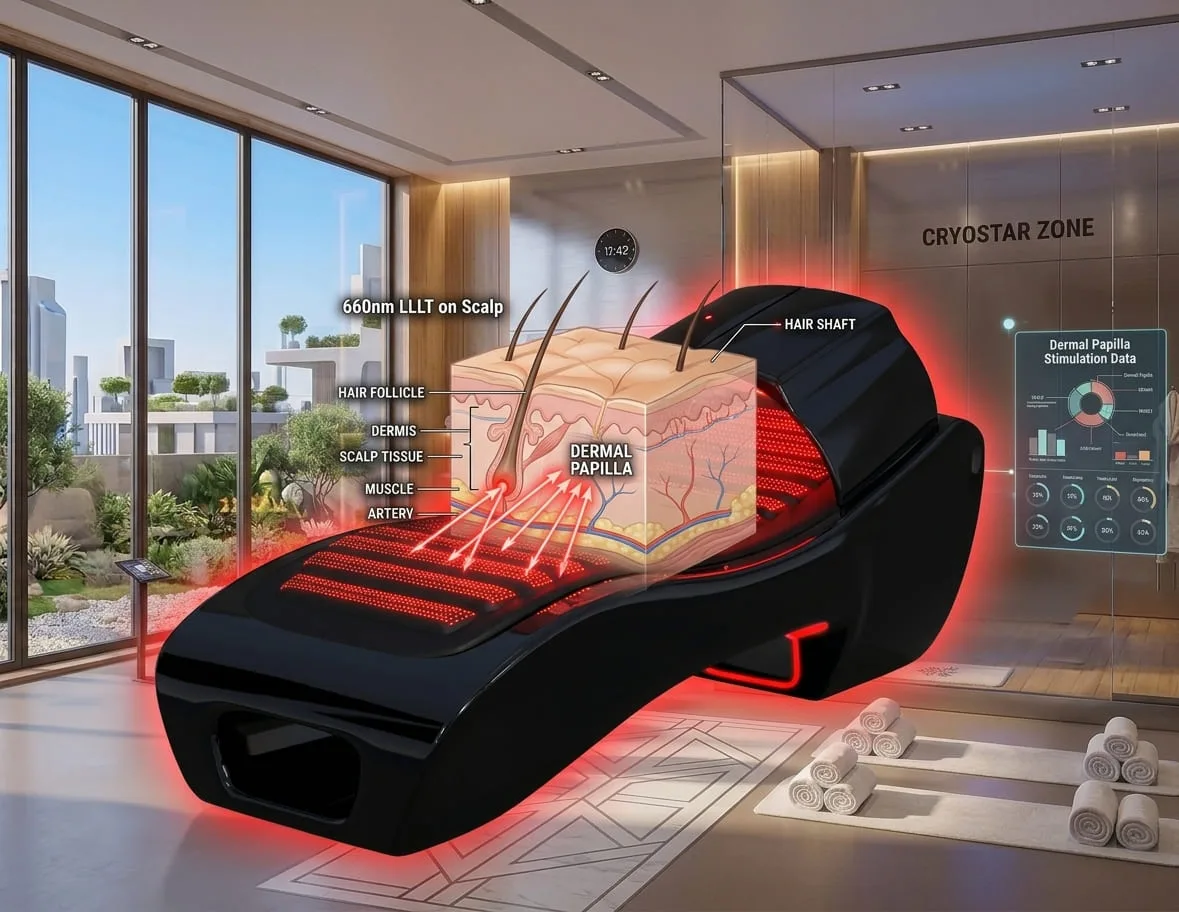
Да, за косопад по тип. Доказателствената база от рандомизирани контролирани проучвания (РКП) е достатъчно последователна, че рецензираните дерматологични прегледи и множество отраслови прегледи от 2025-2026 г. третират растежа на косата, причинен от терапия с червена светлина, като интервенция, подкрепена с доказателства, а не като експериментална тенденция. Измерените подобрения в плътността в сравнение с фалшиви устройства, докладвани в различните проучвания, са реални, статистически значими ефекти (като докладваните диапазони на усилване варират в зависимост от устройството, дължината на вълната, дозата и придържането към сесията).
Историческият произход на това приложение е случайното откритие на Ендре Местер през 1967 г., когато той наблюдава, че мишки, изложени на ниско ниво на лазерно лъчение, растат с коса по-бързо от контролната група. Това случайно откритие дава началото на десетилетия изследвания върху фотобиомодулацията, а регенерацията на косата остава сред най-стабилните клинични приложения. Последните консенсусни прегледи, синтезирани в множество рандомизирани контролирани проучвания, потвърждават, че косопадът по модел (мъжки AGA, женски AGA) реагира измеримо на терапия с червена светлина, прилагана последователно в продължение на 16-26 седмици. Сравнете тази основана на доказателства рамка с по-широкото ръководство „Ползи от терапията с червена светлина, подкрепени от изследвания, а не от реклама“, обхващащо множество приложения извън косата.
Механизмът: Как червената светлина стимулира фоликулите
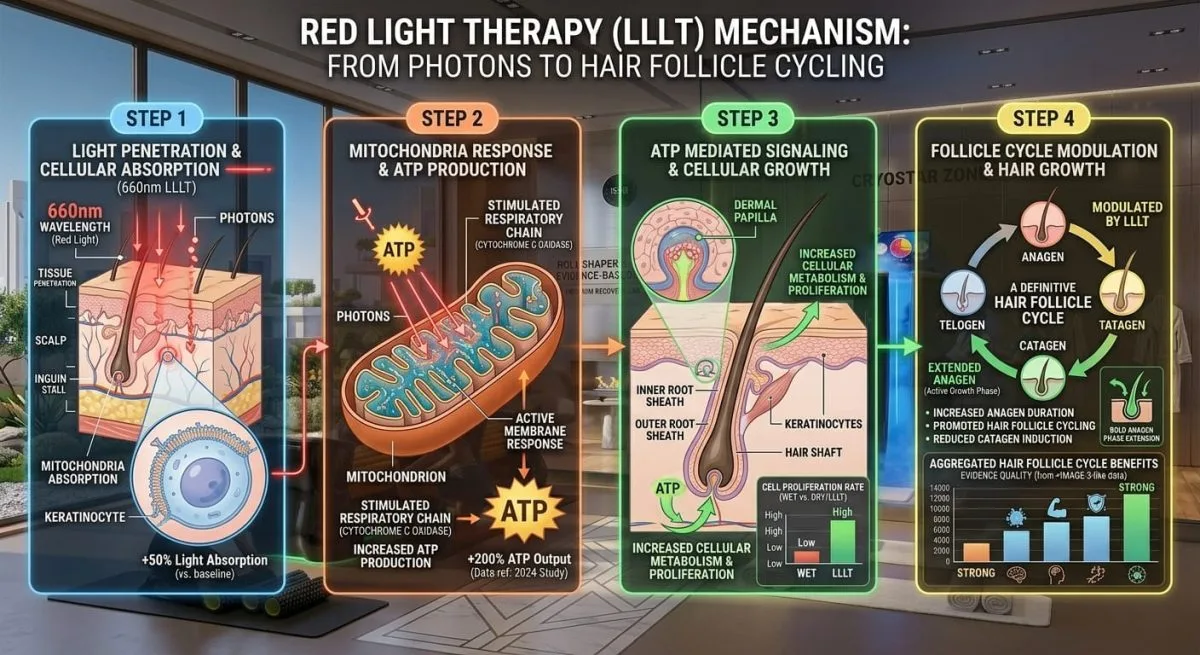
Механизмът е добре характеризиран. Червената светлина в диапазона 630-670 nm (основната терапевтична лента за космените фоликули) прониква в скалпа на дълбочина от няколко милиметра, достигайки до дермалните папилни клетки в основата на космения фоликул. Митохондриите в тези клетки съдържат цитохром с оксидаза, ензим, който абсорбира червена светлина в този диапазон на дължината на вълната. Когато ензимът абсорбира светлината, той ускорява веригата на електронен транспорт, произвеждайки повече АТФ (клетъчната енергийна валута) от изходното ниво.
Повишената наличност на АТФ кара клетките на дермалните папили да се размножават по-бързо. Два последващи ефекта превръщат това клетъчно енергийно увеличение във видим растеж на косата. Първо, излагането на светлина освобождава азотен оксид (NO) от цитохром с оксидазата; азотният оксид е сигнална молекула, която подобрява локалния кръвоток към фоликула. Второ, повишената клетъчна енергия активира компонентите на Wnt сигналния път, по-специално WNT3 и WNT10B, според проучването RNA Seq на човешкия скалп от 2021 г. Wnt сигнализацията връща спящите (телогенни) фоликули обратно в активната (анагенна) фаза на растеж. Крайният резултат: повече фоликули, от които едновременно расте коса, което води до по-дебела терминална коса, а не миниатюризирана велусна коса, характерна за косопада по модел.
За читатели, желаещи да се задълбочат в науката за дължините на вълните и нейните приложения, Панел за терапия с червена светлина: Как дължините на вълните 660nm + 850nm лекуват тъканите обхваща механизма с по-висока резолюция, включително взаимодействието между видимия червен лъч (630-670 nm, първична цел на космения фоликул) и близкия инфрачервен лъч (830-850 nm, по-дълбоко проникване в тъканите за мускулни и ставни приложения, а не специфично насочване към космения фоликул). За паралелно приложение на същия диапазон с дължина на вълната 630-670 nm със силни доказателства вижте „Терапия с червена светлина за облекчаване на болката“, който споделя същия цитохром-с-оксидазен механизъм, прилаган към мускулно-скелетни цели.
Какво показват клиничните доказателства
Данните от рандомизирани контролирани проучвания (РКП) от множество 16-26-седмични проучвания показват статистически значими подобрения в плътността в сравнение с плацебо устройства. Таблицата по-долу обобщава качеството на доказателствата в представителни типове източници и проучвания, като диапазоните на увеличение на плътността умишлено са формулирани като илюстрация на съобщеното, а не като универсални ефекти от лечението.
| Вид/Източник на изследването | Дължина на вълната | Увеличение на плътността спрямо плацебо (докладван диапазон) | Продължителност | Население |
|---|---|---|---|---|
| Резюмета на рандомизирани контролирани проучвания (рецензирани прегледи 2025-2026 г.) | 630-670 nm | Значително подобрение на плътността (докладваните диапазони варират в зависимост от устройството и придържането) | 16-26 седмици | Мъже + жени с AGA |
| Одобрени от FDA проучвания на LLLT (няколко устройства) | Диапазон 630-670nm (първична терапевтична лента) | Статистически значими подобрения в броя на терминалните косми | 16-26 седмици | Косопад по мъжки + женски модел |
| LLLT протоколи, регистрирани в ClinicalTrials.gov за AGA | типично 630-680nm | Статистически значими спрямо плацебо според регистрираните показатели за резултата (проверете текущите регистрирани протоколи директно на clinicaltrials.gov) | Типично 16-24 седмици | Участници в AGA |
| РНК секвениране на човешки скалпни фоликули (2021) | 650 нм | Индукция на анаген, потвърдена на ниво генна експресия | Ин витро проучване | Култивирани човешки фоликули |
| Комбинирано проучване (RLT + миноксидил, 6 месеца) | 660nm в диапазона 630-670nm + миноксидил | Устойчив растеж след плато, третирано само с миноксидил | 6 месеца | Участници в AGA |
| Консенсусни прегледи от 2025 г. (множествени) | 630-670nm първичен | Типичен косопад, потвърден с най-високото ниво на доказателства, достъпно за приложения на фотобиомодулация | Синтез от множество изследвания | AGA кохорти в различните проучвания |
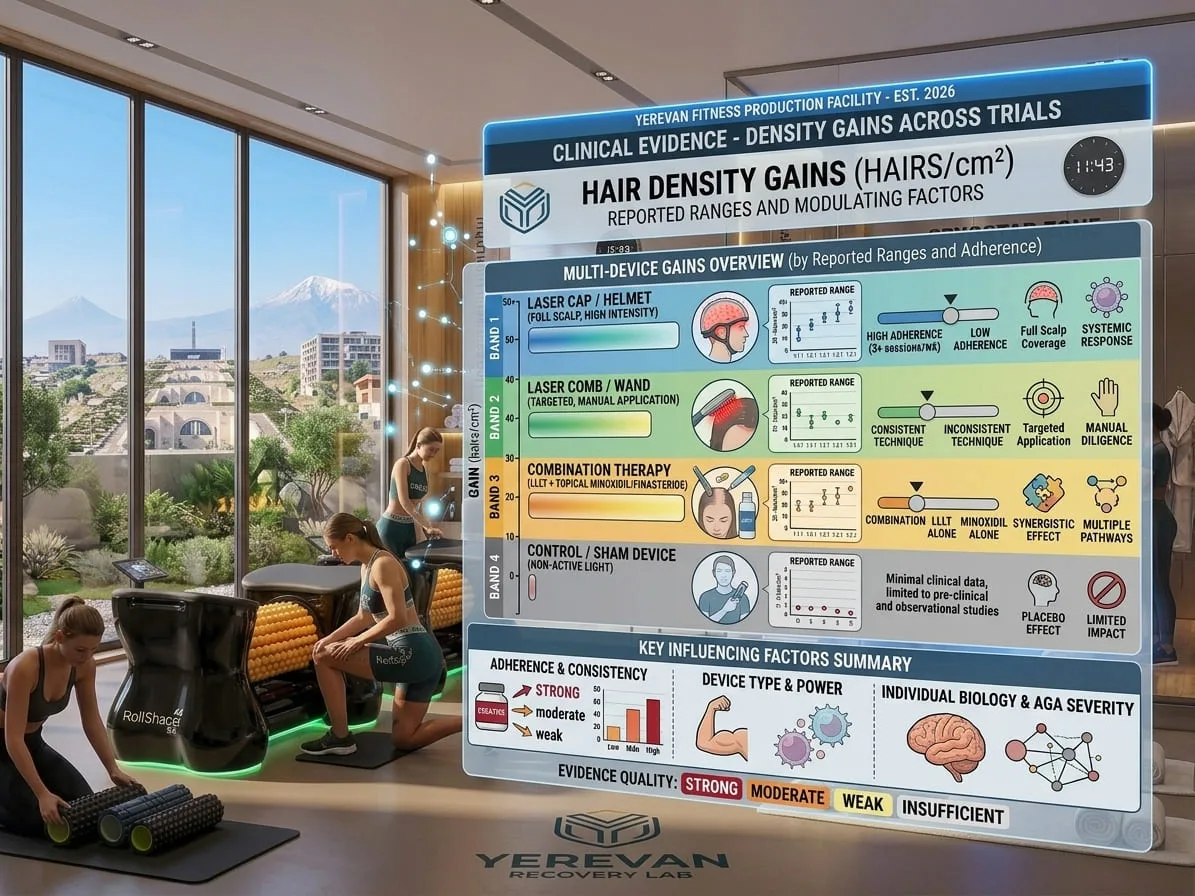
Най-ранните статистически значими подобрения в някои проучвания се появяват около два месеца, но тези ранни промени обикновено идват от групи с комбинирана терапия (например червена светлина плюс миноксидил). Само червената светлина обикновено изисква три до шест месеца постоянна употреба преди видими подобрения в плътността. Последователността е документирана променлива в клиничните данни – протоколите с пропуснати сесии или частично придържане показват по-слаби или никакви ефекти. FDA е одобрила няколко LLLT устройства специално за андрогенетична алопеция въз основа на тази доказателствена база; разрешението се отнася за специфични устройства, а не за терапията с червена светлина като обща категория. Диапазоните на увеличаване на плътността, често цитирани в индустриалната литература (често съобщавани около 15-35% в проучвания за LLLT устройства при AGA популации), трябва да се третират като илюстративни за разпределението на размера на ефекта, а не като гарантирани индивидуални резултати; резултатите варират значително в зависимост от причината за косопад, спецификациите на устройството, придържането към сесията, дължината на вълната, дозата и продължителността.
За кого работи терапията с червена светлина (и за кого не)
Честното сегментиране на аудиторията е важно, тъй като терапията с червена светлина не е универсално ефективна. Профилите на кандидатите по-долу отразяват най-силните и най-слабите модели на реакция, документирани в клинични изпитвания. Хората с косопад трябва да се консултират с квалифициран дерматолог за професионална диагноза, преди да изберат подход за лечение, тъй като основната причина съществено влияе върху това кои интервенции са подходящи.
Най-добри кандидати: ранна до умерена андрогенетична алопеция при мъже и жени. Изтъняване на косата, при което фоликулите са миниатюризирани, но все още не са напълно загубени. Все още е налице активен цикъл на растеж. Пациенти, готови да се ангажират с 16-26 седмици постоянна употреба, преди да оценят резултатите. Предвидими отговорили въз основа на демографските данни на проучването: възрастни 20-60 години с генетично обусловен тип косопад, загуба на плътност на косата в диапазона 15-40% от изходното ниво (скала на Norwood II-IV при мъжете, скала на Ludwig I-II при жените).
По-малко предвидими или лоши кандидати: напреднал тип косопад (Norwood V+ при мъжете), при който миниатюризацията е прогресирала до загуба на фоликули; белези от алопеция (цикатрична), при която фоликулът е унищожен, а не е в латентно състояние; косопад, причинен от медицински състояния (щитовидна жлеза, железен дефицит, странични ефекти от лекарства), а не от генетичен модел; алопеция ареата (автоимунна), при която механизмът е различен. Терапията с червена светлина НЯМА да възстанови напълно оплешивял скалп, защото стимулира съществуващите фоликули, вместо да създава нови. Случаите на напреднал тип косопад обикновено са по-добри кандидати за медицинска интервенция (финастерид, дутастерид) или хирургическа интервенция (трансплантация на коса) като първично лечение. Червената светлина може да допълни тези подходи, но не и да ги замести при напреднали случаи. Консултирайте се с квалифициран дерматолог или медицински специалист, преди да започнете какъвто и да е лечебен протокол.
Каква дължина на вълната и доза са най-добри
Диапазонът на червената светлина 630-670 nm е основният терапевтичен диапазон за стимулиране на скалпа и фоликулите. Тази дължина на вълната се абсорбира ефективно в цитохром с оксидазата в митохондриите, като същевременно прониква достатъчно дълбоко, за да достигне дермалната папила в основата на фоликула. Дължините на вълните, по-къси от 600 nm (жълто, зелено), не проникват достатъчно дълбоко. Дължините на вълните в близкия инфрачервен диапазон (800-900 nm) проникват по-дълбоко, но се абсорбират по-малко ефективно от специфичния митохондриален ензим, най-важен за растежа на косата; близкият инфрачервен диапазон е по-подходящ за мускулно-скелетни приложения и приложения в по-дълбоките тъкани, отколкото за таргетиране на космените фоликули.
Облъчването (интензитетът на светлината, измерен в mW/cm2) е от значение и варира значително между категориите устройства. Професионалните устройства в клиниките обикновено доставят 30-100+ mW/cm2 на повърхността на скалпа, което позволява ефективни дози в рамките на 10-20 минути. Лазерните капачки за домашна употреба обикновено доставят 5-15 mW/cm2, което изисква по-дълги сесии (20-30 минути) за постигане на еквивалентна доза. Червените светлинни панели за домашна употреба доставят силно променливо облъчване в зависимост от позиционирането и разстоянието – по-близо означава по-интензивно, но по-малко покритие на скалпа. Честотата на сесиите в успешни клинични изпитвания е провеждана през ден или няколко пъти седмично, сесиите са с продължителност 15-30 минути. Постоянството е по-важно от интензивността: пропуснатите сесии отслабват значително резултатите според клиничните данни.
Оборудване: Лазерни капачки, панели и устройства за клинична употреба
Три категории оборудване доминират на пазара на терапия с червена светлина за растеж на косата. Всяка от тях има различни компромиси по отношение на облъчване, покритие, удобство и цена.
Лазерни шапки и каски
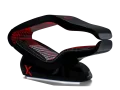
Лазерните капачки са най-удобната категория за домашна употреба, проектирани специално за покриване на скалпа. Съществуват множество опции, одобрени от FDA (iRestore, Capillus, HairMax, Theradome са ярки примери). Форматът на капачката осигурява постоянно покритие на скалпа, без потребителят да е необходимо да държи или позиционира устройство. Облъчването обикновено е по-ниско от това при професионалното оборудване (5-15 mW/cm2), което се компенсира от по-дълго време на сесията (20-30 минути) и удобството за използване без ръце по време на други дейности. Цена: $300-$3000 в зависимост от броя на диодите и зоната на покритие. Най-подходящо за: домашни потребители с ранен до умерен AGA, които дават приоритет на удобството и са ангажирани с 16-26 седмици постоянна употреба. Проверете текущото разрешение от FDA за конкретното устройство директно с производителя преди покупка; разрешението е специфично за устройството, а не за цялата категория.
Панели с червена светлина
Червените светлинни панели служат за множество приложения отвъд косата (кожа, възстановяване на мускулите, обща фотобиомодулация) и често произвеждат по-висока облъченост от лазерните капачки на подобна или по-ниска цена. Компромисът е позиционирането: потребителите трябва да държат панела на постоянно разстояние от скалпа, а покритието варира в зависимост от размера и ориентацията на панела. Най-подходящо: потребители, които вече използват терапия с червена светлина за други приложения (кожа, възстановяване), които искат да добавят коса като вторичен случай на употреба. За Най-добрата домашна терапия с червена светлина през 2026 г.: Защо професионалистите избират професионално оборудване Обхващайки подробно категорията панели за домашна употреба, цитираната статия сравнява спецификациите на водещите опции.
Професионални устройства за клинична употреба
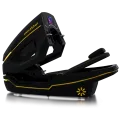
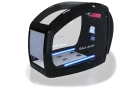
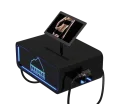
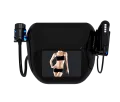
Устройствата за клинично приложение осигуряват най-високата облъченост (30-100+ mW/cm2 на скалпа), което позволява по-кратки сесии (10-20 минути) с предвидимо дозиране. Vacuactivus произвежда търговски панели и легла за терапия с червена светлина, използвани в дерматологични клиники, уелнес центрове и специализирани практики за косопад. Оборудването поддържа както протоколи, фокусирани върху косата (специално лечение на скалпа), така и мултимодални услуги, където косата е едно от няколкото приложения на терапията с червена светлина. Най-подходящо: клиники, предлагащи услуги за коса с червена светлина като част от по-широка практика за възстановяване, дерматология или уелнес. Разгледайте панели за терапия с червена светлина за опции от търговски клас със спецификации за внедряване в клиники. За клиники, комбиниращи протоколи за червена светлина и студена терапия в една линия за възстановяване, вижте „Стак от терапия с червена светлина и криотерапия“, който обхваща икономическата ефективност на комбинираното възстановяване.
Терапия с червена светлина срещу миноксидил и други лечения
Терапията с червена светлина е най-добре да се разглежда като допълнение към медицинските лечения, а не като самостоятелен заместител в повечето случаи на косопад. Миноксидил (локално приложение, без рецепта) удължава анагенната фаза на растеж на фоликуларния цикъл и е най-изследваното лечение за косопад без рецепта. Финастерид и дутастерид (системно приложение, с рецепта) намаляват миниатюризацията на фоликулите, предизвикана от DHT. Терапията с червена светлина действа чрез изцяло различен механизъм (производство на митохондриална енергия и активиране на Wnt сигнализацията), което прави комбинираните протоколи механистично синергични.
Шестмесечно комбинирано проучване установи, че миноксидилът самостоятелно започва да се стабилизира около шест месеца, докато групата с комбинирана терапия (миноксидил плюс терапия с червена светлина) поддържа темпа на растеж по-дълго. Комбинацията е добре поносима (и двете са несистемни по механизъм) и дерматолозите все по-често препоръчват комбинирани протоколи за случаи на косопад по модел, където пациентът желае цялостен подход. Червената светлина самостоятелно може да замести миноксидила в случаи, когато потребителите не могат да понасят локални лекарства (дразненето на скалпа е често срещан страничен ефект от миноксидила), но доказателствената база е по-силна за комбинираните протоколи, отколкото за червената светлина самостоятелно. Консултирайте се с квалифициран дерматолог или медицински специалист, преди да комбинирате лечения, особено ако приемате лекарства, отпускани с рецепта.
Често задавани въпроси
В1. Дали терапията с червена светлина води до растеж на косата?
Да, за косопад по модел. Многобройни рандомизирани контролирани проучвания показват, че нискоинтензивната светлинна терапия (LLLT) води до значителни подобрения в гъстотата на косата в сравнение с фалшивите устройства, като докладваните диапазони на увеличаване на плътността обикновено се цитират около 15-35% в различните проучвания (индивидуалните резултати варират значително в зависимост от устройството, дължината на вълната, дозата и придържането към сеанса). Ефектът е постоянен както при мъже, така и при жени с андрогенетична алопеция. Доказателствата са по-силни, отколкото при повечето нелекарствени лечения за косопад. Действа най-добре при ранен до умерен косопад и няма да възстанови напълно оплешивял скалп. Консултирайте се с квалифициран дерматолог за професионална диагноза, преди да изберете подход за лечение.
В2. Колко време отнема терапията с червена светлина, за да расте косата?
Повечето клинични изпитвания продължават 16-26 седмици, а видимото подобрение само при червена светлина обикновено отнема от три до шест месеца постоянна употреба. Най-ранните статистически значими промени в някои изпитвания се появяват около два месеца, но обикновено само в групите с комбинирана терапия. Косата расте бавно по природа, така че търпението и постоянството са от съществено значение; пропускането на седмици не е отразено в клиничните данни.
В3. Каква дължина на вълната на червената светлина е най-подходяща за растежа на косата?
Червената светлина в диапазона 630-670 nm е основната терапевтична лента за растежа на косата, защото тя прониква в скалпа достатъчно дълбоко, за да достигне дермалната папила в основата на фоликула. Тази дължина на вълната се абсорбира от митохондриите (цитохром с оксидаза), което води до повишено производство на АТФ, което кара фоликулните клетки да пролиферират. Повечето одобрени от FDA LLLT устройства за коса работят в тази червена лента. Близките инфрачервени дължини на вълните (800-900 nm) проникват по-дълбоко, но се абсорбират по-малко ефективно от специфичния ензим, най-подходящ за стимулиране на космените фоликули, така че са по-подходящи за мускулно-скелетни приложения, отколкото за специфично третиране на косата.
Въпрос 4. Одобрена ли е от FDA терапията с червена светлина за косопад?
Да, FDA е одобрила няколко устройства за нискоинтензивна лазерна терапия (LLLT), специално предназначени за лечение на андрогенетична алопеция (косопад по мъжки и женски тип). Одобрението от FDA означава, че устройството е демонстрирало разумна безопасност и ефективност за тази употреба. Обърнете внимание, че разрешението се отнася за специфични устройства, а не за терапия с червена светлина като обща категория, и че „одобрено от FDA“ е различно от „одобрено от FDA“. Проверете текущото разрешение от FDA за конкретното устройство директно с производителя преди покупка.
В5. Действа ли терапията с червена светлина при отслабване на линията на косата?
Може да помогне, ако отдръпването на линията на косата е причинено от андрогенетична алопеция и фоликулите са все още активни (миниатюризирани, но не изчезнали). Терапията с червена светлина стимулира спящите фоликули обратно във фазата на растеж, но не може да създаде нови фоликули там, където са били напълно загубени. Резултатите са най-предсказуеми при ранна до умерена рецесия; напредналите или белези реагират слабо. Консултирайте се с дерматолог за индивидуално ръководство.
Въпрос 6. Колко често трябва да използвам терапия с червена светлина за коса?
Успешните клинични изпитвания използваха устройства през ден или няколко пъти седмично, като сесиите продължаваха около 15-30 минути. Последователността е ключовата променлива; клиничните резултати са резултат от редовна употреба в продължение на месеци, а не от спорадични сесии. Не е доказано, че по-честата употреба извън изследваните протоколи ускорява резултатите и може да е ненужна.
Въпрос 7. По-добра ли е терапията с червена светлина от миноксидила за коса?
Те действат различно и често се съчетават най-добре. Миноксидилът е локално лекарство, което удължава фазата на растеж; терапията с червена светлина е нелекарствено лечение, което стимулира производството на енергия на фоликулите. Шестмесечно проучване установи, че растежът, лекуван само с миноксидил, започва да се стабилизира около шест месеца, докато групата с комбинирано лечение поддържа темпа на растеж по-дълго. Червената светлина е най-добре да се разглежда като допълнение, а не като гарантиран самостоятелен заместител.
В8. Може ли терапията с червена светлина да възстанови плешивото петно?
Обикновено не, ако зоната е напълно оплешивяла и няма активни фоликули. Терапията с червена светлина стимулира съществуващи, спящи или миниатюризирани фоликули; тя не може да регенерира фоликули, които са напълно загубени. За области, където са останали някои фоликули (ранно изтъняване, а не пълно оплешивяване), тя може да подобри плътността. За напълно оплешивял скалп, други опции, като трансплантация, са по-подходящи.
Заключение
Терапията с червена светлина за растеж на косата е легитимна, доказателствено подкрепена интервенция за модел на косопад при правилните кандидати. Механизмът е добре характеризиран (светлината с дължина на вълната 630-670 nm достига до митохондриите на дермалните папили, повишава АТФ, активира Wnt сигнализацията, премества фоликулите от телоген към анаген). Доказателствената база от рандомизирани контролирани проучвания показва значителни подобрения в плътността в сравнение с плацебо устройства в рамките на 16-26 седмични проучвания, като докладваните диапазони на увеличаване на плътността обикновено се цитират около 15-35% за LLLT устройства при AGA популации (индивидуалните резултати варират в зависимост от устройството, дължината на вълната, дозата и придържането). Най-силните данни подкрепят ранна до умерена андрогенетична алопеция. Честните ограничения: тя няма да възстанови напълно плешив скалп, резултатите отнемат минимум три до шест месеца и постоянството е документирана променлива в резултатите от проучванията.
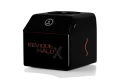
За домашни потребители с ранен до умерен AGA, одобрена от FDA лазерна шапка или качествен панел с червена светлина е разумна инвестиция, когато се комбинира с ангажимент от 16-26 седмици. За клиники, оценяващи терапията с червена светлина като предлагана услуга, професионалното оборудване осигурява по-висока облъчваемост и предвидимо дозиране в по-широка клиентска база. За „Терапия с червена светлина за лице: Наука против стареене и възстановяване на кожата“ съпътстваща статия разглежда терапията с червена светлина за кожни приложения със същата рамка, основана на доказателства. За мултимодални уелнес приложения, комбиниращи червена светлина с други методи за възстановяване, вижте Капсула за дълголетие Revique HaloX, който комбинира червена светлина с инфрачервена светлина и ароматерапия за търговски уелнес центрове. Винаги се консултирайте с квалифициран дерматолог или медицински специалист, преди да започнете каквото и да е лечение за косопад.


