










Θεραπεία με κόκκινο φως για την ανάπτυξη των μαλλιών: Μηχανισμός, στοιχεία, εξοπλισμός
Η θεραπεία με κόκκινο φως δίνει μαλλιά; Ναι, για την τριχόπτωση με μοτίβο. Πολλαπλές τυχαιοποιημένες ελεγχόμενες δοκιμές (RCTs) αναφέρουν σημαντικές βελτιώσεις στην πυκνότητα σε σχέση με τις εικονικές συσκευές για άνδρες και γυναίκες με ανδρογενετική αλωπεκία. Τα αναφερόμενα εύρη συνήθως συγκεντρώνονται γύρω από τα κέρδη πυκνότητας 15-35% σε όλες τις μελέτες, αν και τα μεμονωμένα αποτελέσματα ποικίλλουν σημαντικά ανάλογα με τις προδιαγραφές της συσκευής, το μήκος κύματος, τη δόση, την προσήλωση στη συνεδρία και την αιτία της τριχόπτωσης. Η βάση τεκμηρίωσης είναι ισχυρότερη από ό,τι για τις περισσότερες μη φαρμακευτικές θεραπείες τριχόπτωσης, αλλά η θεραπεία με κόκκινο φως για την ανάπτυξη των μαλλιών λειτουργεί μόνο για ορισμένους τύπους τριχόπτωσης και η συνέπεια σε διάστημα μηνών είναι μη διαπραγματεύσιμη. Αυτή είναι μια ανασκόπηση της ιατρικής συμβουλευτικής και μηχανικής ομάδας Vacuactivu του μηχανισμού, των στοιχείων και του εξοπλισμού από τον Ιούνιο του 2026.
Οι αξιολογήσεις από ομοτίμους κατά την περίοδο 2025-2026 που καλύπτουν τις δερματολογικές εφαρμογές της θεραπείας με κόκκινο φως αναφέρουν την τριχοφυΐα ως έναν από τους κύριους τομείς εφαρμογής με την ισχυρότερη βάση τεκμηρίωσης. Πρόσφατες αξιολογήσεις συναίνεσης έχουν επιβεβαιώσει την τριχόπτωση στο υψηλότερο επίπεδο τεκμηρίωσης που είναι διαθέσιμο για εφαρμογές φωτοβιοδιαμόρφωσης. Το εύρος μήκους κύματος 630-670nm (η κύρια θεραπευτική ζώνη για τη διέγερση των τριχοθυλακίων) διεισδύει στο τριχωτό της κεφαλής αρκετά βαθιά ώστε να φτάσει στις δερματικές θηλές στη βάση του θύλακα, όπου τα μιτοχόνδρια απορροφούν το φως και ενισχύουν την παραγωγή κυτταρικής ενέργειας - ο μηχανισμός εξηγείται λεπτομερώς παρακάτω. Πολλαπλές συσκευές θεραπείας με λέιζερ χαμηλού επιπέδου (LLLT) έχουν εγκριθεί από τον FDA ειδικά για την ανδρογενετική αλωπεκία (με έγκριση από τον FDA, όχι με έγκριση από τον FDA· αυτές είναι ξεχωριστές κανονιστικές καταστάσεις).
Αυτός ο οδηγός απευθύνεται σε δύο είδη κοινού: άτομα που ερευνούν τη θεραπεία με κόκκινο φως για την ανάπτυξη των μαλλιών ως προσωπική θεραπευτική επιλογή και χειριστές κλινικών που αξιολογούν εξοπλισμό με κόκκινο φως για επαγγελματικές υπηρεσίες. Ο τόνος είναι η προτεραιότητα στα στοιχεία: τι λειτουργεί, τι όχι και τι να περιμένετε σε εβδομάδες και μήνες. Εάν ο στόχος σας είναι η γρήγορη διαβεβαίωση ότι μια συσκευή $300 θα αναγεννήσει ένα εντελώς φαλακρό τριχωτό της κεφαλής σε έξι εβδομάδες, αυτός ο οδηγός θα σας απογοητεύσει. Εάν θέλετε ειλικρινή στοιχεία και ρεαλιστικές προσδοκίες, συνεχίστε να διαβάζετε. Για ένα ευρύτερο πλαίσιο βιο-χακάρισμα σχετικά με το πού εντάσσεται η θεραπεία με κόκκινο φως που εστιάζει στα μαλλιά στην κατηγορία βελτιστοποίησης ευεξίας, βλ. Τι είναι το βιοχάκερ; Πλήρης οδηγός για τη βελτιστοποίηση απόδοσης το οποίο καλύπτει το πλαίσιο της στοίβας ευεξίας σε επίπεδο πυλώνα.
Η θεραπεία με κόκκινο φως όντως βγάζει τρίχες;
Ναι, για την τριχόπτωση με μοτίβο. Η βάση δεδομένων των τυχαιοποιημένων ελεγχόμενων δοκιμών (RCT) είναι αρκετά συνεπής ώστε οι αξιολογήσεις δερματολογίας από ομοτίμους και οι πολλαπλές αξιολογήσεις του κλάδου από το 2025-2026 να αντιμετωπίζουν την τριχοφυΐα με θεραπεία με κόκκινο φως ως παρέμβαση που υποστηρίζεται από τεκμηριωμένα στοιχεία και όχι ως πειραματική τάση. Οι μετρούμενες βελτιώσεις στην πυκνότητα σε σχέση με τις εικονικές συσκευές που αναφέρθηκαν σε όλες τις μελέτες είναι πραγματικές, στατιστικά σημαντικές επιδράσεις (με τα αναφερόμενα εύρη κέρδους να ποικίλλουν ανάλογα με τη συσκευή, το μήκος κύματος, τη δόση και την προσήλωση στη συνεδρία).
Η ιστορική προέλευση αυτής της εφαρμογής είναι η τυχαία ανακάλυψη του Endre Mester το 1967, όταν παρατήρησε ότι τα ποντίκια που εκτέθηκαν σε ακτινοβολία λέιζερ χαμηλού επιπέδου ανέπτυσσαν τρίχες γρηγορότερα από τα ποντίκια ελέγχου. Αυτό το τυχαίο εύρημα ξεκίνησε δεκαετίες έρευνας για τη φωτοβιοδιαμόρφωση και η αναγέννηση των μαλλιών παραμένει μία από τις πιο ισχυρές κλινικές εφαρμογές. Πρόσφατες ανασκοπήσεις συναίνεσης που συντέθηκαν σε πολλαπλές τυχαιοποιημένες ελεγχόμενες δοκιμές (RCT) επιβεβαιώνουν ότι η τριχόπτωση τύπου (ανδρική AGA, γυναικεία AGA) ανταποκρίνεται μετρήσιμα στη θεραπεία με κόκκινο φως που εφαρμόζεται σταθερά για 16-26 εβδομάδες. Διασταυρώστε αυτό το πλαίσιο που βασίζεται σε τεκμήρια με τον ευρύτερο οδηγό "Οφέλη της θεραπείας με κόκκινο φως που υποστηρίζονται από μελέτες, όχι διαφημιστικές εκθέσεις" που καλύπτει πολλαπλές εφαρμογές πέρα από τα μαλλιά.
Ο Μηχανισμός: Πώς το Κόκκινο Φως Διεγείρει τα Θυλάκια
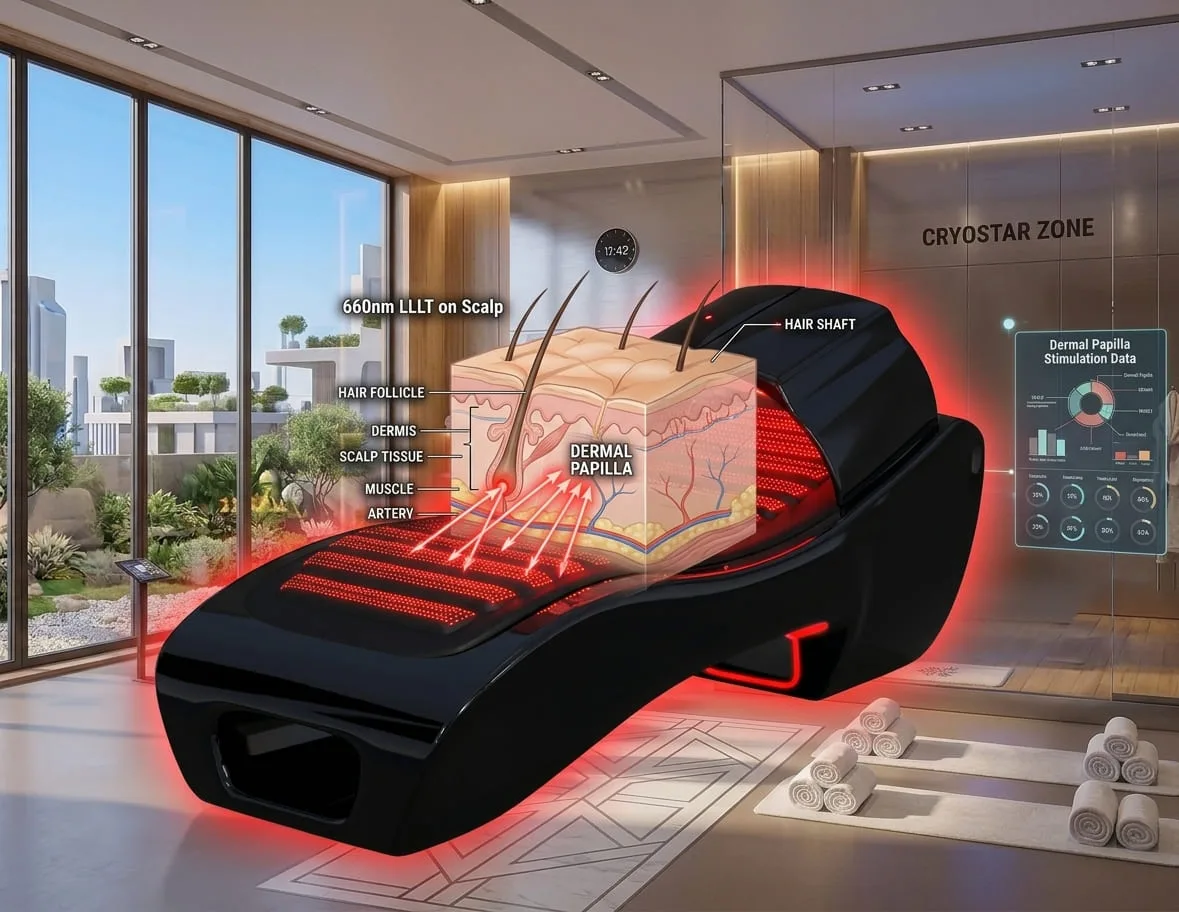
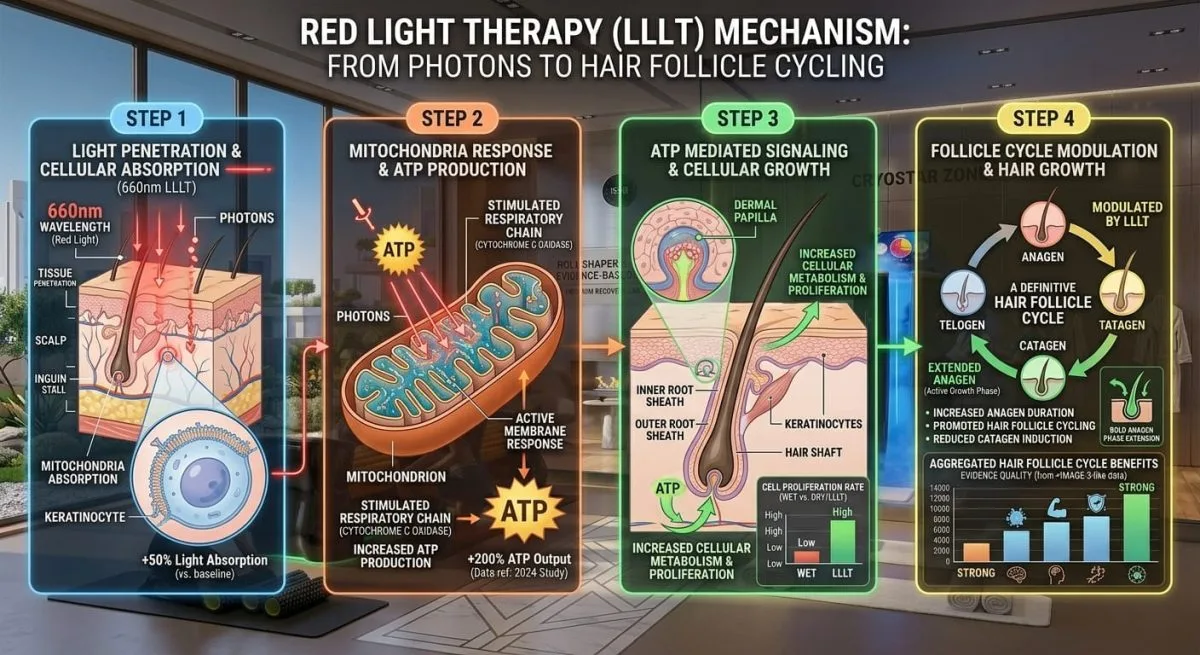
Ο μηχανισμός είναι καλά χαρακτηρισμένος. Το κόκκινο φως στην περιοχή των 630-670 nm (η κύρια θεραπευτική ζώνη για τους θύλακες της τρίχας) διεισδύει στο τριχωτό της κεφαλής σε βάθος αρκετών χιλιοστών, φτάνοντας στα δερματικά θηλώδη κύτταρα στη βάση του θύλακα της τρίχας. Τα μιτοχόνδρια μέσα σε αυτά τα κύτταρα περιέχουν οξειδάση κυτοχρώματος c, ένα ένζυμο που απορροφά το κόκκινο φως σε αυτό το εύρος μήκους κύματος. Όταν το ένζυμο απορροφά το φως, επιταχύνει την αλυσίδα μεταφοράς ηλεκτρονίων, παράγοντας περισσότερο ATP (το κυτταρικό ενεργειακό νόμισμα) από την αρχική τιμή.
Η αυξημένη διαθεσιμότητα ATP οδηγεί τα κύτταρα των δερματικών θηλών να πολλαπλασιάζονται ταχύτερα. Δύο κατάντη επιδράσεις μετατρέπουν αυτήν την κυτταρική ώθηση ενέργειας σε ορατή ανάπτυξη τριχών. Πρώτον, η έκθεση στο φως απελευθερώνει μονοξείδιο του αζώτου (NO) από την οξειδάση του κυτοχρώματος c. Το μονοξείδιο του αζώτου είναι ένα σηματοδοτικό μόριο που βελτιώνει την τοπική ροή αίματος προς τον θύλακα. Δεύτερον, η αυξημένη κυτταρική ενέργεια ενεργοποιεί τα συστατικά της σηματοδοτικής οδού Wnt, συγκεκριμένα τα WNT3 και WNT10B σύμφωνα με τη μελέτη RNA Seq των θυλάκων του τριχωτού της κεφαλής του ανθρώπου του 2021. Η σηματοδότηση Wnt οδηγεί τους αδρανείς (τελογενείς) θύλακες πίσω στην ενεργή (αναγενή) φάση ανάπτυξης. Το τελικό αποτέλεσμα: περισσότεροι θύλακες αναπτύσσουν τρίχες ταυτόχρονα, παράγοντας πιο παχύρρευστες τελικές τρίχες αντί για τις μικροσκοπικές τρίχες που χαρακτηρίζουν την τριχόπτωση.
Για τους αναγνώστες που επιθυμούν μια βαθύτερη εμβάθυνση στην επιστήμη του μήκους κύματος σε όλες τις εφαρμογές, Πάνελ θεραπείας με κόκκινο φως: Πώς τα μήκη κύματος 660nm + 850nm θεραπεύουν τους ιστούς Καλύπτει τον μηχανισμό σε υψηλότερη ανάλυση, συμπεριλαμβανομένης της αλληλεπίδρασης μεταξύ του ορατού κόκκινου (630-670nm, πρωτεύων στόχος θύλακα της τρίχας) και του εγγύς υπέρυθρου (830-850nm, βαθύτερη διείσδυση στους ιστούς για εφαρμογές στους μύες και τις αρθρώσεις αντί για στόχευση ειδική για θύλακες τρίχας). Για παράλληλη εφαρμογή της ίδιας ζώνης μήκους κύματος 630-670nm με ισχυρές ενδείξεις, βλ. Θεραπεία με κόκκινο φως για ανακούφιση από τον πόνο, η οποία μοιράζεται τον ίδιο μηχανισμό κυτοχρώματος-c-οξειδάσης που εφαρμόζεται σε μυοσκελετικούς στόχους.
Τι δείχνουν τα κλινικά δεδομένα
Τα δεδομένα τυχαιοποιημένων ελεγχόμενων δοκιμών (RCT) σε πολλαπλές δοκιμές 16-26 εβδομάδων δείχνουν στατιστικά σημαντικές βελτιώσεις στην πυκνότητα σε σύγκριση με τις εικονικές συσκευές (εικονικό φάρμακο). Ο παρακάτω πίνακας συνοψίζει την ποιότητα των στοιχείων σε αντιπροσωπευτικούς τύπους πηγών και μελέτες, με τα εύρη αύξησης πυκνότητας να διατυπώνονται σκόπιμα ως ενδεικτικά των όσων έχουν αναφερθεί και όχι ως καθολικά αποτελέσματα της θεραπείας.
| Τύπος μελέτης / Πηγή | Μήκος κύματος | Αύξηση πυκνότητας έναντι ψευδούς (αναφερόμενο εύρος) | Διάρκεια | Πληθυσμός |
|---|---|---|---|---|
| Περιλήψεις τυχαιοποιημένων ελεγχόμενων δοκιμών (κριτικές από ομότιμους 2025-2026) | 630-670nm | Σημαντική βελτίωση της πυκνότητας (τα αναφερόμενα εύρη ποικίλλουν ανάλογα με τη συσκευή και την τήρηση) | 16-26 εβδομάδες | Άνδρες + γυναίκες με AGA |
| Δοκιμές LLLT με έγκριση FDA (πολλαπλές συσκευές) | Εύρος 630-670nm (κύρια θεραπευτική ζώνη) | Στατιστικά σημαντικές βελτιώσεις στον αριθμό των τελικών τριχών | 16-26 εβδομάδες | Τριχόπτωση σε ανδρικό + γυναικείο πρότυπο |
| Πρωτόκολλα LLLT καταχωρημένα στο ClinicalTrials.gov για την AGA | 630-680nm τυπικό | Στατιστικά σημαντικά έναντι εικονικών μετρήσεων ανά καταγεγραμμένο αποτέλεσμα (επαληθεύστε τα τρέχοντα καταχωρημένα πρωτόκολλα απευθείας στο clinicaltrials.gov) | 16-24 εβδομάδες τυπικό | Συμμετέχοντες της AGA |
| Ακολουθία RNA θυλακίου ανθρώπινου τριχωτού της κεφαλής (2021) | 650nm | Επαγωγή αναγένεσης επιβεβαιωμένη σε επίπεδο γονιδιακής έκφρασης | Μελέτη in vitro | Καλλιεργημένα ανθρώπινα ωοθυλάκια |
| Συνδυαστική δοκιμή (RLT + μινοξιδίλη, 6 μήνες) | 660nm εντός εύρους 630-670nm + μινοξιδίλη | Παρατεταμένη ανάπτυξη μετά το πλατό μόνο με μινοξιδίλη | 6 μήνες | Συμμετέχοντες της AGA |
| Ανασκοπήσεις συναίνεσης για το 2025 (πολλαπλές) | 630-670nm πρωτεύον | Επιβεβαιωμένη η πρότυπη τριχόπτωση στο υψηλότερο διαθέσιμο επίπεδο στοιχείων για εφαρμογές φωτοβιοδιαμόρφωσης | Σύνθεση πολλαπλών μελετών | Ομάδες AGA σε όλες τις δοκιμές |
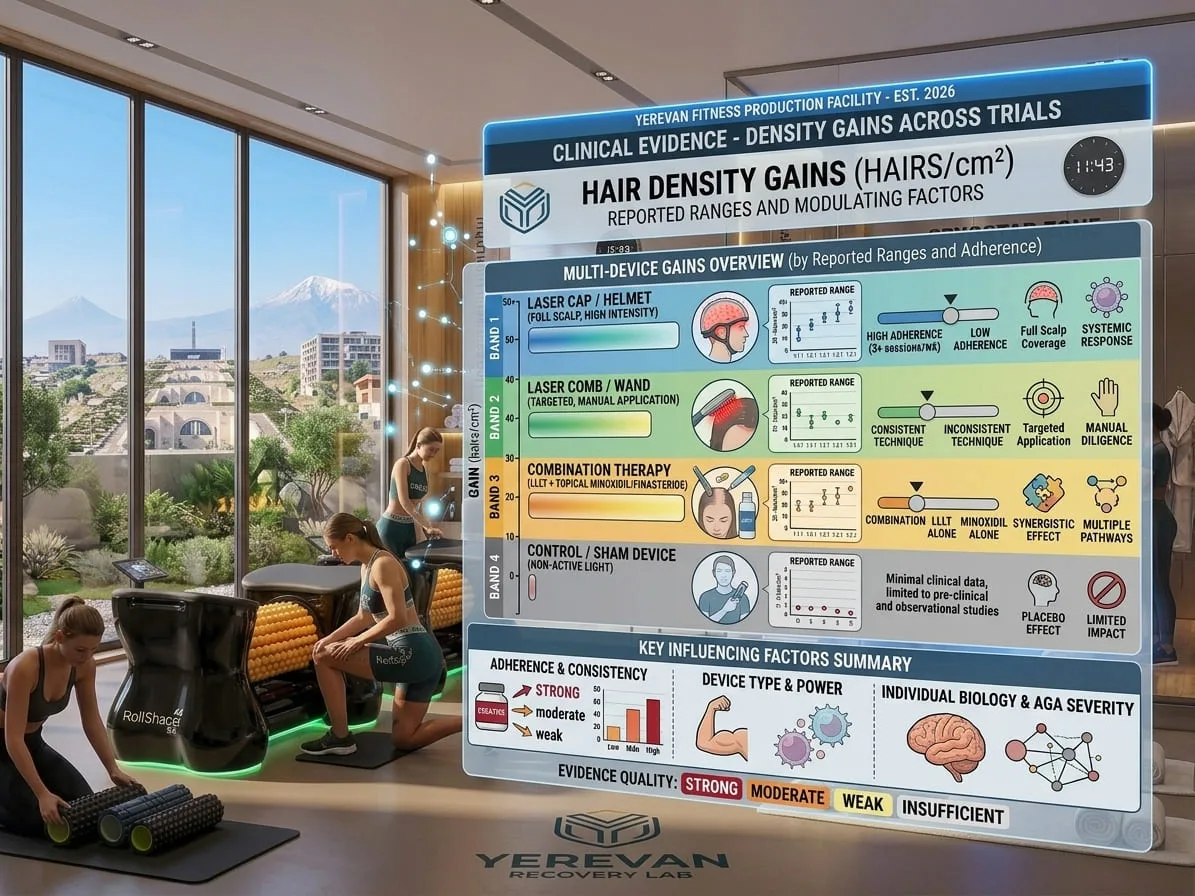
Οι πρώτες στατιστικά σημαντικές βελτιώσεις σε ορισμένες δοκιμές εμφανίστηκαν περίπου δύο μήνες αργότερα, αλλά αυτές οι πρώιμες αλλαγές συνήθως προέρχονταν από ομάδες συνδυαστικής θεραπείας (για παράδειγμα, κόκκινο φως συν μινοξιδίλη). Μόνο το κόκκινο φως συνήθως απαιτεί τρεις έως έξι μήνες συνεπούς χρήσης πριν από ορατές βελτιώσεις στην πυκνότητα. Η συνέπεια είναι μια τεκμηριωμένη μεταβλητή στα κλινικά δεδομένα - τα πρωτόκολλα με παραλείψεις συνεδριών ή μερική τήρηση δείχνουν ασθενέστερα ή καθόλου αποτελέσματα. Ο FDA έχει εγκρίνει αρκετές συσκευές LLLT ειδικά για την ανδρογενετική αλωπεκία με βάση αυτή τη βάση δεδομένων. Η έγκριση ισχύει για συγκεκριμένες συσκευές, όχι για τη θεραπεία με κόκκινο φως ως γενική κατηγορία. Τα εύρη αύξησης πυκνότητας που αναφέρονται συνήθως στη βιομηχανική βιβλιογραφία (συχνά αναφέρονται γύρω στο 15-35% σε μελέτες για συσκευές LLLT σε πληθυσμούς AGA) θα πρέπει να αντιμετωπίζονται ως ενδεικτικά της αναφερόμενης κατανομής μεγέθους του αποτελέσματος και όχι ως εγγυημένα μεμονωμένα αποτελέσματα. Τα αποτελέσματα ποικίλλουν σημαντικά ανάλογα με την αιτία της τριχόπτωσης, τις προδιαγραφές της συσκευής, την τήρηση της συνεδρίας, το μήκος κύματος, τη δόση και τη διάρκεια.
Σε ποιους λειτουργεί η θεραπεία με κόκκινο φως (και σε ποιους όχι);
Η ειλικρινής τμηματοποίηση του κοινού έχει σημασία, επειδή η θεραπεία με κόκκινο φως δεν είναι καθολικά αποτελεσματική. Τα παρακάτω προφίλ υποψηφίων αντικατοπτρίζουν τα ισχυρότερα και τα ασθενέστερα πρότυπα απόκρισης που έχουν καταγραφεί σε κλινικές δοκιμές. Τα άτομα με τριχόπτωση θα πρέπει να συμβουλεύονται έναν εξειδικευμένο δερματολόγο για επαγγελματική διάγνωση πριν επιλέξουν μια θεραπευτική προσέγγιση, καθώς η υποκείμενη αιτία επηρεάζει σημαντικά ποιες παρεμβάσεις είναι κατάλληλες.
Καλύτεροι υποψήφιοι: πρώιμη έως μέτρια ανδρογενετική αλωπεκία σε άνδρες και γυναίκες. Αραίωση μαλλιών όπου τα θυλάκια έχουν μικρύνει αλλά δεν έχουν ακόμη χαθεί εντελώς. Εξακολουθεί να υπάρχει ενεργός κύκλος ανάπτυξης. Ασθενείς που είναι πρόθυμοι να δεσμευτούν για 16-26 εβδομάδες συνεπούς χρήσης πριν από την αξιολόγηση των αποτελεσμάτων. Προβλέψιμοι ανταποκριτές με βάση τα δημογραφικά στοιχεία της δοκιμής: ενήλικες 20-60 ετών με γενετικά καθορισμένο πρότυπο τριχόπτωσης, απώλεια πυκνότητας μαλλιών στην περιοχή 15-40% από την αρχική τιμή (κλίμακα Norwood II-IV στους άνδρες, κλίμακα Ludwig I-II στις γυναίκες).
Λιγότερο προβλέψιμοι ή κακοί υποψήφιοι: προχωρημένη τριχόπτωση (Norwood V+ στους άνδρες) όπου η σμίκρυνση έχει προχωρήσει σε απώλεια ωοθυλακίων· ουλωτικές αλωπεκίες (ουλωτικές) όπου το ωοθυλάκιο καταστρέφεται αντί να είναι αδρανές· τριχόπτωση που προκαλείται από ιατρικές παθήσεις (θυρεοειδής, έλλειψη σιδήρου, παρενέργειες φαρμάκων) και όχι από γενετικά χαρακτηριστικά· γυροειδής αλωπεκία (αυτοάνοση) όπου ο μηχανισμός είναι διαφορετικός. Η θεραπεία με κόκκινο φως ΔΕΝ θα αναγεννήσει ένα εντελώς φαλακρό τριχωτό της κεφαλής επειδή διεγείρει τα υπάρχοντα ωοθυλάκια αντί να δημιουργεί νέα. Οι περιπτώσεις προχωρημένης τριχόπτωσης είναι συνήθως καλύτεροι υποψήφιοι για ιατρική παρέμβαση (φιναστερίδη, δουταστερίδη) ή χειρουργική επέμβαση (μεταμόσχευση μαλλιών) ως κύρια θεραπεία. Το κόκκινο φως μπορεί να συμπληρώσει αυτές τις προσεγγίσεις αλλά όχι να τις αντικαταστήσει σε προχωρημένες περιπτώσεις. Συμβουλευτείτε έναν εξειδικευμένο δερματολόγο ή πάροχο υγειονομικής περίθαλψης πριν ξεκινήσετε οποιοδήποτε πρωτόκολλο θεραπείας.
Ποιο μήκος κύματος και ποια δόση είναι τα καλύτερα
Η περιοχή του κόκκινου φωτός 630-670nm είναι η κύρια θεραπευτική ζώνη για τη διέγερση του τριχωτού της κεφαλής και των θυλάκων. Αυτό το μήκος κύματος απορροφάται αποτελεσματικά στην οξειδάση της κυτοχρώματος c στα μιτοχόνδρια, ενώ διεισδύει αρκετά βαθιά ώστε να φτάσει στις δερματικές θηλές στη βάση του θυλάκου. Μήκη κύματος μικρότερα από 600nm (κίτρινο, πράσινο) δεν διεισδύουν αρκετά βαθιά. Τα μήκη κύματος στην περιοχή εγγύς υπέρυθρης ακτινοβολίας (800-900nm) διεισδύουν βαθύτερα, αλλά απορροφώνται λιγότερο αποτελεσματικά από το συγκεκριμένο μιτοχονδριακό ένζυμο που είναι πιο σημαντικό για την ανάπτυξη των μαλλιών. Η εγγύς υπέρυθρη ακτινοβολία είναι πιο κατάλληλη για εφαρμογές μυοσκελετικού συστήματος και βαθύτερων ιστών παρά για στόχευση θυλάκων τρίχας.
Η ακτινοβολία (ένταση φωτός, μετρούμενη σε mW/cm2) έχει σημασία και ποικίλλει σημαντικά μεταξύ των κατηγοριών συσκευών. Οι επαγγελματικές συσκευές που χρησιμοποιούνται σε κλινικές συνήθως παρέχουν 30-100+ mW/cm2 στην επιφάνεια του τριχωτού της κεφαλής, επιτρέποντας αποτελεσματικές δόσεις σε συνεδρίες 10-20 λεπτών. Τα καπάκια λέιζερ στο σπίτι συνήθως παρέχουν 5-15 mW/cm2, απαιτώντας μεγαλύτερες συνεδρίες (20-30 λεπτά) για την επίτευξη ισοδύναμης δόσης. Τα πάνελ κόκκινου φωτός στο σπίτι παρέχουν εξαιρετικά μεταβλητή ακτινοβολία ανάλογα με τη θέση και την απόσταση - όσο πιο κοντά βρίσκεστε, τόσο πιο έντονη θα είναι η ακτινοβολία, αλλά λιγότερο καλυμμένη. Η συχνότητα των συνεδριών σε επιτυχημένες κλινικές δοκιμές πραγματοποιούνταν κάθε δεύτερη μέρα ή αρκετές φορές την εβδομάδα, με διάρκεια συνεδρίες 15-30 λεπτά. Η συνέπεια έχει μεγαλύτερη σημασία από την ένταση: η παράλειψη των συνεδριών αποδυναμώνει σημαντικά τα αποτελέσματα σύμφωνα με τα κλινικά δεδομένα.
Εξοπλισμός: Κάψουλες λέιζερ, πάνελ και συσκευές εντός κλινικής
Τρεις κατηγορίες εξοπλισμού κυριαρχούν στην αγορά θεραπείας με κόκκινο φως για την ανάπτυξη μαλλιών. Κάθε μία έχει διαφορετικούς συμβιβασμούς όσον αφορά την ακτινοβολία, την κάλυψη, την ευκολία και το κόστος.
Καπέλα και κράνη λέιζερ
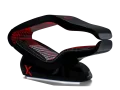
Τα καπάκια λέιζερ είναι η πιο βολική κατηγορία για χρήση στο σπίτι, σχεδιασμένα ειδικά για την κάλυψη του τριχωτού της κεφαλής. Υπάρχουν πολλαπλές επιλογές που έχουν εγκριθεί από τον FDA (iRestore, Capillus, HairMax, Theradome είναι χαρακτηριστικά παραδείγματα). Η μορφή του καπακιού εξασφαλίζει συνεπή κάλυψη του τριχωτού της κεφαλής χωρίς ο χρήστης να χρειάζεται να κρατά ή να τοποθετεί μια συσκευή. Η ακτινοβολία είναι συνήθως χαμηλότερη από τον επαγγελματικό εξοπλισμό (5-15 mW/cm2), η οποία αντισταθμίζεται από μεγαλύτερους χρόνους συνεδρίας (20-30 λεπτά) και την ευκολία χρήσης hands-free κατά τη διάρκεια άλλων δραστηριοτήτων. Κόστος: $300-$3.000 ανάλογα με τον αριθμό των διόδων και την περιοχή κάλυψης. Ιδανική επιλογή: χρήστες στο σπίτι με πρώιμο έως μέτριο AGA που δίνουν προτεραιότητα στην ευκολία και έχουν δεσμευτεί για 16-26 εβδομάδες συνεπούς χρήσης. Επαληθεύστε την τρέχουσα έγκριση FDA για τη συγκεκριμένη συσκευή απευθείας με τον κατασκευαστή πριν από την αγορά. Η έγκριση αφορά τη συγκεκριμένη συσκευή και όχι ολόκληρη την κατηγορία.
Πάνελ κόκκινου φωτός
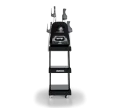
Τα πάνελ κόκκινου φωτός εξυπηρετούν πολλαπλές εφαρμογές πέρα από τα μαλλιά (δέρμα, αποκατάσταση μυών, γενική φωτοβιοδιαμόρφωση) και συχνά παράγουν υψηλότερη ακτινοβολία από τα καπάκια λέιζερ με παρόμοιο ή χαμηλότερο κόστος. Το αντάλλαγμα είναι η τοποθέτηση: οι χρήστες πρέπει να κρατούν το πάνελ σε σταθερή απόσταση από το τριχωτό της κεφαλής και η κάλυψη ποικίλλει ανάλογα με το μέγεθος και τον προσανατολισμό του πάνελ. Βέλτιστη εφαρμογή: χρήστες που χρησιμοποιούν ήδη θεραπεία με κόκκινο φως για άλλες εφαρμογές (δέρμα, αποκατάσταση) και θέλουν να προσθέσουν μαλλιά ως δευτερεύουσα περίπτωση χρήσης. Για Η καλύτερη θεραπεία με κόκκινο φως στο σπίτι το 2026: Γιατί οι επαγγελματίες επιλέγουν επαγγελματικό εξοπλισμό Καλύπτοντας σε βάθος την κατηγορία των οικιακών πάνελ, το αναφερόμενο άρθρο συγκρίνει τις προδιαγραφές μεταξύ των κορυφαίων επιλογών.
Επαγγελματικές συσκευές εντός κλινικής
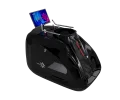
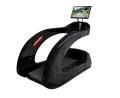
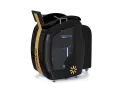
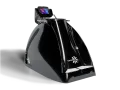
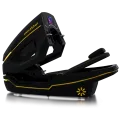
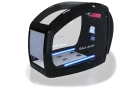
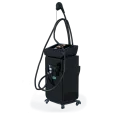
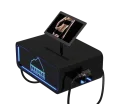
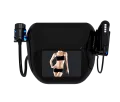
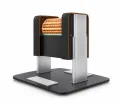
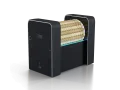
Οι συσκευές που χρησιμοποιούνται σε κλινικές παρέχουν την υψηλότερη ακτινοβολία (30-100+ mW/cm2 στο τριχωτό της κεφαλής), επιτρέποντας μικρότερες συνεδρίες (10-20 λεπτά) με προβλέψιμη δοσολογία. Η Vacuactivus κατασκευάζει πάνελ και κρεβάτια θεραπείας με κόκκινο φως εμπορικής ποιότητας που χρησιμοποιούνται σε δερματολογικές κλινικές, κέντρα ευεξίας και εξειδικευμένες πρακτικές τριχόπτωσης. Ο εξοπλισμός υποστηρίζει τόσο πρωτόκολλα που εστιάζουν στα μαλλιά (αποκλειστική θεραπεία τριχωτού της κεφαλής) όσο και πολυτροπικές υπηρεσίες όπου τα μαλλιά είναι μία από τις πολλές εφαρμογές θεραπείας με κόκκινο φως. Ιδανική επιλογή: κλινικές που προσφέρουν υπηρεσίες μαλλιών RLT ως μέρος μιας ευρύτερης πρακτικής αποκατάστασης, δερματολογίας ή ευεξίας. Εξερευνήστε πάνελ θεραπείας με κόκκινο φως Για επιλογές εμπορικής ποιότητας με προδιαγραφές για κλινική ανάπτυξη. Για κλινικές που συνδυάζουν πρωτόκολλα κόκκινου φωτός με κρυοθεραπεία σε μία μόνο γραμμή υπηρεσιών αποκατάστασης, ανατρέξτε στο Red Light Therapy and Cryotherapy Stack που καλύπτει τα οικονομικά της αποκατάστασης συνδυαστικών μεθόδων.
Θεραπεία με κόκκινο φως έναντι μινοξιδίλης και άλλων θεραπειών
Η θεραπεία με κόκκινο φως θεωρείται καλύτερο να θεωρείται συμπληρωματική των ιατρικών θεραπειών παρά ως αυτόνομη αντικατάσταση στις περισσότερες περιπτώσεις τριχόπτωσης. Η μινοξιδίλη (τοπική, μη συνταγογραφούμενη) παρατείνει την αναγενή φάση ανάπτυξης του κύκλου των ωοθυλακίων και είναι η πιο μελετημένη μη συνταγογραφούμενη θεραπεία τριχόπτωσης. Η φιναστερίδη και η δουταστερίδη (συστηματική, συνταγογραφούμενη) μειώνουν τη σμίκρυνση των ωοθυλακίων που προκαλείται από την DHT. Η θεραπεία με κόκκινο φως λειτουργεί μέσω ενός εντελώς διαφορετικού μηχανισμού (παραγωγή μιτοχονδριακής ενέργειας και ενεργοποίηση σηματοδότησης Wnt), γεγονός που καθιστά τα συνδυαστικά πρωτόκολλα μηχανιστικά συνεργιστικά.
Μια εξάμηνη δοκιμή συνδυασμού διαπίστωσε ότι η μινοξιδίλη από μόνη της άρχισε να σταθεροποιείται σε ισχύ περίπου έξι μήνες, ενώ μια ομάδα συνδυασμού (μινοξιδίλη συν θεραπεία με κόκκινο φως) διατήρησε τον ρυθμό ανάπτυξής της για μεγαλύτερο χρονικό διάστημα. Ο συνδυασμός είναι καλά ανεκτός (και οι δύο έχουν μη συστηματικό μηχανισμό) και οι δερματολόγοι συνιστούν όλο και περισσότερο πρωτόκολλα συνδυασμού για περιπτώσεις τριχόπτωσης με μοτίβο, όπου ο ασθενής επιθυμεί μια ολοκληρωμένη προσέγγιση. Το κόκκινο φως από μόνο του μπορεί να υποκαταστήσει τη μινοξιδίλη σε περιπτώσεις όπου οι χρήστες δεν μπορούν να ανεχθούν την τοπική φαρμακευτική αγωγή (ο ερεθισμός του τριχωτού της κεφαλής είναι μια συχνή παρενέργεια της μινοξιδίλης), αλλά η βάση δεδομένων είναι ισχυρότερη για τα πρωτόκολλα συνδυασμού από ό,τι για το κόκκινο φως μόνο του. Συμβουλευτείτε έναν εξειδικευμένο δερματολόγο ή πάροχο υγειονομικής περίθαλψης πριν συνδυάσετε θεραπείες, ειδικά εάν λαμβάνετε συνταγογραφούμενα φάρμακα.
Συχνές ερωτήσεις
Ε1. Η θεραπεία με κόκκινο φως δίνει μαλλιά;
Ναι, για την τριχόπτωση με μοτίβο. Πολλαπλές τυχαιοποιημένες ελεγχόμενες δοκιμές δείχνουν ότι η θεραπεία χαμηλού επιπέδου φωτός (LLLT) παράγει σημαντικές βελτιώσεις στην πυκνότητα των μαλλιών σε σύγκριση με τις εικονικές συσκευές, με τα αναφερόμενα εύρη αύξησης πυκνότητας που αναφέρονται συνήθως γύρω στο 15-35% σε όλες τις μελέτες (τα μεμονωμένα αποτελέσματα ποικίλλουν σημαντικά ανάλογα με τη συσκευή, το μήκος κύματος, τη δόση και την προσήλωση στη συνεδρία). Το αποτέλεσμα είναι σταθερό τόσο σε άνδρες όσο και σε γυναίκες με ανδρογενετική αλωπεκία. Τα στοιχεία είναι ισχυρότερα από ό,τι για τις περισσότερες μη φαρμακευτικές θεραπείες τριχόπτωσης. Λειτουργεί καλύτερα για την πρώιμη έως μέτρια τριχόπτωση και δεν θα ξαναφυτρώσει ένα εντελώς φαλακρό τριχωτό της κεφαλής. Συμβουλευτείτε έναν εξειδικευμένο δερματολόγο για επαγγελματική διάγνωση πριν επιλέξετε μια θεραπευτική προσέγγιση.
Ε2. Πόσο χρόνο χρειάζεται η θεραπεία με κόκκινο φως για να μακρύνουν τα μαλλιά;
Οι περισσότερες κλινικές δοκιμές διαρκούν 16-26 εβδομάδες και η ορατή βελτίωση μόνο με το κόκκινο φως συνήθως διαρκεί τρεις έως έξι μήνες συνεπούς χρήσης. Οι πρώτες στατιστικά σημαντικές αλλαγές σε ορισμένες δοκιμές εμφανίστηκαν περίπου στους δύο μήνες, αλλά συνήθως μόνο σε ομάδες συνδυαστικής θεραπείας. Τα μαλλιά αναπτύσσονται αργά από τη φύση τους, επομένως η υπομονή και η συνέπεια είναι απαραίτητες. Η παράλειψη εβδομάδων δεν αντικατοπτρίζεται στα κλινικά δεδομένα.
Ε3. Ποιο μήκος κύματος κόκκινου φωτός είναι το καλύτερο για την ανάπτυξη των μαλλιών;
Το κόκκινο φως στην περιοχή των 630-670nm είναι η κύρια θεραπευτική ζώνη για την ανάπτυξη των μαλλιών, επειδή διεισδύει στο τριχωτό της κεφαλής αρκετά βαθιά ώστε να φτάσει στις δερματικές θηλές στη βάση του θύλακα. Αυτό το μήκος κύματος απορροφάται από τα μιτοχόνδρια (οξειδάση κυτοχρώματος c), πυροδοτώντας αυξημένη παραγωγή ATP που ωθεί τα θυλακικά κύτταρα να πολλαπλασιαστούν. Οι περισσότερες συσκευές μαλλιών LLLT που έχουν εγκριθεί από τον FDA λειτουργούν εντός αυτής της κόκκινης ζώνης. Τα μήκη κύματος εγγύς υπέρυθρου (800-900nm) διεισδύουν βαθύτερα, αλλά απορροφώνται λιγότερο αποτελεσματικά από το συγκεκριμένο ένζυμο που είναι πιο σημαντικό για την διέγερση των θυλάκων της τρίχας, επομένως είναι πιο κατάλληλα για μυοσκελετικές εφαρμογές παρά για θεραπεία ειδική για τα μαλλιά.
Ε4. Έχει εγκριθεί από τον FDA η θεραπεία με κόκκινο φως για την τριχόπτωση;
Ναι, ο FDA έχει εγκρίνει αρκετές συσκευές θεραπείας με λέιζερ χαμηλού επιπέδου (LLLT) ειδικά για τη θεραπεία της ανδρογενετικής αλωπεκίας (τριχόπτωση σε άνδρες και γυναίκες). Η έγκριση του FDA σημαίνει ότι η συσκευή έχει επιδείξει εύλογη ασφάλεια και αποτελεσματικότητα για τη συγκεκριμένη χρήση. Σημειώστε ότι η έγκριση ισχύει για συγκεκριμένες συσκευές, όχι για τη θεραπεία με κόκκινο φως ως γενική κατηγορία, και η έγκριση του FDA διαφέρει από την έγκριση του FDA. Επαληθεύστε την τρέχουσα έγκριση του FDA για τη συγκεκριμένη συσκευή απευθείας με τον κατασκευαστή πριν από την αγορά.
Ε5. Λειτουργεί η θεραπεία με κόκκινο φως για την υποχώρηση της γραμμής των μαλλιών;
Μπορεί να βοηθήσει εάν η υποχώρηση της γραμμής των μαλλιών προκαλείται από ανδρογενετική αλωπεκία και τα θυλάκια είναι ακόμα ενεργά (μικρογραφημένα αλλά όχι εξαφανισμένα). Η θεραπεία με κόκκινο φως διεγείρει τα αδρανή θυλάκια πίσω στη φάση ανάπτυξης, αλλά δεν μπορεί να δημιουργήσει νέα θυλάκια όπου έχουν χαθεί εντελώς. Τα αποτελέσματα είναι πιο προβλέψιμα για πρώιμη έως μέτρια υποχώρηση. Οι προχωρημένες ή οι ουλωμένες περιοχές ανταποκρίνονται ανεπαρκώς. Συμβουλευτείτε έναν δερματολόγο για εξατομικευμένη καθοδήγηση.
Ε6. Πόσο συχνά πρέπει να χρησιμοποιώ θεραπεία με κόκκινο φως για τα μαλλιά;
Οι επιτυχημένες κλινικές δοκιμές χρησιμοποίησαν συσκευές κάθε δεύτερη μέρα ή αρκετές φορές την εβδομάδα, με συνεδρίες που διαρκούσαν περίπου 15-30 λεπτά. Η συνέπεια είναι η βασική μεταβλητή. Τα κλινικά αποτελέσματα προήλθαν από τακτική χρήση για μήνες, όχι από σποραδικές συνεδρίες. Η συχνότερη χρήση πέραν των μελετημένων πρωτοκόλλων δεν έχει αποδειχθεί ότι επιταχύνει τα αποτελέσματα και μπορεί να είναι περιττή.
Ε7. Είναι η θεραπεία με κόκκινο φως καλύτερη από τη μινοξιδίλη για τα μαλλιά;
Δρουν διαφορετικά και συχνά λειτουργούν καλύτερα μαζί. Η μινοξιδίλη είναι ένα τοπικό φάρμακο που παρατείνει τη φάση ανάπτυξης. Η θεραπεία με κόκκινο φως είναι μια μη φαρμακευτική θεραπεία που διεγείρει την παραγωγή ενέργειας των ωοθυλακίων. Μια εξάμηνη δοκιμή διαπίστωσε ότι η ανάπτυξη από μινοξιδίλη μόνο άρχισε να σταθεροποιείται περίπου έξι μήνες, ενώ μια ομάδα συνδυασμού διατήρησε τον ρυθμό ανάπτυξής της για περισσότερο χρόνο. Το κόκκινο φως θεωρείται καλύτερα ως συμπληρωματικό και όχι ως εγγυημένη αυτόνομη αντικατάσταση.
Ε8. Μπορεί η θεραπεία με κόκκινο φως να ξαναδώσει μια φαλακρή κηλίδα;
Γενικά όχι, εάν η περιοχή είναι εντελώς φαλακρή χωρίς ενεργά ωοθυλάκια. Η θεραπεία με κόκκινο φως διεγείρει υπάρχοντα, αδρανή ή μικροσκοπικά ωοθυλάκια. Δεν μπορεί να αναγεννήσει ωοθυλάκια που έχουν χαθεί εντελώς. Για περιοχές όπου παραμένουν κάποια ωοθυλάκια (πρώιμη λέπτυνση αντί για πλήρη φαλάκρα), μπορεί να βελτιώσει την πυκνότητα. Για πλήρως φαλακρό τριχωτό της κεφαλής, άλλες επιλογές όπως η μεταμόσχευση είναι πιο κατάλληλες.
συμπέρασμα
Η θεραπεία με κόκκινο φως για την ανάπτυξη των μαλλιών είναι μια νόμιμη, τεκμηριωμένη παρέμβαση για την τριχόπτωση με μοτίβο στους κατάλληλους υποψηφίους. Ο μηχανισμός είναι καλά χαρακτηρισμένος (το φως στα 630-670nm φτάνει στα μιτοχόνδρια των δερματικών θηλών, ενισχύει το ATP, ενεργοποιεί την σηματοδότηση Wnt, μετακινεί τα θυλάκια από την τελογενή στην αναγενή φάση). Η βάση δεδομένων τυχαιοποιημένων ελεγχόμενων δοκιμών (RCT) δείχνει σημαντικές βελτιώσεις στην πυκνότητα σε σχέση με τις εικονικές συσκευές σε δοκιμές 16-26 εβδομάδων, με αναφερόμενα εύρη αύξησης πυκνότητας που αναφέρονται συνήθως γύρω στο 15-35% για συσκευές LLLT σε πληθυσμούς AGA (τα μεμονωμένα αποτελέσματα ποικίλλουν ανάλογα με τη συσκευή, το μήκος κύματος, τη δόση και την προσκόλληση). Τα ισχυρότερα δεδομένα υποστηρίζουν την πρώιμη έως μέτρια ανδρογενετική αλωπεκία. Τα ειλικρινή όρια: δεν θα αναγεννήσει ένα εντελώς φαλακρό τριχωτό της κεφαλής, τα αποτελέσματα χρειάζονται τουλάχιστον τρεις έως έξι μήνες και η συνέπεια είναι μια τεκμηριωμένη μεταβλητή στα αποτελέσματα των δοκιμών.
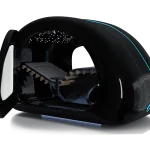
Για χρήστες στο σπίτι με πρώιμο έως μέτριο AGA, ένα καπάκι λέιζερ εγκεκριμένο από τον FDA ή ένα ποιοτικό πάνελ κόκκινου φωτός αποτελεί μια λογική επένδυση όταν συνδυάζεται με δέσμευση 16-26 εβδομάδων. Για τις κλινικές που αξιολογούν τη θεραπεία με κόκκινο φως ως προσφορά υπηρεσιών, ο επαγγελματικός εξοπλισμός προσφέρει υψηλότερη ακτινοβολία και προβλέψιμη δοσολογία σε μια ευρύτερη πελατειακή βάση. Για τη Θεραπεία με Κόκκινο Φως για το Πρόσωπο: Αντιγήρανση και Επιστήμη Επιδιόρθωσης Δέρματος, ένα συνοδευτικό άρθρο καλύπτει τη θεραπεία με κόκκινο φως για εφαρμογές δέρματος με το ίδιο πλαίσιο που δίνει προτεραιότητα στα στοιχεία. Για εφαρμογές ευεξίας πολλαπλών τρόπων που συνδυάζουν το κόκκινο φως με άλλες μεθόδους αποκατάστασης, βλ. Κάψουλα μακροζωίας Revique HaloX, το οποίο συνδυάζει κόκκινο φως με υπέρυθρες ακτίνες και αρωματοθεραπεία για εμπορικά κέντρα ευεξίας. Συμβουλευτείτε πάντα έναν εξειδικευμένο δερματολόγο ή πάροχο υγειονομικής περίθαλψης πριν ξεκινήσετε οποιαδήποτε θεραπεία για την τριχόπτωση.


