










Terapia de luz roja para el crecimiento del cabello: mecanismo, evidencia y equipo.
¿La terapia de luz roja estimula el crecimiento del cabello? Sí, para la alopecia androgénica. Múltiples ensayos clínicos aleatorizados (ECA) reportan mejoras significativas en la densidad capilar en comparación con dispositivos placebo para hombres y mujeres con alopecia androgenética. Los rangos reportados suelen oscilar entre 15 y 351 TP3T de aumento de densidad en los distintos estudios, aunque los resultados individuales varían considerablemente según las especificaciones del dispositivo, la longitud de onda, la dosis, la constancia en las sesiones y la causa de la caída del cabello. La evidencia científica es más sólida que la de la mayoría de los tratamientos no farmacológicos para la caída del cabello, pero la terapia de luz roja para el crecimiento capilar solo funciona para ciertos tipos de alopecia, y la constancia a lo largo de los meses es fundamental. Esta es una revisión del mecanismo, la evidencia y el equipo realizada por el equipo de asesoría médica e ingeniería de Vacuactivus a junio de 2026.
Las revisiones revisadas por pares en 2025-2026 que cubren las aplicaciones dermatológicas de la terapia con luz roja enumeran el crecimiento del cabello como una de las áreas de aplicación principales con la base de evidencia más sólida. Revisiones de consenso recientes han confirmado la alopecia androgénica con el nivel de evidencia más alto disponible para aplicaciones de fotobiomodulación. El rango de longitud de onda de 630-670 nm (la banda terapéutica principal para la estimulación del folículo piloso) penetra el cuero cabelludo lo suficientemente profundo como para alcanzar la papila dérmica en la base del folículo, donde las mitocondrias absorben la luz y aumentan la producción de energía celular, mecanismo que se explica en detalle más adelante. Varios dispositivos de terapia láser de baja intensidad (LLLT) están autorizados por la FDA específicamente para la alopecia androgenética (autorizados por la FDA, no aprobados por la FDA; son estados regulatorios distintos).
Esta guía está dirigida a dos públicos: personas que investigan la terapia de luz roja para el crecimiento del cabello como opción de tratamiento personal y profesionales de clínicas que evalúan equipos de luz roja para ofrecer servicios profesionales. El enfoque se basa en la evidencia: qué funciona, qué no y qué esperar en semanas y meses. Si su objetivo es obtener la certeza de que un dispositivo $300 regenerará un cuero cabelludo completamente calvo en seis semanas, esta guía le decepcionará. Si busca evidencia honesta y expectativas realistas, siga leyendo. Para obtener un contexto más amplio sobre biohacking y su lugar dentro de la categoría de optimización del bienestar, consulte ¿Qué es el biohacking? Guía completa para la optimización del rendimiento que abarca la estructura del conjunto de bienestar a nivel de pilar.
¿Realmente la terapia con luz roja hace crecer el cabello?
Sí, para la alopecia androgénica. La evidencia de los ensayos clínicos aleatorizados es lo suficientemente consistente como para que las revisiones dermatológicas revisadas por pares y múltiples revisiones de la industria de 2025-2026 consideren el crecimiento del cabello mediante terapia de luz roja como una intervención respaldada por evidencia, en lugar de una tendencia experimental. Las mejoras en la densidad capilar medidas en comparación con los dispositivos placebo, reportadas en diversos estudios, son efectos reales y estadísticamente significativos (con rangos de ganancia que varían según el dispositivo, la longitud de onda, la dosis y la adherencia a las sesiones).
El origen histórico de esta aplicación se remonta al descubrimiento accidental de Endre Mester en 1967, cuando observó que los ratones expuestos a radiación láser de baja intensidad desarrollaban cabello más rápido que los controles. Este hallazgo fortuito impulsó décadas de investigación en fotobiomodulación, y la regeneración capilar sigue siendo una de las aplicaciones clínicas más sólidas. Revisiones recientes de consenso, basadas en múltiples ensayos clínicos aleatorizados, confirman que la alopecia androgénica (AGA masculina y femenina) responde de forma significativa a la terapia con luz roja aplicada de manera constante durante 16 a 26 semanas. Consulte esta información basada en la evidencia con la guía más amplia «Beneficios de la terapia con luz roja respaldados por estudios, no por exageraciones», que abarca múltiples aplicaciones más allá del cabello.
El mecanismo: cómo la luz roja estimula los folículos.
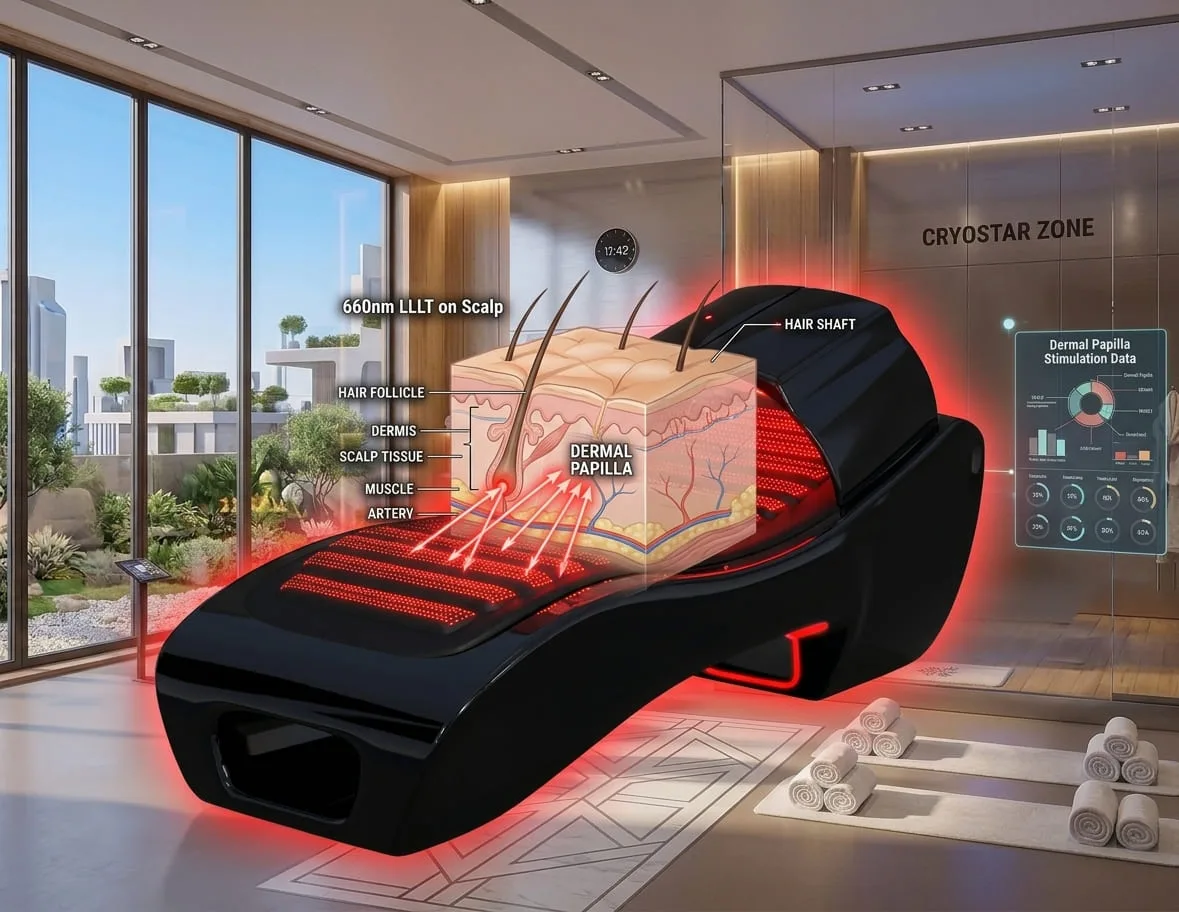
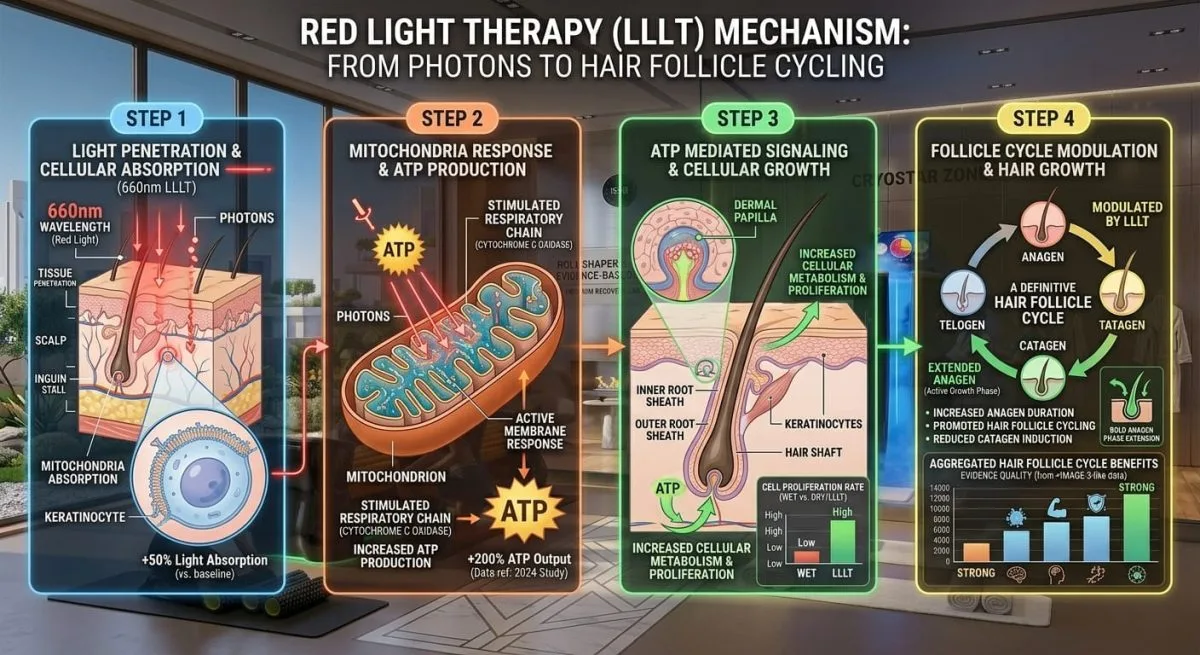
El mecanismo está bien caracterizado. La luz roja en el rango de 630-670 nm (la banda terapéutica principal para los folículos pilosos) penetra en el cuero cabelludo hasta una profundidad de varios milímetros, alcanzando las células de la papila dérmica en la base del folículo piloso. Las mitocondrias dentro de estas células contienen citocromo c oxidasa, una enzima que absorbe la luz roja en este rango de longitud de onda. Cuando la enzima absorbe la luz, acelera la cadena de transporte de electrones, produciendo más ATP (la moneda energética celular) que en condiciones basales.
El aumento de la disponibilidad de ATP impulsa a las células de la papila dérmica a proliferar más rápidamente. Dos efectos posteriores convierten este aumento de energía celular en crecimiento visible del cabello. Primero, la exposición a la luz libera óxido nítrico (NO) de la citocromo c oxidasa; el óxido nítrico es una molécula de señalización que mejora el flujo sanguíneo local al folículo. Segundo, el aumento de la energía celular activa los componentes de la vía de señalización Wnt, específicamente WNT3 y WNT10B, según el estudio de secuenciación de ARN de folículos del cuero cabelludo humano de 2021. La señalización Wnt impulsa a los folículos latentes (telógenos) de vuelta a la fase de crecimiento activa (anágena). El resultado final: más folículos que producen cabello simultáneamente, lo que genera un cabello terminal más grueso en lugar del vello miniaturizado característico de la alopecia androgénica.
Para los lectores que deseen profundizar en la ciencia de la longitud de onda en diversas aplicaciones, Panel sobre terapia con luz roja: Cómo las longitudes de onda de 660 nm y 850 nm curan los tejidos. Este documento describe el mecanismo con mayor detalle, incluyendo la interacción entre la luz roja visible (630-670 nm, objetivo principal del folículo piloso) y la luz infrarroja cercana (830-850 nm, que permite una mayor penetración en los tejidos para aplicaciones musculares y articulares, en lugar de la focalización específica en el folículo piloso). Para una aplicación paralela de la misma banda de longitud de onda de 630-670 nm con evidencia sólida, consulte Terapia con luz roja para el alivio del dolor, que comparte el mismo mecanismo de la citocromo c oxidasa aplicado a objetivos musculoesqueléticos.
Lo que demuestra la evidencia clínica
Los datos de ensayos clínicos aleatorizados (ECA) de múltiples estudios de 16 a 26 semanas muestran mejoras de densidad estadísticamente significativas en comparación con los dispositivos de control (placebo). La tabla a continuación resume la calidad de la evidencia en diferentes tipos de fuentes y estudios representativos, con rangos de ganancia de densidad que ilustran lo que se ha informado, en lugar de representar efectos de tratamiento universales.
| Tipo de estudio / Fuente | Longitud de onda | Aumento de densidad frente a grupo control (rango informado) | Duración | Población |
|---|---|---|---|---|
| Resúmenes de ensayos clínicos aleatorizados (revisiones revisadas por pares 2025-2026) | 630-670 nm | Mejora significativa de la densidad (los rangos reportados varían según el dispositivo y la adherencia). | 16-26 semanas | Hombres y mujeres con AGA |
| Ensayos de terapia láser de baja intensidad (LLLT) aprobados por la FDA (varios dispositivos) | Rango de 630-670 nm (banda terapéutica primaria) | Mejoras estadísticamente significativas en el recuento de cabello terminal | 16-26 semanas | Alopecia androgénica masculina y femenina |
| Protocolos de LLLT registrados en ClinicalTrials.gov para AGA | 630-680 nm típico | Estadísticamente significativo frente al placebo según las medidas de resultado registradas (verifique los protocolos registrados actualmente directamente en clinicaltrials.gov). | 16-24 semanas típico | Participantes de AGA |
| Secuenciación de ARN de folículos del cuero cabelludo humano (2021) | 650 nm | Inducción anágena confirmada a nivel de expresión génica | Estudio in vitro | Folículos humanos cultivados |
| Ensayo de combinación (RLT + minoxidil, 6 meses) | 660 nm dentro del rango de 630-670 nm + minoxidil | Crecimiento sostenido más allá de la meseta obtenida con minoxidil solo | 6 meses | Participantes de AGA |
| Revisiones de consenso de 2025 (múltiples) | luz primaria de 630-670 nm | Se ha confirmado la pérdida de cabello de patrón masculino al nivel de evidencia más alto disponible para aplicaciones de fotobiomodulación. | Síntesis de múltiples estudios | Cohortes de AGA en diferentes ensayos |
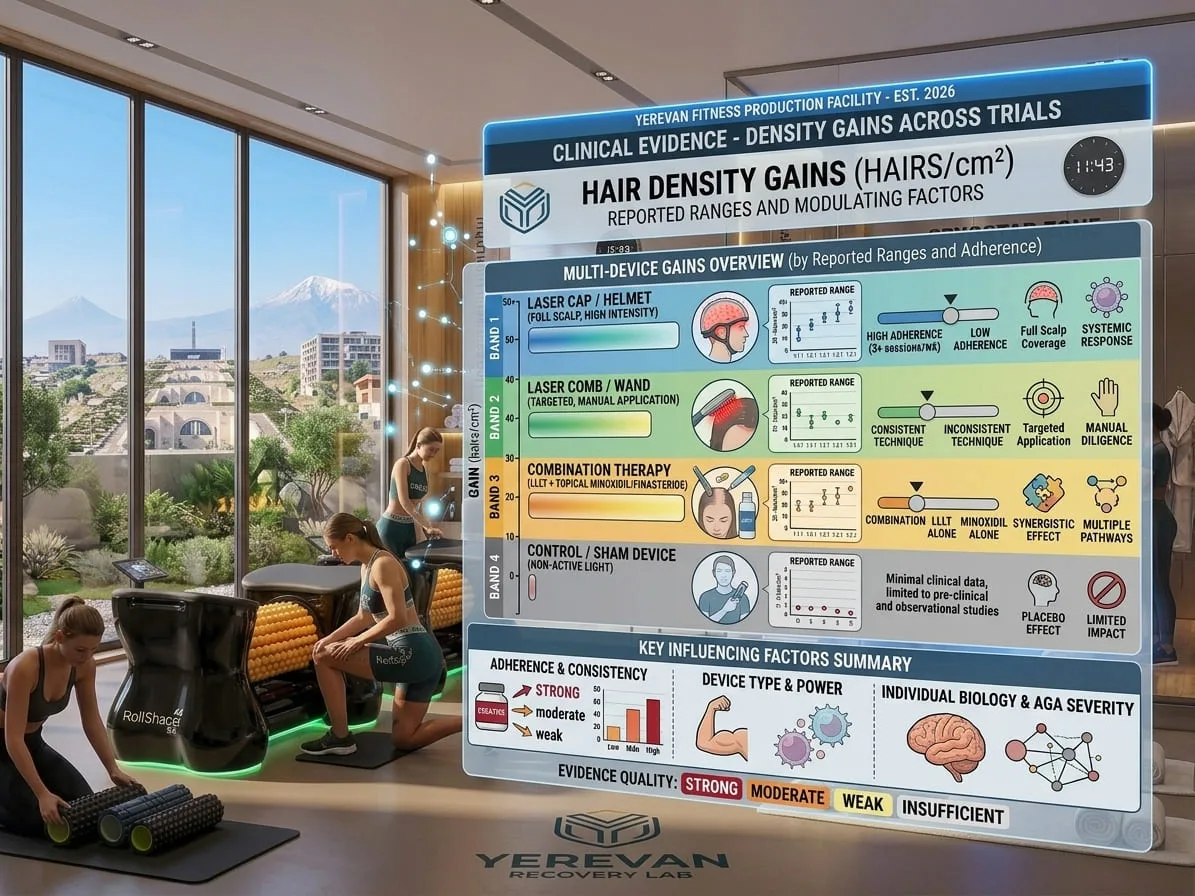
Las primeras mejoras estadísticamente significativas en algunos ensayos aparecieron alrededor de los dos meses, pero esos cambios iniciales generalmente provenían de grupos de terapia combinada (luz roja más minoxidil, por ejemplo). La luz roja sola generalmente requiere de tres a seis meses de uso constante antes de mejoras visibles en la densidad. La constancia es una variable documentada en los datos clínicos: los protocolos con sesiones omitidas o adherencia parcial muestran efectos más débiles o nulos. La FDA ha aprobado varios dispositivos LLLT específicamente para la alopecia androgénica basándose en esta evidencia; la aprobación se aplica a dispositivos específicos, no a la terapia de luz roja como categoría general. Los rangos de ganancia de densidad comúnmente citados en la literatura de la industria (a menudo informados alrededor de 15-35% en estudios para dispositivos LLLT en poblaciones AGA) deben tratarse como ilustrativos de la distribución del tamaño del efecto informado en lugar de como resultados individuales garantizados; los resultados varían sustancialmente según la causa de la pérdida de cabello, las especificaciones del dispositivo, la adherencia a las sesiones, la longitud de onda, la dosis y la duración.
¿Para quién funciona la terapia de luz roja (y para quién no)?
Una segmentación precisa de la audiencia es fundamental, ya que la terapia con luz roja no es universalmente efectiva. Los perfiles de los candidatos que se muestran a continuación reflejan los patrones de respuesta más fuertes y más débiles documentados en ensayos clínicos. Las personas con pérdida de cabello deben consultar a un dermatólogo cualificado para obtener un diagnóstico profesional antes de elegir un tratamiento, dado que la causa subyacente influye considerablemente en la idoneidad de las intervenciones.
Candidatos ideales: alopecia androgenética de leve a moderada en hombres y mujeres. Adelgazamiento del cabello donde los folículos se han miniaturizado pero aún no se han perdido por completo. Ciclo de crecimiento activo aún presente. Pacientes dispuestos a comprometerse a un uso constante durante 16 a 26 semanas antes de evaluar los resultados. Respondedores predecibles según la demografía del ensayo: adultos de 20 a 60 años con pérdida de cabello de patrón genético, pérdida de densidad capilar en el rango de 15 a 40 TP3T con respecto al valor inicial (escala de Norwood II-IV en hombres, escala de Ludwig I-II en mujeres).
Candidatos menos predecibles o inadecuados: alopecia androgénica avanzada (Norwood V+ en hombres) donde la miniaturización ha progresado hasta la pérdida de folículos; alopecia cicatricial, donde el folículo se destruye en lugar de permanecer inactivo; pérdida de cabello causada por afecciones médicas (tiroides, deficiencia de hierro, efectos secundarios de medicamentos) en lugar de por predisposición genética; alopecia areata (autoinmune), donde el mecanismo es diferente. La terapia con luz roja NO regenerará un cuero cabelludo completamente calvo, ya que estimula los folículos existentes en lugar de crear nuevos. Los casos de alopecia androgénica avanzada suelen ser mejores candidatos para la intervención médica (finasterida, dutasterida) o la intervención quirúrgica (trasplante capilar) como tratamiento principal. La luz roja puede complementar estos enfoques, pero no reemplazarlos en casos avanzados. Consulte a un dermatólogo o profesional de la salud calificado antes de comenzar cualquier protocolo de tratamiento.
¿Qué longitud de onda y dosis son las mejores?
La luz roja de 630-670 nm es la principal banda terapéutica para la estimulación del cuero cabelludo y los folículos pilosos. Esta longitud de onda se absorbe eficazmente en la citocromo c oxidasa de las mitocondrias, penetrando lo suficiente como para alcanzar la papila dérmica en la base del folículo. Las longitudes de onda inferiores a 600 nm (amarillas y verdes) no penetran lo suficiente. Las longitudes de onda del infrarrojo cercano (800-900 nm) penetran más profundamente, pero son absorbidas con menor eficacia por la enzima mitocondrial específica más relevante para el crecimiento del cabello; el infrarrojo cercano es más apropiado para aplicaciones musculoesqueléticas y en tejidos más profundos que para la estimulación de los folículos pilosos.
La irradiancia (intensidad de la luz, medida en mW/cm²) es importante y varía significativamente entre las distintas categorías de dispositivos. Los dispositivos profesionales para uso clínico suelen proporcionar entre 30 y 100+ mW/cm² en la superficie del cuero cabelludo, lo que permite obtener dosis efectivas en sesiones de 10 a 20 minutos. Los gorros láser para uso doméstico suelen proporcionar entre 5 y 15 mW/cm², lo que requiere sesiones más largas (de 20 a 30 minutos) para alcanzar la misma dosis. Los paneles de luz roja para uso doméstico ofrecen una irradiancia muy variable según la posición y la distancia: a menor distancia, mayor intensidad, pero menor cobertura del cuero cabelludo. En los ensayos clínicos exitosos, la frecuencia de las sesiones fue de días alternos o varias veces por semana, con sesiones de 15 a 30 minutos. La constancia es más importante que la intensidad: según los datos clínicos, saltarse sesiones reduce considerablemente los resultados.
Equipamiento: gorros láser, paneles y dispositivos para uso clínico.
Tres categorías de equipos dominan el mercado de la terapia de luz roja para el crecimiento del cabello. Cada una presenta diferentes ventajas y desventajas en cuanto a irradiancia, cobertura, comodidad y costo.
Gorras y cascos láser
Los gorros láser son la opción más práctica para uso doméstico, diseñados específicamente para cubrir el cuero cabelludo. Existen múltiples opciones aprobadas por la FDA (iRestore, Capillus, HairMax y Theradome son ejemplos destacados). El formato del gorro garantiza una cobertura uniforme del cuero cabelludo sin necesidad de sujetar ni colocar el dispositivo. La irradiancia suele ser menor que la de los equipos profesionales (5-15 mW/cm²), lo que se compensa con sesiones más largas (20-30 minutos) y la comodidad de poder usarlos con las manos libres durante otras actividades. Precio: $300-$3000, según el número de diodos y la zona de cobertura. Ideal para: usuarios domésticos con alopecia androgénica de leve a moderada que priorizan la comodidad y se comprometen a un uso continuo de 16 a 26 semanas. Antes de comprarlo, verifique la aprobación de la FDA específica del dispositivo directamente con el fabricante; la aprobación es específica para cada dispositivo, no para toda la categoría.
Paneles de luz roja
Los paneles de luz roja tienen múltiples aplicaciones más allá del cabello (piel, recuperación muscular, fotobiomodulación general) y a menudo producen una irradiancia mayor que las gorras láser a un costo similar o menor. La desventaja radica en el posicionamiento: los usuarios deben sostener el panel a una distancia constante del cuero cabelludo, y la cobertura varía según el tamaño y la orientación del panel. Ideal para: usuarios que ya utilizan la terapia de luz roja para otras aplicaciones (piel, recuperación) y que desean agregar el cabello como un caso de uso secundario. La mejor terapia de luz roja para uso doméstico en 2026: ¿Por qué los profesionales eligen equipos profesionales? El artículo mencionado analiza en profundidad la categoría de paneles para el hogar y compara las especificaciones de las principales opciones disponibles.
Dispositivos profesionales para uso en la clínica
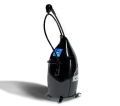
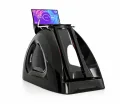
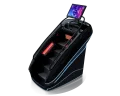
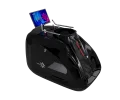
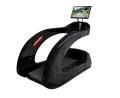
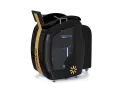
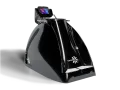
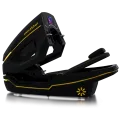
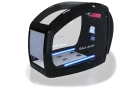
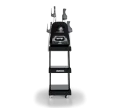
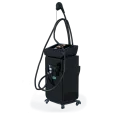
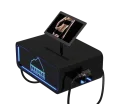
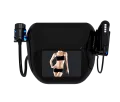
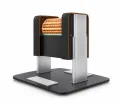
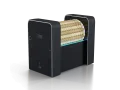
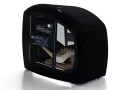
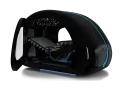
Los dispositivos clínicos ofrecen la mayor irradiancia (30-100+ mW/cm² en el cuero cabelludo), lo que permite sesiones más cortas (10-20 minutos) con una dosificación predecible. Vacuactivus fabrica paneles y camillas de terapia de luz roja de calidad profesional que se utilizan en clínicas dermatológicas, centros de bienestar y consultorios especializados en la caída del cabello. El equipo admite tanto protocolos centrados en el cabello (tratamiento específico del cuero cabelludo) como servicios multimodales donde el cabello es una de las diversas aplicaciones de la terapia de luz roja. Ideal para clínicas que ofrecen servicios de terapia de luz roja para el cabello como parte de una práctica más amplia de recuperación, dermatología o bienestar. Explorar paneles de terapia de luz roja Para opciones de uso comercial con especificaciones para su implementación en clínicas. Para clínicas que combinan terapia de luz roja con protocolos de crioterapia en una sola línea de recuperación, consulte la sección "Combinación de terapia de luz roja y crioterapia", que abarca la economía de la recuperación con modalidades combinadas.
Terapia de luz roja frente a minoxidil y otros tratamientos
La terapia con luz roja se considera más un complemento a los tratamientos médicos que un tratamiento único en la mayoría de los casos de alopecia androgénica. El minoxidil (tópico, de venta libre) prolonga la fase anágena del ciclo folicular y es el tratamiento sin receta más estudiado para la caída del cabello. La finasterida y la dutasterida (sistémicas, con receta) reducen la miniaturización folicular inducida por la DHT. La terapia con luz roja actúa mediante un mecanismo completamente diferente (producción de energía mitocondrial y activación de la vía de señalización Wnt), lo que genera sinergias mecánicas en los protocolos combinados.
Un ensayo combinado de seis meses reveló que el minoxidil solo comenzó a perder efectividad alrededor de los seis meses, mientras que el grupo que recibió la combinación (minoxidil más terapia de luz roja) mantuvo su tasa de crecimiento durante más tiempo. La combinación se tolera bien (ambos tratamientos tienen un mecanismo no sistémico), y los dermatólogos recomiendan cada vez más protocolos combinados para casos de alopecia androgénica en los que el paciente busca un enfoque integral. La luz roja sola puede sustituir al minoxidil en casos donde los usuarios no toleran la medicación tópica (la irritación del cuero cabelludo es un efecto secundario común del minoxidil), pero la evidencia científica es más sólida para los protocolos combinados que para la luz roja sola. Consulte a un dermatólogo o profesional de la salud calificado antes de combinar tratamientos, especialmente si toma medicamentos recetados.
Preguntas frecuentes
P1. ¿La terapia con luz roja hace crecer el cabello?
Sí, para la alopecia androgénica. Múltiples ensayos controlados aleatorios muestran que la terapia con luz de baja intensidad (LLLT) produce mejoras significativas en la densidad capilar en comparación con dispositivos placebo, con rangos de aumento de densidad comúnmente citados alrededor de 15-35% en los estudios (los resultados individuales varían sustancialmente según el dispositivo, la longitud de onda, la dosis y la adherencia a las sesiones). El efecto es consistente tanto en hombres como en mujeres con alopecia androgénica. La evidencia es más sólida que para la mayoría de los tratamientos no farmacológicos para la caída del cabello. Funciona mejor para la alopecia de leve a moderada y no regenerará un cuero cabelludo completamente calvo. Consulte a un dermatólogo calificado para obtener un diagnóstico profesional antes de seleccionar un enfoque de tratamiento.
P2. ¿Cuánto tiempo tarda la terapia de luz roja en hacer crecer el cabello?
La mayoría de los ensayos clínicos duran entre 16 y 26 semanas, y la mejoría visible con la luz roja sola suele tardar entre tres y seis meses de uso constante. En algunos ensayos, los primeros cambios estadísticamente significativos aparecieron alrededor de los dos meses, pero generalmente solo en los grupos de terapia combinada. El cabello crece lentamente por naturaleza, por lo que la paciencia y la constancia son esenciales; saltarse semanas no se refleja en los datos clínicos.
P3. ¿Qué longitud de onda de luz roja es la mejor para el crecimiento del cabello?
La luz roja en el rango de 630-670 nm es la principal banda terapéutica para el crecimiento del cabello, ya que penetra lo suficientemente profundo en el cuero cabelludo como para alcanzar la papila dérmica en la base del folículo. Esta longitud de onda es absorbida por las mitocondrias (citocromo c oxidasa), lo que desencadena una mayor producción de ATP que impulsa la proliferación de las células foliculares. La mayoría de los dispositivos LLLT para el cabello aprobados por la FDA operan dentro de esta banda roja. Las longitudes de onda del infrarrojo cercano (800-900 nm) penetran más profundamente, pero son absorbidas con menor eficacia por la enzima específica más relevante para la estimulación del folículo piloso, por lo que son más adecuadas para aplicaciones musculoesqueléticas que para tratamientos capilares específicos.
P4. ¿Está aprobada por la FDA la terapia con luz roja para la caída del cabello?
Sí, la FDA ha autorizado varios dispositivos de terapia láser de baja intensidad (LLLT) específicamente para el tratamiento de la alopecia androgénica (pérdida de cabello de patrón masculino y femenino). La autorización de la FDA significa que el dispositivo ha demostrado una seguridad y eficacia razonables para dicho uso. Tenga en cuenta que la autorización se aplica a dispositivos específicos, no a la terapia de luz roja como categoría general, y que la autorización de la FDA es distinta de la aprobación de la FDA. Verifique la autorización de la FDA específica para cada dispositivo directamente con el fabricante antes de comprarlo.
P5. ¿Funciona la terapia con luz roja para la caída del cabello?
Puede ser útil si la caída del cabello se debe a alopecia androgenética y los folículos aún están activos (miniaturizados, pero no desaparecidos). La terapia con luz roja estimula los folículos inactivos para que vuelvan a la fase de crecimiento, pero no puede crear nuevos folículos donde se han perdido por completo. Los resultados son más predecibles en casos de caída leve a moderada; las zonas avanzadas o con cicatrices responden mal. Consulte a un dermatólogo para obtener orientación personalizada.
P6. ¿Con qué frecuencia debo usar la terapia de luz roja para el cabello?
En los ensayos clínicos exitosos se utilizaron dispositivos cada dos días o varias veces por semana, con sesiones de entre 15 y 30 minutos. La constancia es fundamental; los resultados clínicos se obtuvieron con un uso regular durante meses, no con sesiones esporádicas. Un uso más frecuente, más allá de los protocolos estudiados, no ha demostrado acelerar los resultados y puede resultar innecesario.
P7. ¿Es la terapia con luz roja mejor que el minoxidil para el cabello?
Funcionan de manera diferente y, a menudo, funcionan mejor en combinación. El minoxidil es un fármaco tópico que prolonga la fase de crecimiento; la terapia con luz roja es un tratamiento no farmacológico que estimula la producción de energía del folículo. Un ensayo de seis meses reveló que el crecimiento con minoxidil solo comenzó a estancarse alrededor de los seis meses, mientras que el grupo que recibió el tratamiento combinado mantuvo su tasa de crecimiento durante más tiempo. La luz roja se considera más bien un tratamiento complementario que un sustituto garantizado por sí solo.
P8. ¿Puede la terapia con luz roja regenerar una zona calva?
En general, no, si la zona está completamente calva y no hay folículos activos. La terapia con luz roja estimula los folículos existentes, inactivos o miniaturizados; no puede regenerar los folículos que se han perdido por completo. En zonas donde aún quedan algunos folículos (adelgazamiento incipiente en lugar de calvicie total), puede mejorar la densidad. Para una calvicie total, otras opciones como el trasplante son más apropiadas.
Conclusión
La terapia de luz roja para el crecimiento del cabello es una intervención legítima y respaldada por evidencia para la alopecia androgénica en los candidatos adecuados. El mecanismo está bien caracterizado (la luz a 630-670 nm llega a las mitocondrias de la papila dérmica, aumenta el ATP, activa la señalización Wnt, mueve los folículos de la fase telógena a la anágena). La base de evidencia de los ECA muestra mejoras significativas en la densidad en comparación con los dispositivos placebo en ensayos de 16 a 26 semanas, con rangos de ganancia de densidad reportados comúnmente citados alrededor de 15-35% para dispositivos LLLT en poblaciones AGA (los resultados individuales varían según el dispositivo, la longitud de onda, la dosis y la adherencia). Los datos más sólidos respaldan la alopecia androgénica temprana a moderada. Las limitaciones honestas: no regenerará un cuero cabelludo completamente calvo, los resultados tardan de tres a seis meses como mínimo, y la consistencia es una variable documentada en los resultados de los ensayos.
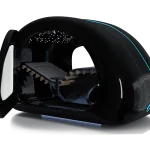
Para usuarios domésticos con AGA de leve a moderada, una gorra láser aprobada por la FDA o un panel de luz roja de calidad es una inversión razonable cuando se combina con un compromiso de 16 a 26 semanas. Para las clínicas que evalúan la terapia de luz roja como un servicio ofrecido, el equipo profesional proporciona una mayor irradiancia y una dosificación predecible para una base de clientes más amplia. Para Terapia de luz roja para el rostro: ciencia antienvejecimiento y reparación de la piel, un artículo complementario cubre la terapia de luz roja para aplicaciones cutáneas con el mismo enfoque basado en la evidencia. Para implementaciones de bienestar multimodal que combinan la luz roja con otras modalidades de recuperación, consulte Cápsula de longevidad Revique HaloX, que combina luz roja con infrarrojos y aromaterapia para centros de bienestar comerciales. Consulte siempre con un dermatólogo o profesional de la salud cualificado antes de comenzar cualquier tratamiento para la caída del cabello.


