














¿Qué tan fría está una cámara de crioterapia? Guía de temperaturas según el tipo de máquina.
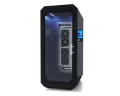
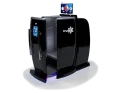
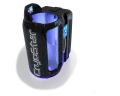
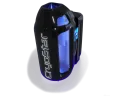
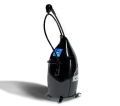
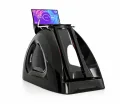
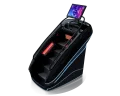
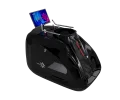
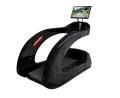
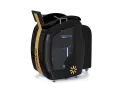
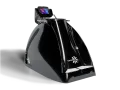
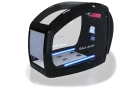
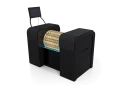
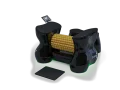
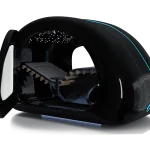
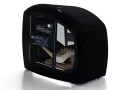
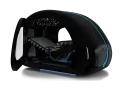
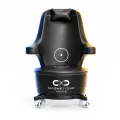
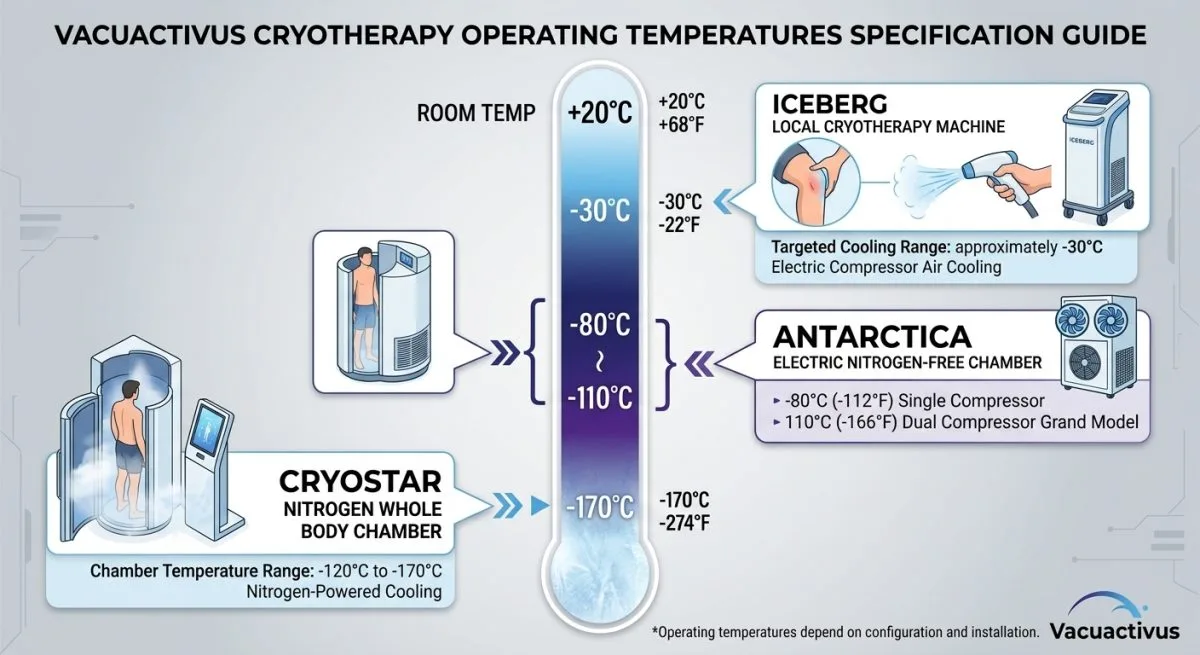
Una cámara de crioterapia funciona a temperaturas extremadamente bajas, pero la cifra exacta depende del tipo de máquina. Este artículo ajusta cada cifra a las especificaciones de producción de Vacuactivus, con notas explícitas donde difieren los rangos de mercado de terceros. Las cámaras de crioterapia de cuerpo entero eléctricas de Vacuactivus funcionan a -80 °C a -110 °C (-112 °F a -166 °F) en la línea Antarctica: Antarctica Electric a -100 °C, WBC Electric en el rango de -80 °C a -110 °C, y Antarctica Barrel Electric a -110 °C. Las criosaunas de nitrógeno líquido de Vacuactivus alcanzan de -140 °C a -170 °C (-220 °F a -274 °F): CryoStar alcanza -170 °C, y WBC Nitrogen funciona en el rango de -140 °C a -170 °C. Vacuactivus también fabrica un dispositivo de crioterapia eléctrica local (Iceberg Electric Cryo) que funciona a -20 °C para el tratamiento puntual de una sola zona. Algunas unidades eléctricas de terceros se anuncian con rangos de hasta -140 °C, y algunas unidades de nitrógeno de terceros se anuncian con un pico de hasta -180 °C; estos rangos reflejan afirmaciones publicitarias generalizadas en el mercado, no las especificaciones de los productos Vacuactivus, y esta guía los mencionará por separado cuando sea relevante.
Vacuactivus fabrica cámaras de crioterapia eléctricas y de nitrógeno líquido desde 2009 (más de 15 años), por lo que las temperaturas que se muestran a continuación reflejan la ingeniería de producción real, no simplificaciones de marketing. La respuesta honesta a la pregunta de qué tan fría se pone una cámara de crioterapia depende del equipo, y esta guía explica a los compradores los rangos de temperatura según el tipo de máquina, tomando como referencia las especificaciones de Vacuactivus. Cuando el artículo menciona que algunas afirmaciones del mercado se encuentran fuera del alcance de Vacuactivus, se trata de una aclaración intencionada, no de un respaldo implícito a dichas cifras.
Esta guía está dirigida a personas interesadas en aprender y comparar la experiencia real de las cámaras de crioterapia, así como a compradores (propietarios de estudios, spas y clínicas) que evalúan las máquinas según sus especificaciones reales, en lugar de basarse en cifras de marketing. Si está investigando antes de su primera sesión, tenga en cuenta que la crioterapia no sustituye el tratamiento médico; si padece alguna afección diagnosticada o toma medicamentos recetados, consulte con un profesional sanitario cualificado antes de reservar. Nunca utilice la cámara solo; debe haber otra persona presente en todas las sesiones.
Rangos de temperatura de las cámaras de crioterapia: una visión general
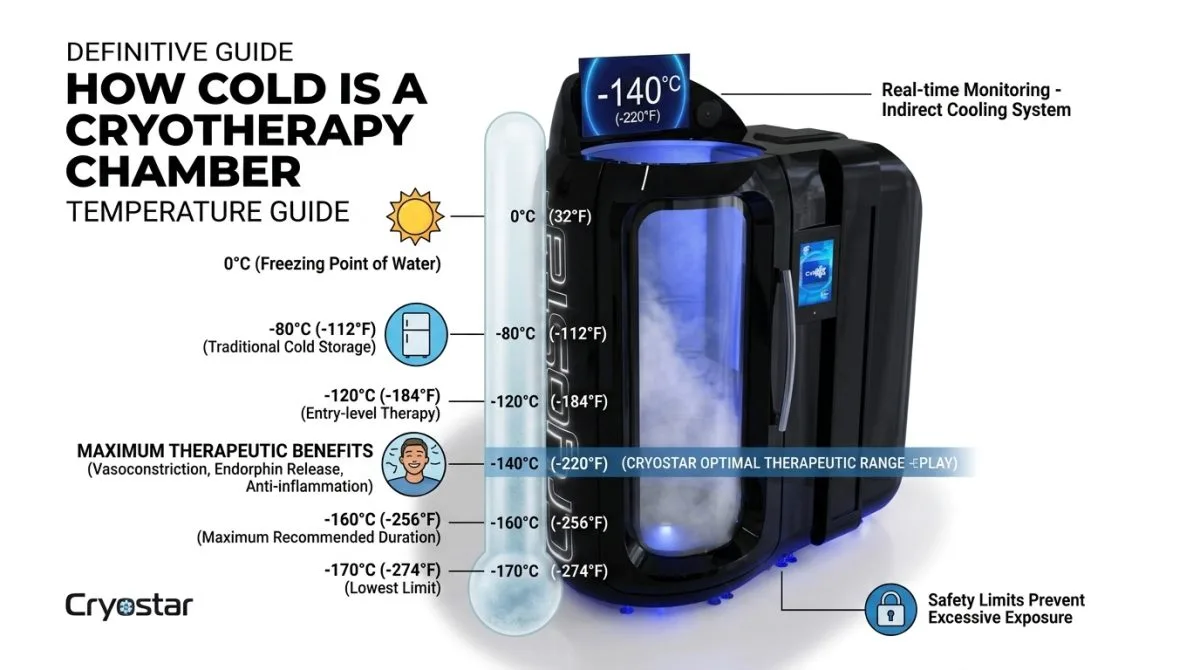
La mayoría de las sesiones de crioterapia de cuerpo entero de Vacuactivus se realizan entre -80 °C y -170 °C, según la tecnología. El extremo más cálido (de -80 °C a -110 °C) corresponde a la línea eléctrica Antarctica, que utiliza aire oxigenado respirable y permite la exposición de todo el cuerpo, incluida la cabeza. El extremo más frío (de -140 °C a -170 °C) corresponde a la línea de criosauna de nitrógeno líquido, que suministra nitrógeno vaporizado para sesiones más cortas con la cabeza fuera. Ambas funcionan con ventanas de sesión de 2 a 3 minutos. Vacuactivus también fabrica la crioterapia eléctrica Iceberg a -20 °C para tratamientos locales de una sola zona, un tipo fundamentalmente diferente de las cámaras de cuerpo entero, que se incluye aquí porque una guía de temperaturas para la gama Vacuactivus sin ella estaría incompleta.
| Tipo de máquina | Temperatura específica de Vacuactivus | Método de enfriamiento | Notas / Contexto del mercado |
|---|---|---|---|
| Cámara de crioterapia eléctrica Vacuactivus (línea Antártida) | -80 °C a -110 °C (-112 °F a -166 °F): Antarctica Electric a -100 °C, WBC Electric en todo el rango de -80 °C a -110 °C, Barrel Electric a -110 °C | Compresor de refrigeración con circuito de refrigeración en cascada; aire oxigenado respirable. | Cuerpo completo, incluyendo la cabeza; mayor tiempo de enfriamiento entre clientes. Algunas unidades eléctricas de terceros anuncian rangos de hasta -140 °C; esto es una afirmación del mercado, no una especificación de Vacuactivus. |
| Crioosauna de nitrógeno líquido Vacuactivus (CryoStar + Nitrógeno WBC) | -140 °C a -170 °C (-220 °F a -274 °F): CryoStar alcanza los -170 °C, WBC Nitrogen opera en un rango de -140 °C a -170 °C. | Vapor de nitrógeno líquido inyectado a través de boquillas de suministro; vapor rico en nitrógeno no apto para la respiración. | Cuerpo expuesto del cuello para abajo; la cabeza permanece fuera; enfriamiento más rápido; sesión típica de 2 a 3 minutos. Algunas unidades de nitrógeno de terceros anuncian picos de hasta -180 °C; ese es el contexto del mercado. |
| Crioterapia eléctrica local Vacuactivus (Iceberg Electric Cryo) – NUEVO según auditoría | -20 °C para tratamiento puntual de una sola zona | Refrigeración eléctrica aplicada a un aplicador de una sola área; no requiere nitrógeno. | Tratamiento localizado en rostro, articulaciones o tejidos específicos; la sesión suele durar de 5 a 10 minutos en la zona objetivo. No es un tratamiento corporal completo; complementa el uso de la cámara para instalaciones que ofrecen ambos servicios. |
| Comercialización de dispositivos de crioterapia localizada (nitrógeno/CO2 puntual) | -30 °C a -80 °C (-22 °F a -112 °F) en el punto tratado según el rango de mercado de terceros | Suministro puntual de nitrógeno o CO2 mediante boquilla aplicadora (fabricantes externos). | Tratamiento localizado para rostro y articulaciones; no para todo el cuerpo; sesión de 5 a 15 minutos. No fabricado por Vacuactivus. La fila Iceberg de arriba es la alternativa eléctrica local de Vacuactivus. |
| Baño de agua fría o baño de hielo (para contextualizar) | 5-15 °C (41-59 °F) | Refrigeración por conducción de agua | Inmersión de cuerpo entero; sesiones de 5 a 15 minutos; no es crioterapia en cámara, pero se compara frecuentemente con ella. El agua transfiere el calor aproximadamente 25 veces más rápido que el aire. |
Cámaras de crioterapia eléctrica: de -80 °C a -110 °C (línea Vacuactivus Antarctica)
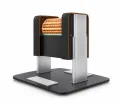
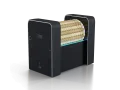
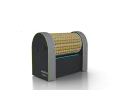
Las cámaras de crioterapia eléctricas utilizan compresores de refrigeración que impulsan un circuito de enfriamiento en cascada de refrigerante para alcanzar y mantener su rango de funcionamiento. La línea eléctrica Vacuactivus Antarctica alcanza de -80 °C a -110 °C: Antarctica Electric mantiene -100 °C, WBC Electric opera en el rango de -80 °C a -110 °C según el protocolo de la sesión, y Antarctica Barrel Electric mantiene -110 °C. Esa cifra de -110 °C es el límite superior de la línea eléctrica Vacuactivus; algunas unidades eléctricas de terceros se comercializan con rangos de hasta -140 °C, lo cual es una afirmación del mercado, y los compradores deben verificar la temperatura de producción real comparándola con la medición calibrada de la caída de temperatura de la piel en lugar de la placa de características. Para obtener una visión más detallada de cómo funciona la tecnología eléctrica sin nitrógeno y por qué cuesta y se comporta de manera diferente al nitrógeno, consulte Cámara de crioterapia eléctrica: Cómo funciona la tecnología sin nitrógeno que abarca el mecanismo y la comparación en profundidad.
La característica distintiva de una cámara de crioterapia eléctrica, en comparación con las unidades de nitrógeno, es que el aire en su interior está oxigenado y es respirable. Al entrar, todo el cuerpo, incluida la cabeza, permanece dentro del área de tratamiento durante la sesión completa de 2 a 3 minutos. Esto cambia la experiencia del cliente en comparación con las criosaunas de nitrógeno donde la cabeza queda fuera, y también modifica la ingeniería del equipo: una cámara eléctrica debe mantener todo el volumen de aire oxigenado a la temperatura de funcionamiento, en lugar de emitir una ráfaga localizada de vapor de nitrógeno. Por ello, las unidades eléctricas tienen un costo inicial más elevado y un enfriamiento más lento entre clientes, pero evitan por completo la cadena de suministro de nitrógeno consumible y el riesgo de asfixia.
Crioterapia eléctrica localizada: Iceberg -20 °C (diferente tipo, diferente aplicación)
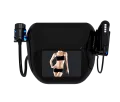
Una categoría que no puede faltar en una guía de temperaturas "por tipo de máquina" es la crioterapia eléctrica local. Vacuactivus fabrica el Iceberg Electric Cryo a -20 °C para tratamientos puntuales en áreas específicas: aplicaciones faciales, tratamiento focal de tejidos articulares o recuperación dirigida en un área, en lugar de inmersión de todo el cuerpo. Este es un tipo de máquina fundamentalmente diferente de una cámara de cuerpo entero y funciona a una temperatura fundamentalmente distinta (-20 °C en lugar de -80 °C a -170 °C) porque el área de tratamiento es un área única a corta distancia en lugar de todo el volumen corporal. Algunos fabricantes de terceros ofrecen dispositivos localizados de nitrógeno o CO2 a -30 °C a -80 °C en el punto tratado; el Iceberg de Vacuactivus es la alternativa eléctrica a -20 °C. La duración de la sesión en un dispositivo local suele ser de 5 a 10 minutos en el área objetivo, en comparación con los 2 a 3 minutos totales para una cámara de cuerpo entero.
Criosaunas de nitrógeno líquido: -140 °C a -170 °C (línea Vacuactivus CryoStar)
La crioterapia con nitrógeno líquido ofrece temperaturas máximas más bajas mediante un mecanismo fundamentalmente diferente. En lugar de refrigeración por compresor, una criosauna inyecta nitrógeno líquido vaporizado a través de boquillas de suministro en una cabina cerrada. La línea de nitrógeno Vacuactivus opera entre -140 °C y -170 °C: CryoStar alcanza los -170 °C en su pico operativo, y WBC Nitrogen opera en el rango de -140 °C a -170 °C. Esa cifra de -170 °C en CryoStar es el pico más frío en la gama Vacuactivus y marca el límite superior práctico de temperatura de la cámara de nitrógeno para una unidad de producción bien diseñada. Algunas criosaunas de terceros anuncian picos de hasta -180 °C; esta es una afirmación comercial más amplia que una especificación de Vacuactivus, y los lectores que evalúen cámaras con una placa de identificación de -180 °C deben solicitar la metodología de calibración que respalda esa cifra y el informe de prueba de terceros. Para una visión más amplia de lo que realmente es una cámara de crioterapia a nivel de componentes, consulte ¿Qué es una cámara de crioterapia? Anatomía de una criosauna moderna que analiza el equipo en profundidad.
Las implicaciones prácticas del método de nitrógeno incluyen un enfriamiento más rápido entre sesiones (mayor número de clientes por hora), temperaturas máximas más bajas en la pantalla, duraciones típicas de sesión más cortas (2-3 minutos en lugar de 3-4 minutos para las eléctricas) y el requisito de que la cabeza del cliente permanezca fuera de la cabina, por encima del borde. El vapor de nitrógeno no es respirable, por lo que el formato de criosauna con la cabeza fuera no es una elección estética, sino un requisito de seguridad, y es la razón por la que las cámaras de nitrógeno de cuerpo entero, incluyendo la cabeza, son poco comunes, mientras que las eléctricas son habituales. La cadena de suministro de nitrógeno (entrega de nitrógeno líquido, dewars de almacenamiento, ventilación y monitorización del oxígeno en las instalaciones) es la contrapartida operativa para lograr una temperatura máxima más baja y un mayor número de clientes.
La temperatura que muestra la pantalla frente a la temperatura que siente tu piel.
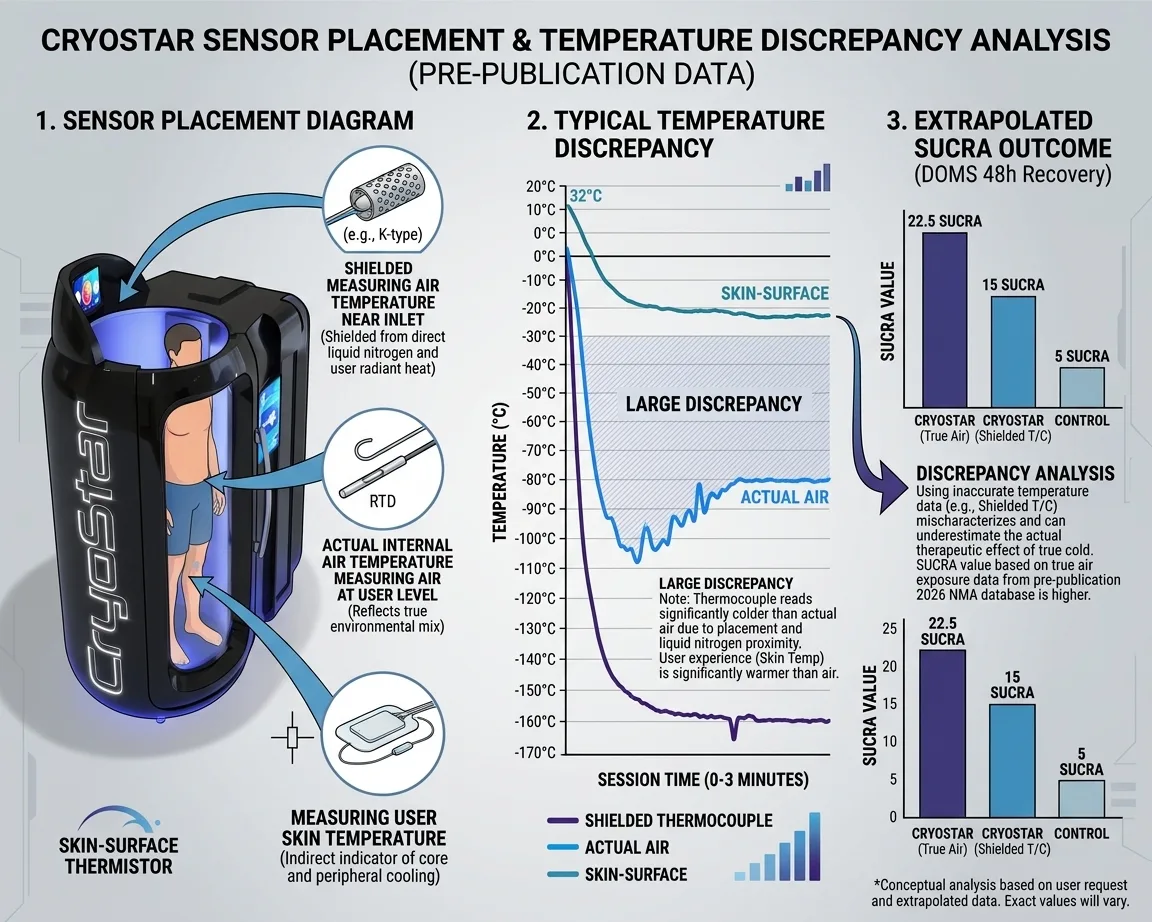
Esta sección distingue la información objetiva del contenido con fines comerciales. Los análisis de fabricantes externos han revelado un detalle que la mayoría de las guías de temperatura de las cámaras de crioterapia pasan por alto: la temperatura que se muestra en la pantalla no suele coincidir con la temperatura real que experimenta la piel. En muchas cámaras, el sensor de temperatura se encuentra detrás de una cubierta para evitar que el aire frío incida directamente sobre el paciente, lo cual es una medida de seguridad y comodidad. Sin embargo, esto significa que la lectura mostrada representa la ubicación del termopar protegido, en lugar de la temperatura del aire libre a nivel de la piel, y ambas pueden diferir en 20 °C o más, según el diseño de la cámara.
Existe una pista práctica para detectar esto: las pantallas LED y la electrónica digital simplemente no funcionan por debajo de los -40 °C. Si una cámara muestra una pantalla LED en funcionamiento dentro del área de tratamiento, el aire que la rodea no puede estar a una temperatura inferior a -40 °C. Por esta razón, las pantallas suelen ubicarse fuera de la zona más fría o detrás de un aislamiento, y leer el valor sin saber dónde se midió es un error de especificación. Lo que realmente importa desde el punto de vista terapéutico es la disminución de la temperatura de la superficie de la piel durante la sesión, que es una medición diferente que se realiza con sensores de contacto con la piel en lugar de termopares de aire. Solicite al proveedor la metodología de medición de la disminución de la temperatura de la piel junto con la temperatura del aire indicada en la placa de características, y compare valores similares entre cámaras en lugar de comparar directamente los valores mostrados.
¿Qué temperatura desencadena realmente la respuesta al frío?
El mecanismo terapéutico de la crioterapia de cuerpo entero se activa por un descenso rápido de la temperatura de la superficie cutánea, lo que provoca vasoconstricción, respuesta del sistema nervioso simpático y liberación de la citocina antiinflamatoria IL-10. Los protocolos de investigación sugieren que el enfriamiento significativo de la piel comienza a acumularse a temperaturas del aire de alrededor de -80 °C durante exposiciones de 2 a 3 minutos; esta es la razón por la que el límite inferior del rango eléctrico de Vacuactivus (de -80 °C a -110 °C) está configurado donde está, y por la que las sesiones se realizan en el intervalo de 2 a 3 minutos en todos los tipos de cámaras. Para una guía para principiantes sobre lo que sucede realmente durante esos 2-3 minutos a la temperatura de la cámara, consulte Sesiones en cámara de crioterapia: qué esperar en su primera visita. que abarca la experiencia de la sesión de principio a fin.
Por debajo de este umbral (temperatura del aire superior a -80 °C durante una sesión demasiado corta para lograr un enfriamiento adecuado de la piel), el cuerpo no alcanza de forma fiable el estado de estrés por frío que impulsa el efecto terapéutico. Por encima de este umbral, las temperaturas del aire más frías aceleran el descenso de la temperatura superficial de la piel y pueden acortar la exposición necesaria, lo que explica en parte por qué las criosaunas de nitrógeno a -170 °C funcionan durante 2 minutos, mientras que las cámaras eléctricas a entre -80 °C y -110 °C suelen funcionar durante 3 minutos. Ambos extremos proporcionan el descenso terapéutico de la temperatura de la piel (30-40%), solo que a través de diferentes rutas de temperatura del aire.
¿Qué tan frío es demasiado frío? Límites de seguridad
El intervalo de 2 a 4 minutos para todas las cámaras de crioterapia no es arbitrario. El protocolo clínico estándar abarca el rango de -80 °C a -170 °C con límites estrictos de 2 a 4 minutos precisamente porque la exposición limitada en el tiempo previene el daño tisular que de otro modo ocurriría a estas temperaturas. Por encima de los 4 minutos a la temperatura de la cámara, el riesgo de lesiones por frío aumenta rápidamente independientemente de la tecnología; por debajo de los 2 minutos, el enfriamiento de la piel no se ha acumulado lo suficiente como para desencadenar de forma fiable la respuesta terapéutica. El intervalo de 2 a 4 minutos está calibrado según el umbral terapéutico, no según las limitaciones del equipo.
Las personas con afecciones cardiovasculares (hipertensión no controlada, eventos cardíacos recientes, arritmias), enfermedad de Raynaud, urticaria por frío, crioglobulinemia, fiebre o infección activa, embarazo o heridas abiertas no deben usar una cámara de crioterapia sin una autorización médica documentada de un médico calificado que conozca su historial. Los estudios deben evaluar estas contraindicaciones en el cuestionario de admisión y rechazar las sesiones en las que aparezcan sin autorización; esto es una medida de seguridad, no un rechazo. Nunca use una cámara solo; debe haber una segunda persona presente en todas las sesiones. Las cámaras enfriadas con nitrógeno conllevan un riesgo adicional documentado (el vapor de nitrógeno desplaza el oxígeno y puede causar hipoxia y pérdida de conciencia en una habitación cerrada), razón por la cual las unidades de nitrógeno requieren ventilación y monitoreo de oxígeno, y por la cual la regla de nunca estar solo se aplica en toda la industria después del caso fatal de 2015 en Nevada.
Espectro de temperaturas de la terapia de frío
Las cámaras de crioterapia se sitúan en el extremo de mayor intensidad y menor duración de un espectro más amplio de terapia de frío. Las diferentes profundidades de frío se adaptan a distintas aplicaciones. Una bolsa de hielo aplicada localmente permanece a unos 0 °C sobre la piel durante 15-20 minutos. Un baño de hielo sumerge todo el cuerpo en agua a 5-15 °C durante 5-15 minutos y transfiere calor unas 25 veces más rápido que el aire a la misma temperatura. El Vacuactivus Iceberg Electric Cryo proporciona -20 °C en una sola zona tratada durante 5-10 minutos. Los dispositivos localizados de nitrógeno o CO2 de terceros en el mercado proporcionan entre -30 °C y -80 °C en un punto durante 5-15 minutos.
Las cámaras de crioterapia eléctricas Vacuactivus (de -80 °C a -110 °C, cuerpo entero, incluida la cabeza, sesiones de 2 a 3 minutos) y las criosaunas de nitrógeno (de -140 °C a -170 °C, con la cabeza fuera, sesiones de 2 a 3 minutos) se sitúan en el extremo de ese espectro de temperatura del aire. Ambas proporcionan la reducción terapéutica de la temperatura de la piel mediante rutas de temperatura del aire fundamentalmente diferentes y ventanas de duración de sesión distintas, y ambas operan dentro del margen de seguridad general de 2 a 4 minutos. Lo que se encuentra entre ellas (declaraciones de mercado más amplias de terceros de -110 °C a -140 °C para las eléctricas o de -160 °C a -180 °C para las de nitrógeno) es el contexto del mercado para los compradores que evalúan a varios proveedores; los rangos de Vacuactivus mencionados anteriormente son la referencia autorizada para este artículo.
Preguntas frecuentes
P1. ¿Qué tan fría está una cámara de crioterapia?
Depende del tipo de máquina. Las cámaras de crioterapia eléctrica de cuerpo entero Vacuactivus (línea Antarctica) funcionan a -80 °C a -110 °C (-112 °F a -166 °F): Antarctica Electric mantiene -100 °C, WBC Electric entre -80 °C y -110 °C, y Barrel Electric a -110 °C. Las criosaunas de nitrógeno líquido Vacuactivus (CryoStar + WBC Nitrogen) funcionan a -140 °C a -170 °C (-220 °F a -274 °F). Vacuactivus también fabrica el dispositivo local Iceberg Electric Cryo a -20 °C para tratamientos puntuales en áreas específicas. Las afirmaciones de mercado más generales (algunas cámaras eléctricas anuncian hasta -140 °C, algunas unidades de nitrógeno hasta -180 °C en su punto máximo) reflejan afirmaciones del mercado en general, no las especificaciones de Vacuactivus.
P2. ¿Cuál es la temperatura de una cámara de crioterapia eléctrica en comparación con una cámara de crioterapia con nitrógeno?
Las cámaras eléctricas y de nitrógeno operan en rangos diferentes por diseño. Rango eléctrico de Vacuactivus (línea Antarctica): de -80 °C a -110 °C (de -112 °F a -166 °F). Rango de nitrógeno de Vacuactivus (CryoStar y WBC Nitrogen): de -140 °C a -170 °C (de -220 °F a -274 °F). El sistema de nitrógeno alcanza una temperatura máxima del aire más baja, pero utiliza nitrógeno líquido vaporizado (la cabeza debe permanecer fuera de la cabina y el vapor de nitrógeno no es respirable), mientras que el sistema eléctrico mantiene aire oxigenado respirable en toda la cámara, incluida la zona de la cabeza. Los rangos más amplios del mercado de terceros pueden extender estos límites; las cifras anteriores corresponden a las especificaciones del producto Vacuactivus.
P3. ¿La temperatura que muestra la pantalla es precisa?
No necesariamente. Como señalan el equipo de fabricación de CryoMed y otros análisis de equipos, el sensor de temperatura en muchas cámaras se coloca detrás de una cubierta para evitar que el aire más frío incida directamente sobre el paciente. La lectura mostrada representa la ubicación del termopar protegido, no la temperatura del aire libre a nivel de la piel, y ambas pueden diferir en 20 °C o más, según el diseño de la cámara. Las pantallas LED y la electrónica digital tampoco funcionan por debajo de los -40 °C, por lo que cualquier LED en funcionamiento dentro del área de tratamiento no puede estar a la temperatura ambiente de la cámara; está ubicado en una zona más cálida por diseño. Lo que realmente importa desde el punto de vista terapéutico es la caída de temperatura en la superficie de la piel, que es una medición diferente que se realiza con sensores de contacto con la piel. Solicite a cualquier proveedor la metodología para medir la caída de temperatura en la piel, además de la temperatura del aire indicada en la placa de características.
P4. ¿Qué temperatura es demasiado baja para la crioterapia?
No existe un valor fijo de "temperatura del aire demasiado baja" debido a la limitación de tiempo de las sesiones. Por debajo de los -170 °C, durante una exposición de 2 a 3 minutos (el límite superior de la línea de nitrógeno Vacuactivus), se observa una meseta de ganancias en relación con el riesgo incremental de congelación. El intervalo de exposición estándar de 2 a 4 minutos en todos los tipos de cámaras está calibrado para alcanzar el descenso terapéutico de la temperatura de la piel sin llegar a causar lesiones por frío. Extender el tiempo más allá de los 4 minutos a la temperatura de la cámara aumenta drásticamente el riesgo de daño tisular, independientemente de la tecnología, razón por la cual los estudios imponen un máximo de 3 a 4 minutos. Los límites absolutos se refieren más al tiempo de exposición a la temperatura que a la temperatura en sí.
P5. ¿Qué tan fría es la crioterapia en comparación con un baño de hielo?
Las cámaras de crioterapia son mucho más frías que los baños de hielo a temperatura ambiente: Vacuactivus eléctrico a -80 °C a -110 °C y nitrógeno a -140 °C a -170 °C frente a 5-15 °C para inmersión en agua fría. Pero el agua transfiere calor unas 25 veces más rápido que el aire, por lo que el agua fría a 5-15 °C durante 10-15 minutos alcanza un enfriamiento más profundo en los tejidos de las extremidades que 2-3 minutos a -110 °C en aire. Por eso, el metaanálisis de la red de crioterapia Frontiers 2026 concluyó que la inmersión en agua fría superó a las cámaras de crioterapia para el alivio del dolor en la primera hora después del ejercicio, a pesar de ser 100 °C más caliente. Mecanismos diferentes, profundidad de penetración diferente, duración de la sesión diferente, perfil de resultados diferente.
P6. ¿Qué tan fría se pone una criosauna?
Las criosaunas de nitrógeno líquido Vacuactivus (CryoStar y WBC Nitrogen) operan a temperaturas de entre -140 °C y -170 °C (-220 °F y -274 °F), alcanzando la CryoStar los -170 °C en su punto máximo de funcionamiento. El cuerpo, desde el cuello hacia abajo, se expone al vapor de nitrógeno, mientras que la cabeza permanece fuera de la cabina, dado que el vapor de nitrógeno no es respirable. Algunas criosaunas de terceros se anuncian con una temperatura máxima de -180 °C; sin embargo, esta cifra es una afirmación comercial generalizada, y los compradores que evalúen cámaras con una indicación de -180 °C deben solicitar la metodología de calibración y el informe de pruebas de terceros que respaldan dicha cifra.
P7. ¿Cuánto tiempo se puede permanecer de forma segura en una cámara de crioterapia?
Las sesiones estándar de cuerpo completo duran de 2 a 4 minutos, y este límite no es arbitrario. Por debajo de los 2 minutos, el cuerpo generalmente no ha alcanzado la respuesta sistémica al estrés por frío que impulsa el efecto terapéutico. Por encima de los 4 minutos a la temperatura de la cámara, el riesgo de daño tisular por exposición al frío aumenta rápidamente, independientemente de la tecnología. El intervalo de 2 a 4 minutos se aplica tanto a la cámara eléctrica Vacuactivus (normalmente 3 minutos a -80 °C a -110 °C) como a la de nitrógeno (normalmente de 2 a 3 minutos a -140 °C a -170 °C), y se garantiza su cumplimiento a nivel de equipo mediante temporizadores de sesión y a nivel de estudio mediante la supervisión del personal. Nunca utilice una cámara solo; debe haber una segunda persona presente en todas las sesiones.
P8. ¿Cuál es la cámara de crioterapia más fría?
En la gama Vacuactivus, la cámara más fría es CryoStar, que alcanza los -170 °C (-274 °F) en su punto máximo de funcionamiento. Algunas criosaunas de terceros anuncian una temperatura máxima de -180 °C, lo cual es una afirmación comercial más general que una especificación de Vacuactivus, y los lectores que evalúen estas cifras nominales deben solicitar la metodología de calibración y el informe de pruebas de terceros. En cuanto a la temperatura del aire, el beneficio terapéutico no se correlaciona linealmente con la temperatura máxima de frío; tanto las cámaras de nitrógeno como las eléctricas proporcionan la misma reducción de la temperatura de la piel (30-40%) en la misma ventana de sesión de 2 a 4 minutos, solo que a través de diferentes rutas de temperatura del aire. La cámara más fría sobre el papel no es automáticamente la mejor opción; la capacidad de reducción de la temperatura de la piel, la consistencia en la duración de la sesión y la precisión de la monitorización son más importantes que la temperatura nominal.
Conclusión
Las cámaras de crioterapia eléctrica Vacuactivus (línea Antarctica) funcionan a -80 °C a -110 °C, las criosaunas de nitrógeno líquido Vacuactivus (CryoStar + WBC Nitrogen) alcanzan de -140 °C a -170 °C, y la crioterapia eléctrica Iceberg de Vacuactivus proporciona -20 °C para el tratamiento localizado de una sola zona. Ambos tipos de crioterapia de cuerpo entero proporcionan la misma reducción terapéutica de la temperatura de la piel (30-40%) a través de diferentes rutas de temperatura del aire. Algunas afirmaciones de terceros en el mercado amplían esos rangos (eléctrica hasta -140 °C en algunas unidades, nitrógeno hasta un pico de -180 °C en algunas unidades); estas cifras reflejan publicidad generalizada en el mercado, no especificaciones de Vacuactivus, y este artículo considera los rangos de Vacuactivus mencionados anteriormente como la referencia autorizada.
Para los compradores que evalúan las máquinas de crioterapia según sus especificaciones reales en lugar de las cifras de marketing, la guía práctica consiste en centrarse en la capacidad de descenso de la temperatura de la piel, la consistencia de la duración de la sesión, la precisión del monitoreo (sensores de contacto con la piel junto con termopares de aire), la metodología de calibración y los términos de la garantía comercial. La temperatura nominal es un punto de partida, no la solución. Explorar cámaras de crioterapia comerciales para toda la gama Vacuactivus (línea eléctrica Antártida, línea de nitrógeno CryoStar y línea eléctrica local Iceberg), Sistemas de sauna de crioterapia de cuerpo entero para la configuración WBC, o la Centro de información sobre criosaunas para el centro de información más amplio. Para ver el desglose de precios, consulte ¿Cuánto cuesta una máquina de crioterapia? Cifras reales de 2026.


