

















Massage Chair Cost: True Investment for Wellness and Recovery Studios
A commercial massage chair for a wellness or recovery studio costs anywhere from $300 for an entry-level residential unit to $15,000 and above for a flagship luxury spa model, with the workhorse commercial tier landing between $5,000 and $12,000. Between those anchors sit four practical tiers, each fitting a different service model and each pricing at a different payback horizon.
This guide covers the true cost of putting a chair in a studio, not just the sticker price. Total cost of ownership includes freight, installation, electricity, insurance, maintenance, staff allocation and marketing, and it typically adds another 30-50% to the equipment price over the 5-7 year service life of a mid-to-premium unit. Session revenue math, ROI payback timelines, financing options and the commercial-versus-residential distinction that separates 12-month burnout from 5-7 year service life at commercial load are all covered below, with the numbers verifiable against 2026 industry-observed pricing.
Vacuactivus manufactures the De-Stress Lounge zero-gravity massage chair as part of a broader commercial wellness equipment range since 2009 (over 15 years). This is a cost-consultant guide for B2B operators, not a sales page. The chair pricing anchors reflect market observations; individual studio economics vary substantially by location, clientele, pricing model, and operational execution. Nothing here is medical or financial advice; ROI and financing decisions should be reviewed with a qualified accountant or business advisor.
How Much Does a Massage Chair Cost? Full Price Breakdown by Tier
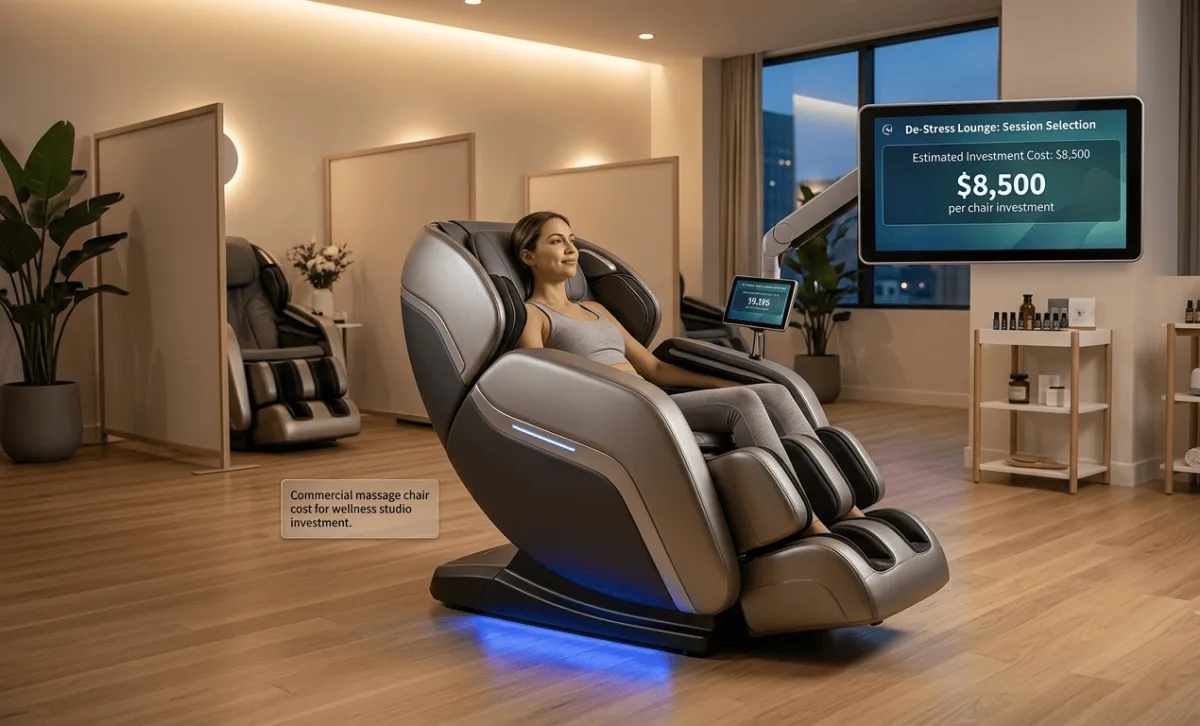
The commercial massage chair market spans four practical price tiers, each defined by construction, feature set, and rated duty cycle rather than by marketing tier label. Entry-level chairs at $300 to $800 are residential-grade with basic vibration and shiatsu, limited zero-gravity, and no full-body coverage. They are legitimate home tools and fail as commercial equipment: a chair rated for 30-60 minutes of daily home use burns through its lifecycle in 12-18 months at 8+ hours of commercial load. Putting an entry chair in a studio is the single most expensive buying mistake in this category, and it looks like a saving until month 14.
Mid-range prosumer chairs at $1,000 to $3,500 add 2D/3D rollers, heat therapy, partial zero-gravity and basic touch controls, rated for 3-5 years at commercial use. They fit small studios, chiropractic add-ons and low-volume commercial deployment. Premium commercial-grade chairs at $5,000 to $12,000 are the workhorse category: full 4D rollers, complete zero-gravity, heat therapy, foot reflexology and commercial warranty coverage, rated for 5-7 years at 6-10 hrs/day. This is where most mainstream wellness studios, recovery centers and established spas anchor their equipment selection. Luxury flagship chairs at $12,000 to $15,000+ add top-tier 4D, AI body scanning, spa-grade materials and extended warranty, rated for 7-10 years with proper servicing. They suit luxury spa positioning, premium urban markets and high-margin session pricing where the chair itself is part of the service story.
| Tier | Price Range (USD) | Key Features | Best For | Durability |
|---|---|---|---|---|
| Entry-Level (residential-grade) | $300 – $800 | Basic vibration + shiatsu, limited zero-gravity, no full-body coverage | Home use, 30-60 min daily; NOT recommended for commercial deployment | 1-3 years at residential use, 12-18 months at commercial 8+ hrs/day |
| Mid-Range (prosumer) | $1,000 – $3,500 | 2D/3D rollers, heat therapy, partial zero-gravity, basic touch controls | Small studios, chiropractic add-on, low-volume commercial | 3-5 years at commercial use |
| Premium (commercial-grade) | $5,000 – $12,000 | Full 4D rollers, complete zero-gravity, heat therapy, foot reflexology, commercial warranty | Mainstream recovery studios, wellness centers, established spa | 5-7 years at 6-10 hrs/day commercial use |
| Luxury (flagship commercial) | $12,000 – $15,000+ | Top-tier 4D, AI body scanning, spa-grade materials, extended warranty, flagship-class construction | Luxury spa positioning, premium urban markets, high-margin session pricing | 7-10 years at commercial use with proper servicing |
Commercial vs Residential Massage Chairs: What Is the Difference?
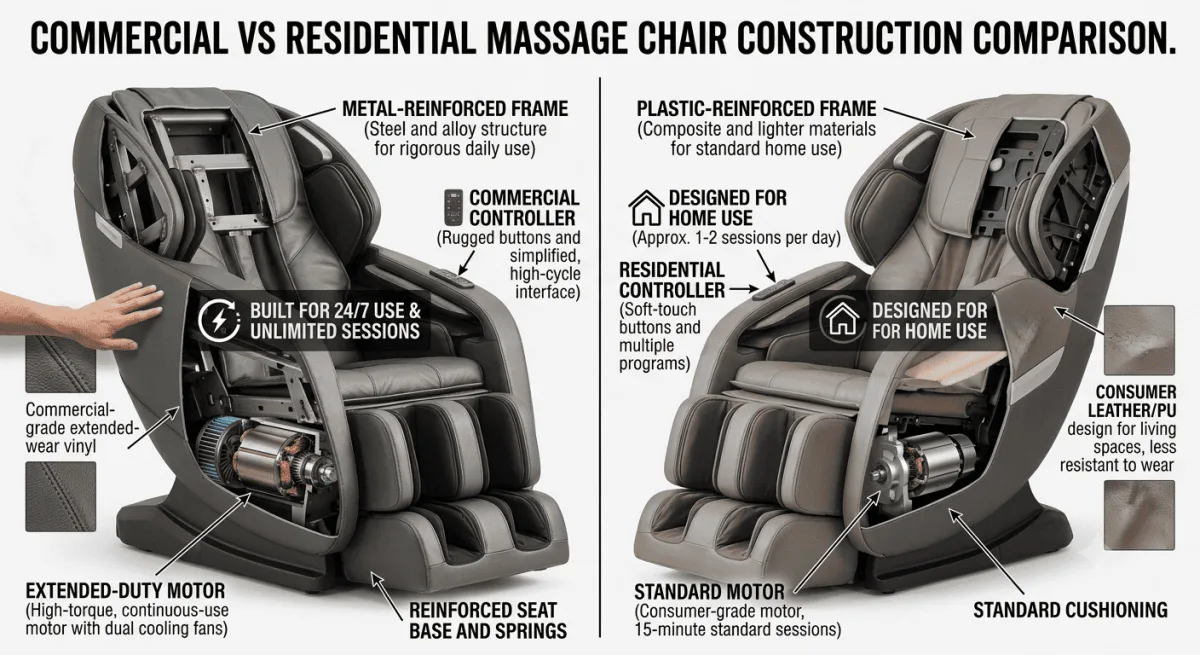
The single most consequential distinction in this category is not brand or feature list but duty cycle – how many hours the chair is rated to run without wearing. A residential chair is designed for 30-60 minutes of daily use in a home context. A commercial-grade chair is engineered for 6-10 hours of continuous daily use at 8-12 sessions per day. The difference shows up in reinforced steel frame construction versus plastic housing, sealed motors rated for continuous operation versus residential intermittent-use motors, and commercial-grade upholstery designed to survive daily cleaning cycles versus consumer-grade fabric.
The commercial premium exists for a real reason: putting a residential chair in a commercial room burns through its lifecycle in 12-18 months instead of the 5-7 years a commercial unit delivers under the same load, and the repair, warranty gap and replacement cost over that shortened life exceeds the money saved at purchase. There is also a positioning cost that does not show up on the spec sheet: a $500 residential chair in a $60-per-session wellness studio undercuts the pricing position the whole room depends on, because a client paying premium prices notices equipment that looks domestic. The chair is part of the service story, and the tier of the chair tells that story regardless of how it performs on the day.
Session Revenue: How Much Can a Massage Chair Actually Earn?
Session pricing for a chair session in 2026 US wellness markets typically runs $15-$25 for a standard walk-in tier, $35-$65 for a mid-range spa or recovery studio session, and $65-$100 for a luxury spa signature session in premium urban markets. Session length is 15-30 minutes across tiers, and pricing anchors to the local competitive landscape (adjacent chiropractic, massage therapist, and other recovery services) rather than to the equipment cost.
Packs of 10 typically sell at 15-20% discount to single-session pricing, and monthly unlimited memberships run $79 to $149 with $99-$129 as the most common tier in mid-2026 US market data. Membership-heavy revenue mix is what compresses payback and stabilizes cash flow versus volatile single-session walk-in revenue: a chair booked 12 times a day at $25 per session (60% utilization on a 200-session monthly capacity) grosses roughly $3,000/month; adding a membership base of 30 members at $99/month adds another $3,000 in recurring revenue. The pricing question for a specific operator is not the national range but the local anchor, and that anchor sets the ceiling on what any chair tier can earn regardless of feature count. For the wider zero-gravity mechanism context that supports premium pricing at the top tier, see Zero Gravity Massage Chair: How Reclined Position Triples Recovery which walks the physiology that anchors luxury session pricing.
ROI Math: Real Numbers by Chair Tier
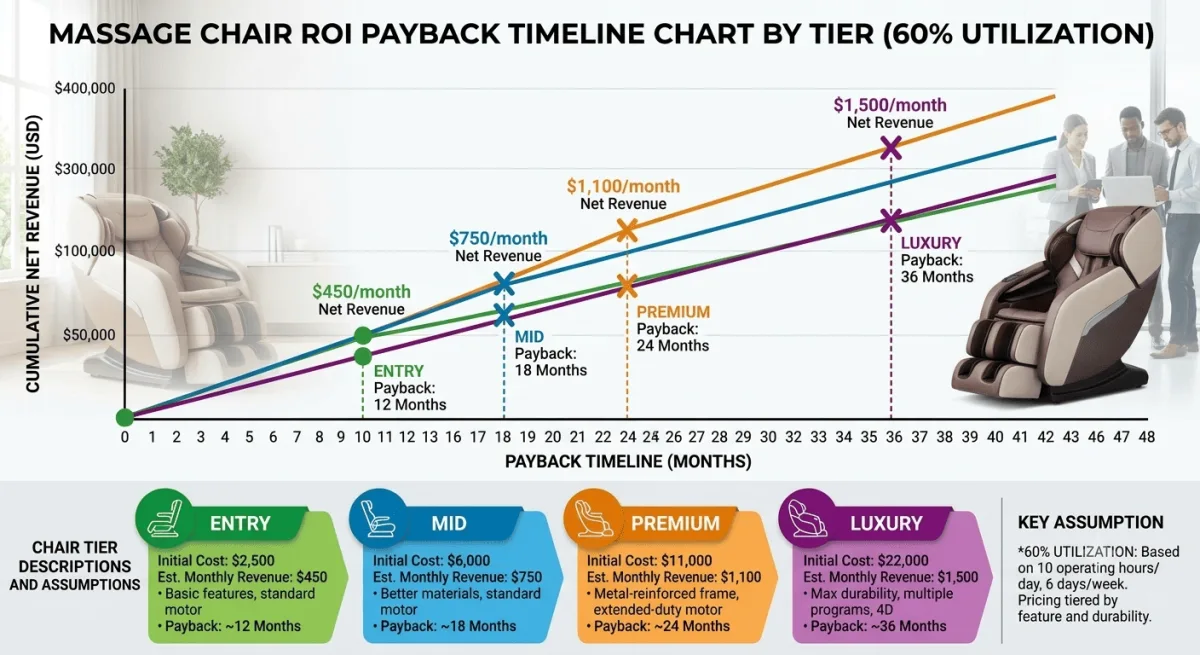
Real payback timelines depend on tier price, session pricing, and utilization, and the math works transparently. A mid-range $2,000 prosumer chair at $25 per session and 60% utilization (roughly 120 sessions/month across 20 operating days at 10 sessions/day) grosses $3,000/month; net contribution after operating costs (electricity, staff allocation, maintenance) of roughly $1,000-$1,200 lands at $1,800-$2,000/month, giving payback in approximately 2 months at that scenario. A premium $8,000 commercial chair at $45 per session and 60% utilization at higher-margin operating grosses $5,400/month; net contribution around $3,500-$4,000 gives payback in approximately 4-5 months.
A luxury $15,000 flagship chair at $80 per session and 55% utilization grosses $8,800/month; net around $5,500-$6,500 gives payback in approximately 8-9 months. Higher utilization (75%+) or membership pricing that raises effective average per-session revenue compresses each window by 20-40%. Lower utilization (40% or under) or aggressive discounting stretches payback by 40-60%. The 2-9 month range brackets what most operators see across tiers at 60% utilization; a sub-40% utilization studio should model payback closer to 6-15 months depending on tier and budget accordingly. Model the specific studio’s numbers before capital allocation rather than assuming industry benchmarks apply directly. For a comparison of the full commercial massage chair market with model-by-model buying options, see Massage Chairs for Sale: Commercial Models for Spas and Recovery Studios which walks the model landscape by tier.
Total Cost of Ownership: What You Actually Pay Beyond Sticker Price
The equipment sticker price is the largest single cost but not the total, and the difference matters for operators comparing options honestly. Total cost of ownership over a 5-year service life for a mid-to-premium chair typically breaks down as: equipment sticker price roughly 55% of TCO, freight and installation 5%, electricity 5%, insurance 5%, maintenance and consumables 10%, staff allocation 15%, marketing 5%. That works out to TCO of roughly 1.6-1.8× the equipment purchase price over 5 years for a well-run operation.
The concrete monthly numbers for a $8,000 premium unit look like this: electricity $30-$80/month depending on utilization (chairs draw 200-400W during operation, minimal draw idle), insurance for equipment plus liability coverage $50-$150/month allocation, maintenance and replacement upholstery covers and small parts $60-$120/month averaged across service life, cleaning supplies $20-$40/month, staff allocation for front desk plus scheduled turnover $500-$1,000/month depending on staffing model, marketing spend for the chair as a service line $100-$400/month depending on channel mix. Total recurring operating cost lands roughly $760-$1,790/month for a single-chair setup – a range that should be modeled before purchase rather than discovered in month four when the membership base has not yet ramped.
Financing Options: How to Buy a Commercial Massage Chair
For a chair in the $2,000-$15,000 range, financing decisions come down to cash preservation versus total interest cost, and the practical options split cleanly. Cash purchase gives full ownership immediately with no interest paid, but ties up capital that could otherwise support marketing, inventory or working capital during the ramp period. Equipment leasing at $200-$500/month over 36-60 months preserves cash and the monthly payment is typically a deductible operating expense; total cost over the lease exceeds cash purchase by 15-30% depending on terms, and lease-end options vary (return, renew, or purchase at residual). SBA loans and traditional equipment loans offer 5-7 year terms at moderate rates with ownership retained; these fit operators who want ownership without the immediate cash outlay.
Manufacturer financing is often the most competitive option on multi-unit orders or on facility-scale purchases combining chair plus adjacent equipment (cryotherapy, red light, other recovery modalities). For operators planning a facility build with multiple equipment lines, Vacuactivus lease cryotherapy chamber and commercial equipment financing covers the multi-modality leasing framework. Whichever option chosen, verify the same specs: duty cycle rated to your projected sessions per day, warranty terms including whether commercial use is covered rather than excluded (consumer warranties void the moment a paying client uses the chair), and operator training included with delivery. A lease that locks you into a chair with wrong duty cycle is not a saving; a slightly higher purchase price on a properly-rated commercial unit typically outperforms it over the service life.
When Should Wellness Studios Buy a Commercial Massage Chair?
The strongest case for a chair investment is a studio with an existing membership base and adjacent recovery services where the chair adds a menu line without requiring standalone acquisition. Chiropractic clinics adding a chair typically increase average revenue per visit by $20-$50 through the additional service. Recovery studios use it as a recovery-and-relaxation station between other modalities. Wellness centers position it in an upgraded membership tier. Boutique fitness operators add it as a post-training recovery service that fills the gap after the workout. Medspas use it as an ambient service delivered while other treatments run in adjacent rooms.
Where a chair fits less well: a high-volume standalone location where floor space would earn more as a treatment room with a therapist rather than as a chair station; a market with no existing wellness demand infrastructure to draw from; an operator unwilling to explain the difference between a $500 home chair and a $8,000 commercial one, since clients will notice the position mismatch. Verify the fit with the specific clientele before signing the purchase order – ask them what they would pay for a chair session at your intended tier before buying at that tier. The chair is a service tool; the service model determines whether the tier is worth the price.
Vacuactivus De-Stress Lounge: Zero-Gravity Massage Chair Investment
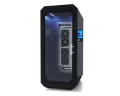
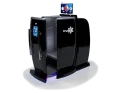
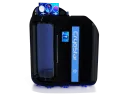
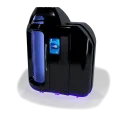
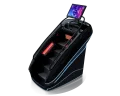
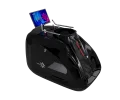
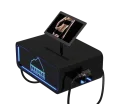
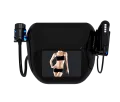
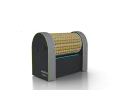
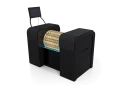
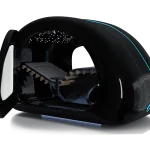
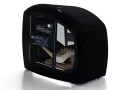
Vacuactivus manufactures the De-Stress Lounge as its commercial zero-gravity massage chair, positioned in the premium-to-luxury commercial tier for wellness centers, recovery studios and medspas building signature-service positioning. It is built on the same construction principles described in the commercial-versus-residential section: reinforced steel frame, sealed motors rated for continuous commercial use, commercial-grade upholstery designed for cleaning cycles, and warranty coverage that includes commercial deployment rather than excluding it. Full spec, current pricing and configuration options are on the De-Stress Lounge zero-gravity massage chair product page, with the broader De-Stress Lounge equipment category covering related configurations and adjacent products.
For the wellness-center service-model deep dive covering how the zero-gravity chair fits alongside adjacent recovery equipment on a full facility menu, see De-Stress Lounge Zero-Gravity Massage Chair for Wellness Centers which walks the facility integration. Vacuactivus pricing is not published as a single quoted figure – it varies by configuration, quantity, and delivery specifics – and current quotes should be requested directly. Apply the same specification checklist described above to us that you would apply to any supplier: ask for the duty cycle in writing, verify commercial-use warranty coverage, confirm operator training inclusion, and request current freight and installation figures for your location. A manufacturer confident in the equipment will provide those in writing on request.
Frequently Asked Questions
Q1. How much does a commercial massage chair cost in 2026?
Commercial massage chairs span four practical tiers in 2026 US wellness markets: Entry-Level $300-$800 (residential-grade, NOT recommended for commercial), Mid-Range prosumer $1,000-$3,500 (small studios, low-volume commercial), Premium commercial-grade $5,000-$12,000 (mainstream wellness studios and recovery centers – the workhorse tier), and Luxury flagship $12,000-$15,000+ (premium spa positioning with AI body scanning and extended warranty). What moves a chair up the ladder is concrete: reinforced frame construction, sealed motors rated for continuous commercial use, full 4D roller systems, commercial warranty coverage, and duty cycle rated for 6-10 hours daily use. Verify current pricing directly with suppliers since equipment prices move quarterly, and budget beyond the sticker for freight, installation, and total cost of ownership additions.
Q2. What is the cheapest good commercial massage chair?
The cheapest chair that legitimately survives commercial deployment is a mid-range prosumer unit at $1,000-$3,500 with 3-5 year commercial-use rating. Entry-level $300-$800 chairs are legitimate for home use but fail as commercial equipment – they are rated for 30-60 minutes daily and burn through their lifecycle in 12-18 months at 8+ hours of commercial load. That is the single most expensive buying mistake in this category, because the initial $500 saving is more than eaten by 14-month replacement plus warranty gaps. If capital is genuinely constrained, buying a used premium commercial chair at $3,000-$5,000 typically outperforms buying new entry-level at the same price point – the used premium unit retains commercial duty cycle and construction quality while the new entry-level unit does not.
Q3. How much can a wellness studio charge per massage chair session?
Session pricing in 2026 US wellness markets typically runs $15-$25 for standard walk-in, $35-$65 for mid-range spa or recovery studio session, and $65-$100 for luxury spa signature session in premium urban markets. Session length is 15-30 minutes across tiers. Packs of 10 sell at 15-20% discount to single-session pricing, and monthly unlimited memberships run $79-$149 with $99-$129 as the most common tier in mid-2026 US market data. The right price for a specific operator is the local anchor – what nearest chiropractic, massage therapist, and other recovery services charge – rather than the national range. Match your session pricing to your chair tier: a $60-per-session premium tier requires premium-tier chair positioning, and a $500 residential chair in a $60 session tier undercuts the pricing position the entire room depends on.
Q4. How long does ROI take on a commercial massage chair?
Payback timelines depend on tier price, session pricing, and utilization. A mid-range $2,000 prosumer chair at $25 per session and 60% utilization pays back in approximately 2 months. A premium $8,000 commercial chair at $45 per session and 60% utilization pays back in approximately 4-5 months. A luxury $15,000 flagship at $80 per session and 55% utilization pays back in approximately 8-9 months. Higher utilization (75%+) or membership pricing that raises effective per-session revenue compresses each window by 20-40%. Sub-40% utilization or aggressive discounting stretches payback by 40-60%. The 2-9 month range brackets what most operators see across tiers at 60% utilization; a sub-40% utilization studio should model payback closer to 6-15 months depending on tier.
Q5. Can you finance a commercial massage chair?
Yes, with several practical options. Cash purchase gives full ownership immediately with no interest paid, but ties up capital. Equipment leasing at $200-$500/month over 36-60 months preserves cash and monthly payments are typically deductible operating expenses; total cost exceeds cash purchase by 15-30% depending on terms. SBA loans and traditional equipment loans offer 5-7 year terms at moderate rates with ownership retained. Manufacturer financing is often most competitive on multi-unit orders or facility-scale purchases combining chair plus adjacent equipment. Whichever option chosen, verify the same specs: duty cycle rated to your projected sessions per day, warranty terms including commercial-use coverage (consumer warranties void the moment a paying client uses the chair), and operator training inclusion. A lease that locks you into a chair with wrong duty cycle is not a saving.
Q6. What is the difference between commercial and residential massage chairs?
The single most consequential distinction is duty cycle – how many hours the chair is rated to run without wearing. Residential chairs are designed for 30-60 minutes daily home use. Commercial-grade chairs are engineered for 6-10 hours of continuous daily use at 8-12 sessions per day. The difference shows up in reinforced steel frame versus plastic housing, sealed motors for continuous operation versus intermittent-use residential motors, and commercial-grade upholstery designed for daily cleaning cycles versus consumer fabric. Putting a residential chair in a commercial room burns through its lifecycle in 12-18 months instead of the 5-7 years a commercial unit delivers under the same load. There is also a positioning cost: a $500 residential chair in a $60-per-session wellness studio undercuts the pricing position the entire room depends on, because clients paying premium prices notice equipment that looks domestic.
Q7. How much does it cost to maintain a commercial massage chair per year?
Annual maintenance on a commercial-grade chair typically runs $700-$1,500 including replacement upholstery covers, small parts, cleaning supplies, and periodic professional servicing. Electricity adds $360-$960/year depending on utilization (chairs draw 200-400W during operation with minimal idle draw). Insurance for equipment plus liability coverage typically adds $600-$1,800/year allocation. Extended warranty for commercial coverage adds $200-$600/year depending on chair tier and coverage level. Total non-equipment recurring cost lands at approximately $1,860-$4,860/year for a single-chair setup. Over a 5-year service life, that adds roughly 25-40% to the equipment purchase price – meaningful for TCO planning and something to model honestly before purchase rather than discover in month four.
Q8. Is a massage chair a good investment for a wellness studio?
For the right business, yes, and the case rests on adding a menu line to an existing service infrastructure rather than launching standalone. Chiropractic clinics, recovery studios, wellness centers, boutique fitness operations, and medspas with existing client bases and adjacent recovery services typically see the chair pay back in 2-9 months at commercial-tier pricing and 60% utilization. It works less well for a high-volume standalone location where floor space would earn more as a therapist-staffed treatment room, for markets without existing wellness demand infrastructure, and for operators unwilling to invest in a commercial-tier chair (a residential chair burns out in 12-18 months and its position undercuts premium pricing). Run the numbers on the specific clientele the chair would convert rather than assuming industry benchmarks apply, and confirm the specific tier fits the specific service model before committing capital.
Conclusion
Commercial massage chairs span four practical tiers – $300-$800 entry, $1,000-$3,500 mid-range prosumer, $5,000-$12,000 premium commercial-grade, and $12,000-$15,000+ luxury flagship – and what a studio buys decides what service it can build the room around. Entry-level chairs are legitimate home tools that fail as commercial equipment (12-18 months at 8+ hrs/day vs 5-7 years for commercial-grade under the same load); mid-range fits small studios and low-volume commercial; premium anchors mainstream wellness studios and recovery centers; luxury supports premium spa positioning where the chair itself is part of the service story. Duty cycle is the specification that separates a $500 residential from a $8,000 commercial unit, and matching the class of chair to the volume and price point of the room is the single most important buying decision.
ROI math works transparently: 2 months for mid-range at $25/session/60% utilization, 4-5 months for premium at $45/session/60% utilization, 8-9 months for luxury at $80/session/55% utilization, with higher utilization or membership pricing compressing each window and lower utilization or aggressive discounting stretching it. TCO adds another 30-50% over 5 years above sticker price for electricity, insurance, maintenance, staff and marketing. Financing options split into cash, lease, SBA loan, and manufacturer financing, each with different cash-flow and total-cost profiles. Verify duty cycle, commercial warranty coverage, and operator training in writing before signing, and apply the checklist to any supplier including us.


