












Red Light Therapy Tanning Bed: Why Salons Are Adding RLT in 2026
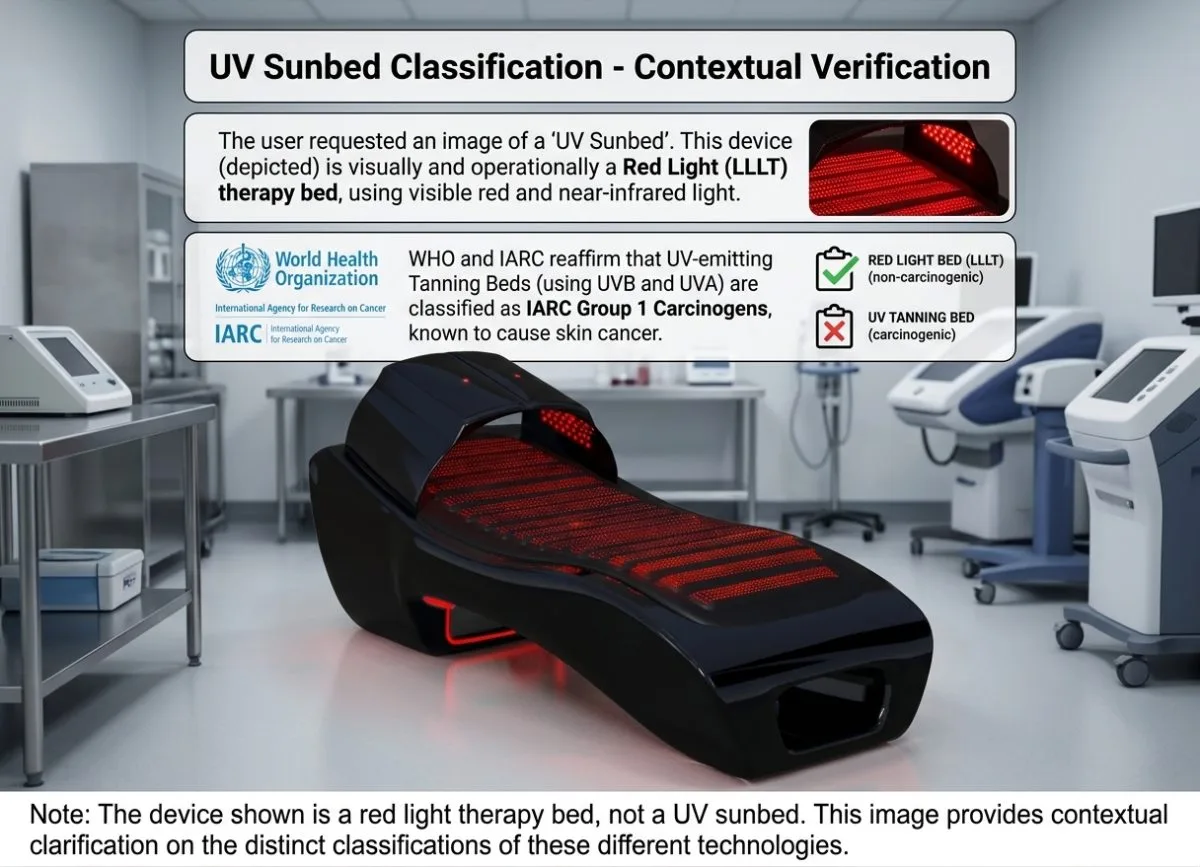
A red light therapy bed is not a tanning bed. It uses red (630-700nm) and near-infrared (810-850nm) LEDs to deliver photobiomodulation to skin and body – no UV, no melanin stimulation, no tan. UV-emitting sunbeds are classified by WHO / International Agency for Research on Cancer (IARC) as Group 1 carcinogen; a red light therapy bed does not carry that risk because it has no UV. The red light therapy vs tanning bed question is why salons are adding RLT rooms in 2026 as wellness upsell, not as a tanning replacement.
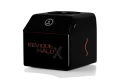
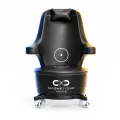
Engineer-reviewing-own-product with honest science pop. Vacuactivus manufactures the InfraCouch Red Light and RedLight Couch PEMF HaloX at the Cronick Wellness Technology Factory in Poland since 2009 (over 15 years). Both are pure non-UV commercial-grade RLT beds, not hybrid UV+red. This is the beds-and-salons pillar; for the general definition and why-trending see the Article #49 pillar-hub companion; for face-specific protocols see the Article #47 companion.
Honest positions up front. (1) The term red light tanning bed exists in consumer searches but is technically incorrect for a pure RLT device; no UV means no tan. (2) Hybrid beds combining UV bulbs + red LEDs keep the UV risk; red light does not cancel UV DNA damage. (3) A dedicated non-UV InfraCouch bed is the clean edge for a salon entering wellness without UV liability. We do not devalue the tanning salon business; RLT just solves a different problem. Wellness modality, not medical treatment.
Red Light Therapy Bed vs Tanning Bed: The Real Difference
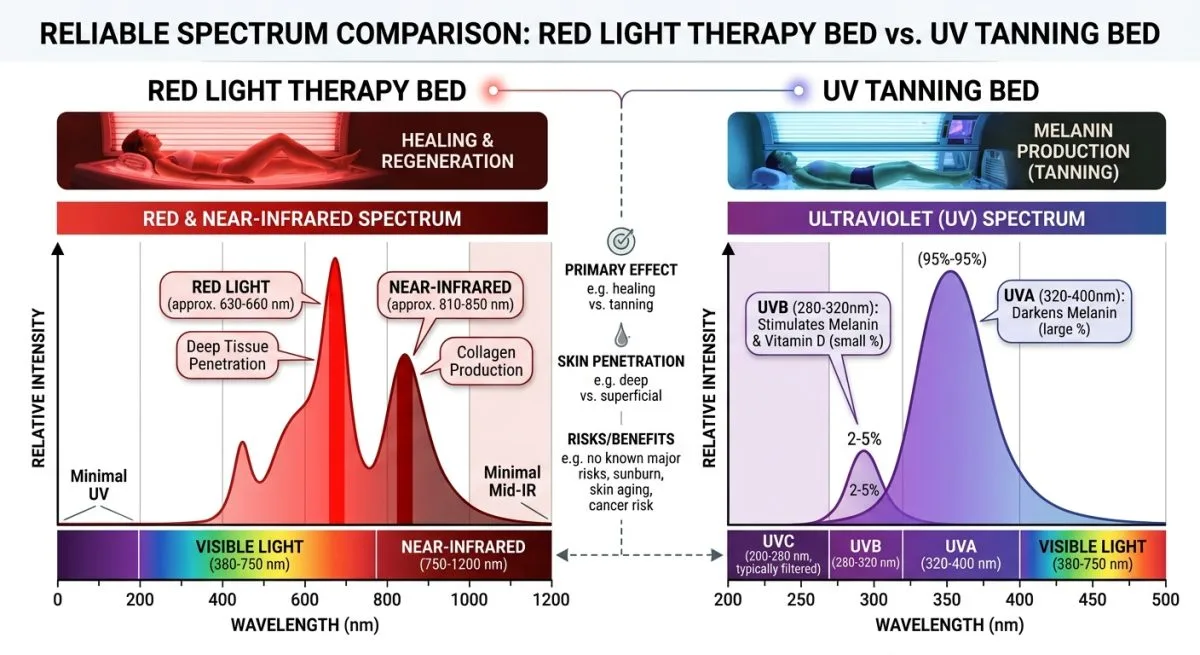
The red light therapy vs tanning bed difference is the wavelength emitted and what it does to skin. A tanning bed emits UV (UVA 315-400nm and UVB 280-315nm) that penetrates skin and stimulates melanocytes to produce melanin, the tanning response. UV also damages DNA in skin cells cumulatively, which is why UV tanning beds are IARC Group 1 carcinogen. An RLT bed emits red (630-700nm) and near-infrared (810-850nm) LEDs that do not stimulate melanin and do not cause UV DNA damage. Photobiomodulation via cytochrome c oxidase in mitochondria increases ATP synthesis and modulates nitric oxide, supporting cellular repair and circulation. No tan, no UV.
| Attribute | UV Tanning Bed (Sunbed) | Hybrid (UV + Red) | Red Light Therapy Bed (Non-UV) |
|---|---|---|---|
| Wavelength emitted | UV: UVA 315-400nm + UVB 280-315nm | UV bulbs + red LED 630-660nm | Red 630-700nm + NIR 810-850nm only (no UV) |
| WHO / IARC classification | Group 1 carcinogen (sunbeds) | UV portion = Group 1 (red does not cancel) | Non-UV; not in IARC carcinogen category |
| Produces a tan | Yes (melanin stimulation) | Yes (from UV component) | No (no UV, no melanin stimulation) |
| Primary purpose | Cosmetic tan | Tan + wellness marketing | Wellness: skin health, circulation, recovery |
| Skin cancer risk from device | Elevated (per IARC) | Elevated (UV portion retained) | None from UV; wellness-safe at recommended dose |
| Eye protection required | Yes (UV goggles) | Yes (UV goggles) | Yes (comfort + safety, not UV) |
| Typical energy consumption | High (UV lamps) | High (UV lamps + LEDs) | Lower (LED-based, 30-40% energy savings vs UV) |
| Typical session price (salon industry) | ~$12-14 standard | ~$30 luxury hybrid | $25-40 typical wellness (verify current) |
UV Tanning: Melanin and the IARC Carcinogen Classification
UV tanning beds deliver UVA and UVB to skin. UVB (280-315nm) reaches epidermis and directly damages DNA in keratinocytes; UVA (315-400nm) penetrates deeper into dermis, generates reactive oxygen species, and contributes to photoaging and DNA damage. Both stimulate melanocytes to produce melanin (the tan). In 2009 WHO IARC reclassified UV-emitting sunbeds from Group 2A (probable carcinogen) to Group 1 (carcinogenic to humans), the same category as tobacco and asbestos. Classification is based on cumulative epidemiological evidence linking sunbed use to increased melanoma and non-melanoma skin cancer risk, especially before age 35. Verifiable public-health fact.
Red Light Therapy: Non-UV Photobiomodulation
Red light therapy uses non-UV wavelengths only: red (630-700nm) and near-infrared (810-850nm). These wavelengths reach skin cells without ionizing DNA the way UV does. Photobiomodulation mechanism: photons absorbed by cytochrome c oxidase (complex IV of the mitochondrial electron transport chain), dissociating inhibitory nitric oxide, boosting electron transport, and increasing ATP synthesis. Downstream: fibroblasts increase collagen production, circulation improves, inflammation is modulated. Red 630-700nm penetrates epidermis and upper dermis (~1-2 mm); NIR 810-850nm penetrates deeper (~5-6 mm). No melanin stimulation, no tan, no UV DNA damage.
Why Red Light Tanning Bed Is a Confusing Term
The term red light tanning bed appears in consumer searches but is technically incorrect for a pure RLT device. The confusion is understandable: consumers know tanning beds are the horizontal LED-lined enclosures they see at salons, and when they hear about red light therapy in the same form factor they merge the terms. Three real form factors this can refer to: a pure non-UV commercial red light therapy bed (no UV, no tan, wellness only); a hybrid bed with UV bulbs + red LEDs (retains UV risk); or marketing that uses the term loosely for either. When shopping, ask directly: does this bed emit UV? If yes, IARC Group 1 applies. If no, no tan.
Why Salons Are Adding Red Light Therapy in 2026
Salon operators are adding commercial red light therapy rooms and red light therapy beds in 2026 for four converging reasons: the wellness market is expanding faster than tanning; wellness clients are higher-value and more loyal than tanning-only clients; an existing tanning-salon membership base can be upsold to RLT without acquiring new customers; and LED delivery uses less energy than UV tanning bed lamps. Business-model reasons, not marketing spin.
The Wellness Shift and Higher-Value Clients
The wellness industry has been growing in double-digit percentages while traditional UV tanning has been under sustained regulatory and consumer pressure since the IARC Group 1 reclassification. Wellness clients (RLT, infrared sauna, cold plunge, PEMF, halotherapy) show longer retention, higher average revenue per user, and stronger repeat visit rate than tanning-only clients. A salon that adds a dedicated non-UV RLT room can position itself as a wellness studio rather than a tanning salon, broadening demographic reach and increasing price point per session. See Article #49 pillar-hub for the broader why-trending context.
Upselling Your Existing Membership
For an existing tanning salon owner, the fastest RLT adoption path is upselling the existing membership base. Customers already in your CRM know your location, staff, and hygiene standards. Introducing an RLT room (or an RLT bed near existing tanning rooms) gives current members a wellness option without asking them to switch salons. Membership tiers can be restructured: tanning-only, RLT-only, or combined. Local-search queries like red light therapy beds near me are climbing, and an existing salon is well-positioned to capture that traffic if it now offers RLT.
Energy Savings and Session Economics
LED-based RLT beds typically consume 30-40% less energy per session than UV tanning bed lamps, reducing operating cost per session (verify against local utility rates). Session pricing in the salon industry is a range: standard UV tanning ~$12-14, luxury hybrid rooms reported ~$30, dedicated RLT sessions typically $25-40 depending on market (verify current). A red light therapy bed cost for a commercial-grade device is a capital investment; request full delivered quotes including shipping, installation, and utility hookup. See the red light therapy equipment for sale checklist.
Dedicated Red Light Bed vs Hybrid (UV+Red): The Honest Choice
Two form-factor decisions for a salon adding RLT. Option A: dedicated non-UV RLT beds (like InfraCouch) alongside existing tanning rooms: two flows, two rooms, zero UV liability on the wellness side. Option B: hybrid beds combining UV bulbs and red LEDs in one enclosure. One bed, one session, but the UV component retains IARC Group 1 classification. Red light does not cancel UV DNA damage; the UV portion of a hybrid session carries the same cumulative skin cancer risk as standard tanning. If a salon wants to position a room as wellness without UV liability, hybrid is not that room. Vacuactivus makes pure non-UV InfraCouch and RedLight Couch PEMF HaloX. Dedicated, not hybrid. Deliberate positioning, not a limitation.
What to Look for in a Commercial Red Light Therapy Bed
When evaluating the best red light therapy beds for commercial installation, request specification data on eight attributes: spectral output (wavelengths and ratio; best-practice combines red 630-660nm and NIR 810-850nm); irradiance at treatment distance in mW/cm2 (higher = shorter session or higher dose); LED count and density (uniform dose across treatment area); lens design (convex concentrates irradiance, flat panels lose intensity to divergence); delivery mode (continuous plus pulse for protocol flexibility); form factor (full-body lie-down covers face and body in one session); commercial-duty rating (continuous salon use, not consumer); warranty and factory-direct parts. See professional versus at-home red light and how 660nm and 850nm wavelengths heal tissue for wavelength science.
InfraCouch Red Light: A Commercial Non-UV Full-Body Bed
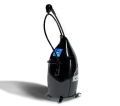
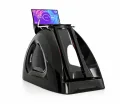
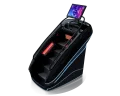
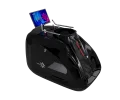
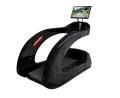
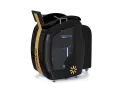
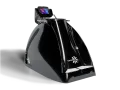
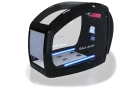
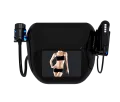
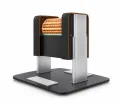
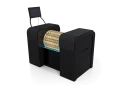
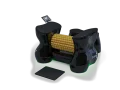
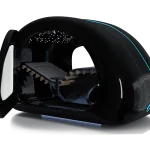
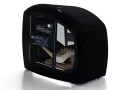
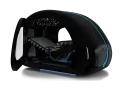
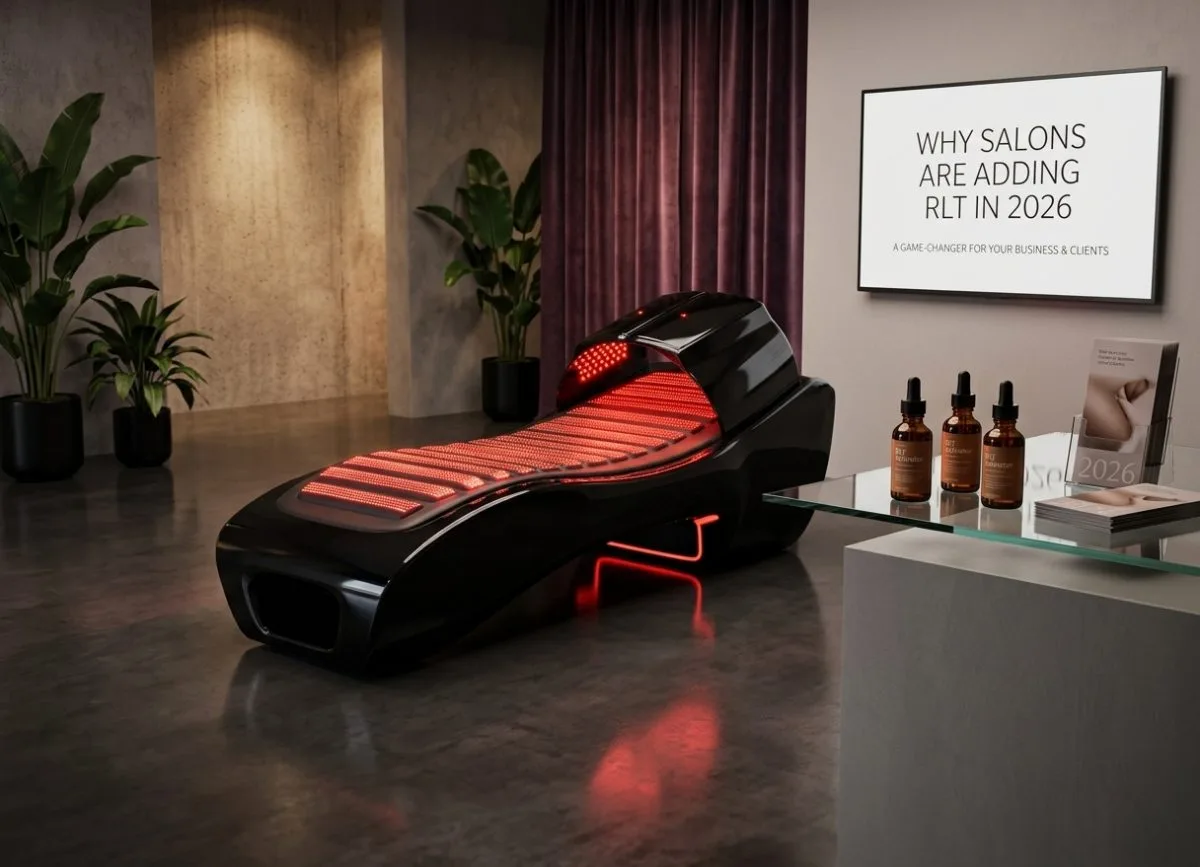
The Vacuactivus InfraCouch Red Light is a commercial non-UV full-body RLT bed with 1152 LEDs across four wavelengths (630nm + 660nm red; 810nm + 850nm NIR). Convex 30 degree lens focus concentrates irradiance. Continuous and pulse-mode delivery. Full-body lie-down means face and body receive four-wavelength coverage in one session – no separate face mask needed. The red light couch with PEMF variant adds PEMF and wet halotherapy. Broader catalog: red light therapy equipment. For face-specific see red light therapy for the face companion, and red light panel for full body therapy panel format.
Cost and ROI for a Salon
The red light therapy bed cost for a commercial-grade device depends on irradiance, wavelength count, LED density, and commercial-duty rating. Request full delivered quotes from Vacuactivus commercial sales including shipping, installation, and utility hookup; the manufacturer quote alone is not the final delivered price. Payback for a salon depends on session pricing and utilization: at $25-40 per session with 3-6 sessions per day (verify local demand), a commercial device can pay back within 12-24 months of consistent utilization. Industry-reference range, not a guarantee. Salons with existing membership traffic to upsell see faster utilization than those building demand from scratch.
Specifications That Matter (InfraCouch)
For commercial installation, specifications that matter: 1152 LEDs across four wavelengths (630nm + 660nm red; 810nm + 850nm NIR); convex 30 degree lens for irradiance concentration; continuous plus pulse delivery modes; full-body lie-down form factor including face; commercial-grade continuous-duty rating; manufacturer-direct commercial warranty; factory-direct parts from Cronick Wellness Technology Factory in Poland (since 2009, over 15 years); pure non-UV design (zero UV emission). Session protocol flexibility (length, wavelength selection, pulse frequency) matters for a salon serving different client goals. The full body red light therapy bed positioning covers face and body in one session, reducing total session time versus mask-plus-panel setup for same coverage.
Frequently Asked Questions
Q1. Is a red light therapy bed the same as a tanning bed?
No. A tanning bed emits UV (UVA + UVB) to stimulate melanin and produce a tan; a red light therapy bed emits non-UV red (630-700nm) and near-infrared (810-850nm) LEDs to drive photobiomodulation for skin, circulation, and recovery. Different wavelengths, different mechanism, different safety profile. UV tanning beds are IARC Group 1 carcinogen; red light therapy beds are non-UV wellness devices.
Q2. Do red light therapy beds give you a tan?
No. A tan requires UV to stimulate melanocytes to produce melanin. Red light therapy beds emit no UV, so there is no melanin stimulation and no tan. Some marketing conflates red glow with tan-like appearance, but there is no biological tan produced by pure RLT. If a device produces a tan, it is emitting UV and is either a UV tanning bed or a hybrid.
Q3. Are red light therapy beds safe?
Yes, generally, when used per manufacturer guidelines. Red light therapy beds are non-UV and non-ionizing, no burn risk at recommended dose, and no cumulative UV DNA damage risk. Eye protection is recommended during sessions for comfort. Contraindications: photosensitizing medications (isotretinoin, some antibiotics, some diuretics), active skin cancer or unexplained lesions, recent surgery, severe eye conditions, and pregnancy for full-body use.
Q4. Why are salons adding red light therapy in 2026?
Four reasons converging: the wellness market is growing faster than the tanning market; wellness clients have higher average revenue per user and longer retention; an existing tanning-salon membership base can be upsold to RLT without acquiring new customers; and LED delivery uses 30-40% less energy than UV tanning bed lamps. See the Article #49 pillar-hub companion for the broader why-trending context.
Q5. What is a hybrid red light tanning bed?
A hybrid bed combines UV tanning bulbs with red LEDs in one enclosure. Marketing benefit: one session, one bed for tan + red light. Honest downside: the UV component retains the WHO IARC Group 1 carcinogen classification. Red light does not cancel UV DNA damage. If a salon operator wants to position a room as wellness without UV liability, hybrid is not that room. Vacuactivus makes pure non-UV devices, not hybrid.
Q6. Do red light beds have UV?
A pure red light therapy bed has zero UV – only red (630-700nm) and near-infrared (810-850nm) LEDs. A hybrid bed does have UV. When shopping, always ask directly: does this bed emit UV? Request spectral output data from the manufacturer. If the device is marketed as red light tanning bed but no spectral data is provided, assume it may be hybrid until confirmed otherwise.
Q7. How much does a commercial red light therapy bed cost?
Commercial red light therapy bed cost depends on irradiance, wavelength count, LED density, form factor, and commercial-duty rating. It is a capital investment; request full delivered quotes from Vacuactivus commercial sales that include shipping, installation, and utility hookup. Red light therapy beds for sale from commercial manufacturers typically ship with 12-24 month manufacturer warranty. Payback for a salon depends on session pricing and utilization; verify local market.
Q8. Is red light therapy worth it for a salon?
Potentially yes, as a premium wellness upsell rather than a tanning replacement. Salons with an existing membership base to upsell see faster utilization than those building demand from scratch. Wellness clients tend to have higher retention and higher per-visit spend than tanning-only clients. The wellness market is expanding; the traditional UV tanning market is under regulatory and consumer pressure. Verify local demand and pricing before committing capital.
Q9. What does a red light therapy bed do?
What does a red light therapy bed do? It delivers red (630-700nm) and near-infrared (810-850nm) LED light to skin and body, driving photobiomodulation via cytochrome c oxidase in mitochondria. This increases ATP synthesis and modulates nitric oxide, supporting collagen production, circulation, and modulation of inflammation. Wellness applications: skin health, recovery support, comfort. Not medical treatment. Sessions typically 10-20 minutes.
Q10. What warranty comes with the InfraCouch?
The Vacuactivus InfraCouch Red Light ships with commercial warranty coverage and factory-direct parts from Cronick Wellness Technology Factory in Poland (since 2009, over 15 years). Warranty covers the LED arrays, control electronics, cooling system, and upholstery frame; consumables and shipping-damage claims are handled separately. Ask Vacuactivus commercial sales for the current warranty schedule and named salon or wellness-studio references before ordering.
Conclusion
A red light therapy bed is not a tanning bed. No UV, no tan, no IARC Group 1 classification. UV tanning beds emit UVA and UVB, stimulate melanin, carry cumulative skin cancer risk. RLT beds emit non-UV red (630-700nm) and near-infrared (810-850nm) LEDs driving photobiomodulation for skin, circulation, and recovery. Salons are adding RLT in 2026 because the wellness market is expanding, wellness clients are higher-value, existing membership bases can be upsold, and LED energy use is lower than UV lamps. Hybrid beds retain UV risk; a dedicated non-UV bed does not. Vacuactivus red light therapy beds for sale include the InfraCouch Red Light with 1152 LEDs across four wavelengths (630/660/810/850nm) and convex 30 degree lens – a pure non-UV commercial full-body bed manufactured since 2009 at Cronick Wellness Technology Factory in Poland. Wellness modality, not medical treatment. For general RLT science see #49; for face-specific see #47.


