



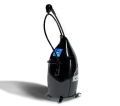

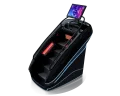
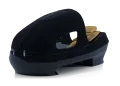
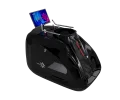


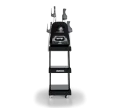
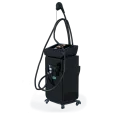
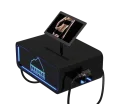
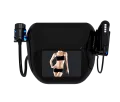






HIFEM Pelvic Floor Chair: Incontinence and Postpartum Recovery
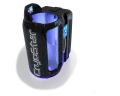
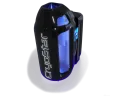
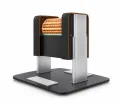
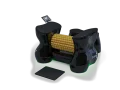
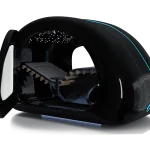
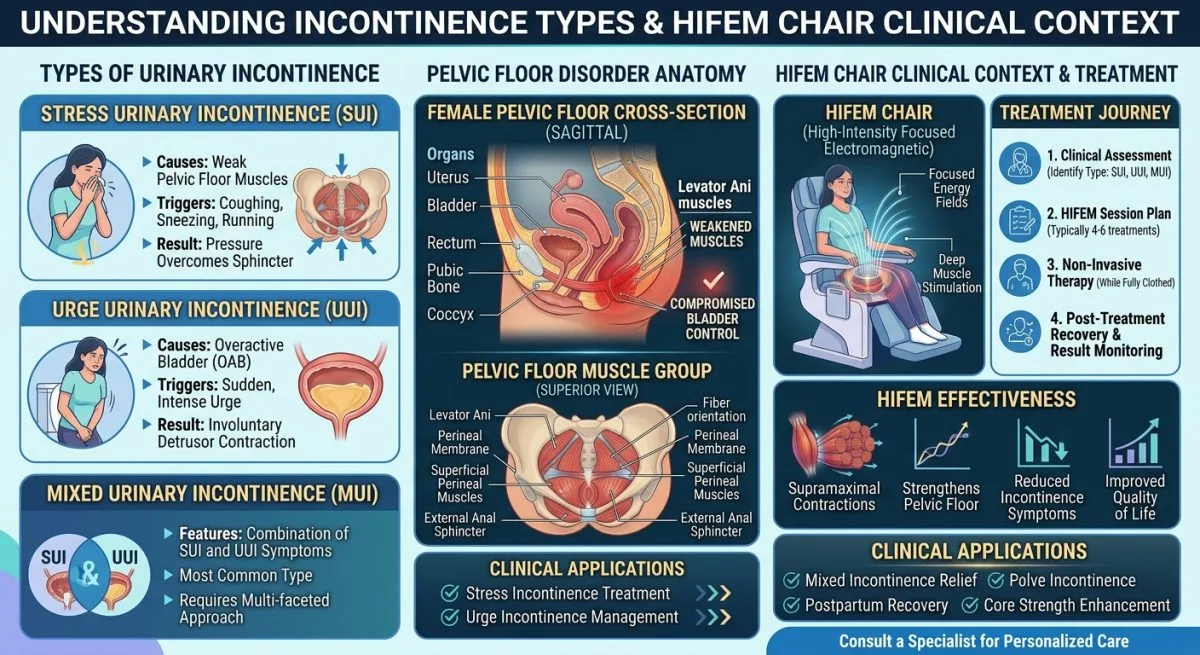
A pelvic floor therapy chair using HIFEM technology strengthens the pelvic floor muscles via supramaximal contractions delivered by a magnetic field, without electrodes or internal probes. The patient sits fully clothed on the chair; the field passes through clothing and tissue to reach the levator ani, coccygeus, and surrounding pelvic floor musculature. This support article covers what a HIFEM pelvic floor chair does clinically, what the evidence shows across urinary incontinence and postpartum recovery, how it compares to pelvic floor TENS and Kegel devices, and how the Vacuactivus Magnetique X-Trone fits commercial pelvic floor programs as a dual-zone chair covering pelvic floor plus lower back in one session.
Engineer-reviewing-own-product with honest medical science-pop tone. HIFEM is not a cure for incontinence and does not replace medical evaluation or care for pelvic floor disorders. Clinical results reported for the HIFEM chair category come from FULL treatment courses (typically 6 sessions over 3 weeks at 2 sessions per week), not from a single session; individual outcomes vary. Vacuactivus does not attribute BTL Emsella’s FDA 510(k) clearance for stress urinary incontinence to the Magnetique X-Trone: Emsella is a distinct device in the same category. For the definitional pillar covering HIFEM technology and HIFEM vs EMS/TENS/RF see the what is a HIFEM chair pillar of this cluster.
Vacuactivus manufactures the Magnetique X-Trone at the Cronick Wellness Technology Factory in Poland since 2009 (over 15 years, deliveries to 50+ countries). Standard 1-year warranty with optional extension to 3 years if selected within 10 days of purchase. Contraindications include pregnancy, implanted metal (pacemaker, cochlear implant, spinal cord stimulator, IUD with metal, copper IUD), active malignancy in the treatment area, hemorrhagic conditions, and menstrual period per manufacturer guidance. Common minor side effect in HIFEM literature is transient mild soreness or paresthesia. Consult a healthcare provider before starting any HIFEM protocol with pre-existing conditions or during pregnancy or postpartum. For lower back and core see Article 3 (when published); for B2B cost and buying see Article 4.
What a HIFEM Pelvic Floor Chair Does
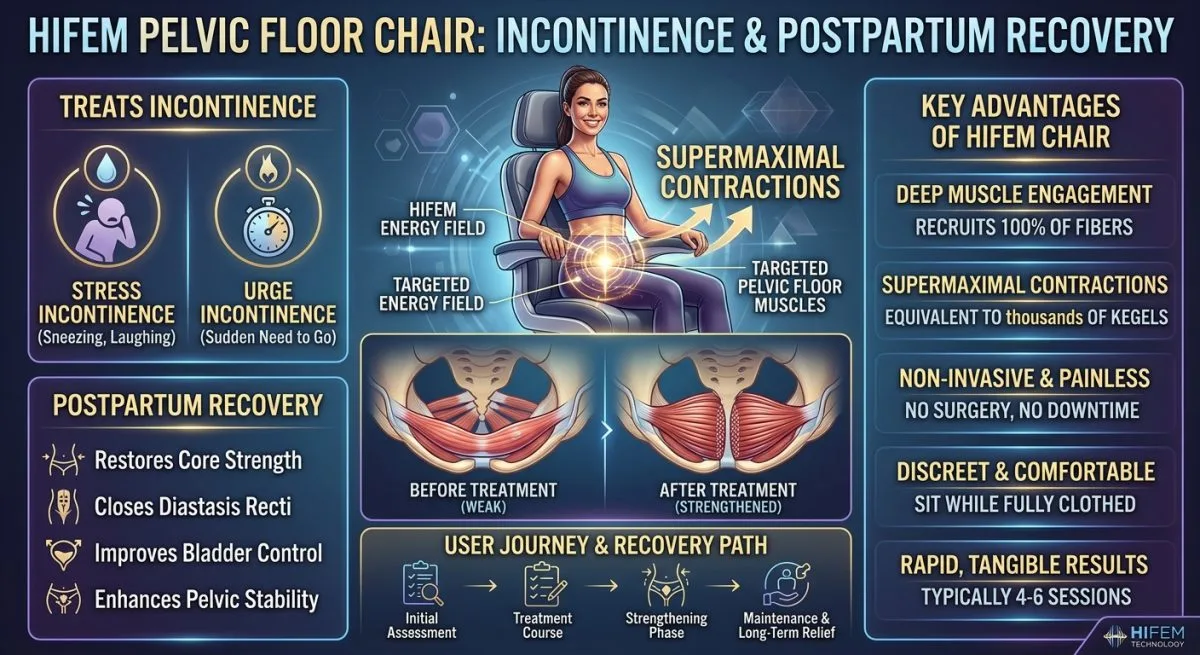
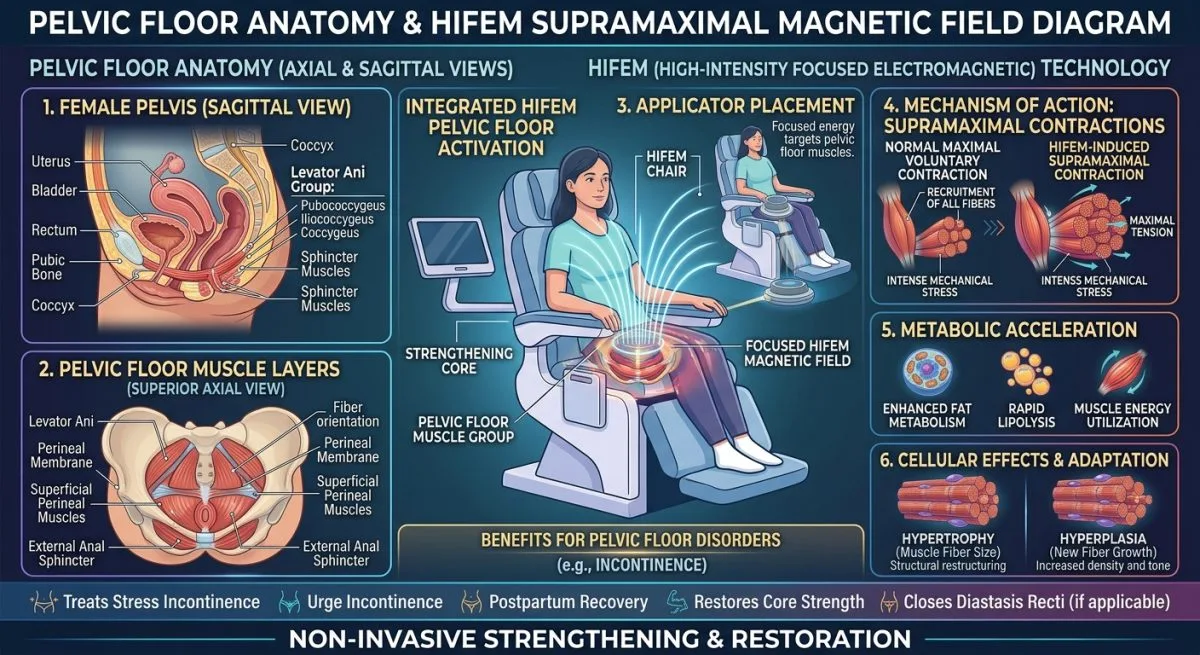
A HIFEM pelvic floor chair delivers supramaximal contractions by focusing a magnetic field into the seat of the chair. When the patient sits down, the field passes through clothing without resistance and induces currents inside conductive tissue below, depolarizing motor neurons of the levator ani, coccygeus, and surrounding pelvic floor musculature. The result activates approximately 100 percent of muscle fibers in the target zone, which is why HIFEM chairs cite the 11,200-Kegel-equivalent-per-session figure. Supramaximal contractions of the pelvic floor muscles support urethral closure and improve strength and endurance more efficiently than voluntary Kegels at 40-60 percent recruitment. The patient sits fully clothed for the 28-minute session and can read or use a phone; no probe, no electrodes, no gel.
The Evidence: Urinary Incontinence (SUI, Urge, Mixed)
The most-studied urinary incontinence chair in the HIFEM category is BTL Emsella, which received FDA 510(k) clearance as a non-implanted electrical continence device for stress urinary incontinence in adult women. BTL Emsella clinical materials cite an equivalent of 11,200 Kegel contractions per 28-minute session and a pilot study of 30 women showing 95 percent quality-of-life improvement and 67 percent reduction or elimination of incontinence pads at completion of a 6-session treatment course over 3 weeks. Additional clinicaltrials.gov studies list Emsella evaluations across overactive bladder (urge urinary incontinence) and mixed incontinence, with reports of symptomatic improvement from full treatment courses. A systematic review (PMC12693354) of chair-based magnetic stimulation concludes the modality delivers supramaximal contractions of a clothed patient, short-term continence improvements are documented, and the safety profile is favorable with the most common minor side effect being transient mild soreness or paresthesia. These citations refer to BTL Emsella and the HIFEM chair category specifically; Vacuactivus does not claim Emsella’s FDA clearance for Magnetique X-Trone.
Postpartum Recovery: Pelvic Floor + Core (Dual-Zone)
Postpartum recovery chair use is where dual-zone HIFEM has a specific advantage. After childbirth, the pelvic floor and core (lumbar and abdominal musculature) are both weakened, and reconditioning both is standard postpartum practice. A single-zone HIFEM chair addresses only one at a time; a dual-zone postpartum recovery chair like the Magnetique X-Trone addresses pelvic floor plus lower back in the same 28-minute session, more efficient for postpartum programs where visit count and adherence are practical constraints. A published postpartum study (PMC10566909, 36 women) evaluated HIFEM+RF applied abdominally combined with HIFEM applied to the pelvic floor and reported 97.1 percent stronger core, 94.1 percent stronger pelvic floor, painless treatment (VAS pain score 2.6 out of 10), and no side effects at completion of the treatment course. This is a small study on a specific combined protocol; results are not automatically transferable to any HIFEM chair or Magnetique specifically. Postpartum patients should consult a healthcare provider before starting a HIFEM protocol; use should follow standard postpartum recovery timelines.
Men’s Health: Post-Prostatectomy Incontinence
Post-prostatectomy incontinence (PPI) is a common complication after radical prostatectomy, and pelvic floor muscle training is a standard rehabilitation component. A urinary incontinence chair delivering HIFEM supramaximal contractions can be applied to men in a fully clothed seated session, addressing the compliance friction of self-directed home Kegels. Multiple clinical evaluations of electromagnetic chair devices for post-prostatectomy incontinence exist in the literature (see clinicaltrials.gov for specific study identifiers); reported outcomes include symptomatic improvement and reduced pad use across full treatment courses. Male pelvic floor rehabilitation programs at urology and urogynecology practices routinely add HIFEM chair sessions as part of a broader PPI recovery pathway. As with women’s applications, HIFEM complements medical care and does not replace it; PPI recovery timelines and specific protocols should be set by the treating urologist.
| Attribute | HIFEM Pelvic Floor Chair (Magnetique X-Trone) | Pelvic Floor TENS Machine | Kegel Trainer / TENS Unit Kegel |
|---|---|---|---|
| Delivery mechanism | Magnetic field through clothing to pelvic floor musculature – no electrodes, no probe | Surface electrode pads on skin or vaginal probe delivering electric current | Vaginal or rectal probe with surface electrode or biofeedback |
| Patient position | Seated on chair, fully clothed | Pads on skin or internal probe insertion required | Internal probe insertion required |
| Contraction type | Supramaximal – approximately 100% muscle fiber activation | Sub-maximal – surface-electrode limited | Sub-maximal – biofeedback or low-current stimulation |
| Session format | 28-minute hands-free seated session | Home use with pads or probe, session length varies | Home use with probe, self-directed |
| Kegel equivalent per session (category reference) | HIFEM chairs (BTL Emsella) cite 11,200 Kegels per 28-minute session | Not directly comparable – different mechanism | 1 contraction per attempt (voluntary/assisted) |
| Compliance / adherence | High – passive session, no home protocol | Home-adherence dependent | Home-adherence dependent, probe often skipped by users |
| Regulatory status (US, category-specific) | BTL Emsella FDA 510(k) for SUI (Emsella-specific); other HIFEM chairs verify per device | FDA-cleared TENS devices; specific pelvic floor claims device-specific | Consumer-marketed; medical claims device-specific |
| Fit for postpartum + core (dual-zone) | Yes – dual-zone pelvic floor plus lower back or core in one session | No – single-zone pads | No – single-zone probe |
HIFEM Chair vs Pelvic Floor TENS and Kegel Devices
A pelvic floor tens machine or a tens unit kegel device is a different modality from a HIFEM chair, and the confusion is worth clearing up because both are marketed for pelvic floor concerns. Such a TENS device typically uses either surface electrode pads or an internal vaginal or rectal probe to deliver low-frequency electric current for either pain modulation (TENS in the traditional sense) or muscle stimulation. A tens unit kegel or Kegel trainer is generally a consumer device using an internal probe with biofeedback or low-current stimulation to guide voluntary Kegels. A kegel floor therapy chair using HIFEM does none of that: no probe, no electrodes, no skin contact. HIFEM delivers supramaximal contractions across the whole pelvic floor musculature simultaneously via magnetic field through clothing, fundamentally different delivery producing different intensity. Both categories have their place; for a commercial B2B program serving multiple patients per day with high compliance and no probe insertion, a pelvic floor therapy chair using HIFEM is the operational choice.
What to Expect: Sessions, Sensations, Safety
A HIFEM session is 28 minutes seated on the chair, fully clothed. The sensation is intense muscle contractions in the pelvic floor and, on a dual-zone chair, the lower back or core simultaneously. Published patient reports describe the sensation as strong but not painful (VAS pain scores in the 2-3 out of 10 range in the postpartum study cited above), with the most common minor side effect being transient mild soreness or paresthesia in the hours following the session. Typical protocol in published studies is 6 sessions over 3 weeks at 2 sessions per week; effect is documented across the full course, not from a single session. Some patients receive maintenance sessions after the initial course. Safety profile in the systematic review (PMC12693354) is favorable. Contraindications include pregnancy, implanted metal (pacemaker, cochlear implant, spinal cord stimulator, IUD with metal, copper IUD), active malignancy in the treatment area, hemorrhagic conditions, and menstrual period per manufacturer guidance.
The Magnetique X-Trone for Pelvic Floor Programs
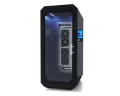
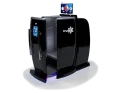
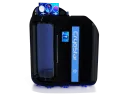
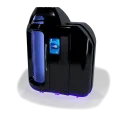
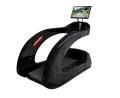
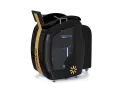
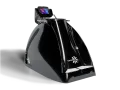
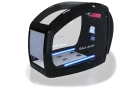
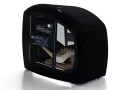
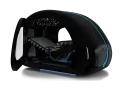
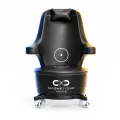
The Vacuactivus HIFEM pelvic floor chair Magnetique X-Trone is a dual-zone HIFEM chair for commercial pelvic floor programs. Delivers 5.8 Tesla peak magnetic field, 28-minute hands-free sessions, and simultaneous supramaximal contractions in two zones: pelvic floor and lower back or core. This dual-zone design is particularly relevant to postpartum recovery programs (pelvic floor plus core reconditioning in one session) and to broader pelvic floor and lower back pain programs where the two zones are commonly addressed together. Non-invasive delivery through clothing without electrodes or probes. Touchscreen control, no consumables, 110-240V universal input, pure HIFEM without radiofrequency. Warranty 1 year standard from Cronick Wellness Technology Factory in Poland with optional extension to 3 years if selected within 10 days of purchase.
Who Offers This: Clinics, Med Spas, Postpartum Programs
An incontinence treatment chair is deployed across several B2B settings. Urogynecology and urology practices integrate HIFEM chair sessions into pelvic floor rehabilitation pathways for stress and mixed incontinence in women and post-prostatectomy incontinence in men. Postpartum programs at OB/GYN practices, women’s health clinics, and specialized postpartum recovery clinics add HIFEM chairs to reconditioning protocols. Med spas and wellness centers offer HIFEM chair sessions as part of pelvic floor wellness packages for women who want proactive pelvic floor toning without a diagnosed clinical condition. Pelvic floor physical therapy practices use HIFEM alongside supervised Kegel and biofeedback protocols. In each case, an incontinence treatment chair fits into a broader clinical or wellness pathway; it does not stand alone as a substitute for medical evaluation and management of pelvic floor disorders.
Frequently Asked Questions
Q1. How does a HIFEM chair help with incontinence?
Supramaximal contractions strengthen pelvic floor muscles, improving urethral closure support and endurance. Published HIFEM chair studies (BTL Emsella specifically, per FDA 510(k) for SUI) report symptomatic improvement and reduced pad use at completion of a full treatment course of 6 sessions over 3 weeks. Individual outcomes vary. HIFEM complements medical care for incontinence; it does not replace evaluation and management by a healthcare provider.
Q2. Does the pelvic floor chair work for postpartum recovery?
Postpartum studies of HIFEM (PMC10566909, 36 women, HIFEM+RF abdominal + HIFEM pelvic) report substantial improvements in pelvic floor and core strength (94.1 percent and 97.1 percent respectively). Dual-zone chairs address pelvic floor and lower back or core in one session, which is efficient for postpartum programs. Postpartum use should follow standard recovery timelines and be started with healthcare provider consultation.
Q3. Is a HIFEM chair better than a pelvic floor TENS machine?
Different modality. A pelvic floor tens machine uses surface pads or an internal probe delivering electric current at sub-maximal intensity. HIFEM uses a magnetic field through clothing without probe or pads to deliver supramaximal contractions across the whole pelvic floor. For a commercial B2B program with high compliance and no probe insertion, HIFEM is the operational choice. Both categories have valid use cases.
Q4. Can men use a HIFEM pelvic floor chair?
Yes. Multiple clinical evaluations of electromagnetic chair devices for post-prostatectomy incontinence exist in the literature. Men sit on the chair fully clothed for the same 28-minute session. HIFEM chair sessions are commonly integrated into male pelvic floor rehabilitation pathways at urology and urogynecology practices. As with women’s applications, HIFEM complements medical care rather than replacing it.
Q5. How many HIFEM sessions do you need?
Typical protocol in published HIFEM chair studies is 6 sessions over 3 weeks at 2 sessions per week; some protocols extend to 8 sessions. Reported outcomes are from full treatment courses, not from single sessions. Maintenance sessions after the initial course are common and vary by patient and clinical goal. Specific protocol should be set by the treating clinician.
Q6. Does it hurt? What does it feel like?
Sensation is strong muscle contractions, intense but not painful in published patient reports (VAS pain scores in the 2-3 out of 10 range in the postpartum study cited above). Most common minor side effect reported in the systematic review is transient mild soreness or paresthesia in the hours following the session. The patient sits fully clothed for the session and can read or use a phone.
Q7. Is HIFEM safe for the pelvic floor?
The safety profile reported in the HIFEM chair systematic review (PMC12693354) is favorable; the most common minor side effect is transient mild soreness or paresthesia. Contraindications include pregnancy, implanted metal (pacemaker, cochlear implant, IUD with metal, copper IUD), active malignancy in the treatment area, hemorrhagic conditions, and menstrual period per manufacturer guidance. Consult a healthcare provider before starting with pre-existing conditions.
Q8. How long do results last?
Follow-up data in published pilot studies documents symptomatic improvement at 3-6 months after completion of a full treatment course. Duration varies by patient factors (age, severity, adherence to Kegel maintenance) and by whether maintenance HIFEM sessions are continued. Long-term durability across years is less well-characterized in the literature; treating clinician should set expectations for the specific case.
Q9. Can it replace Kegels?
HIFEM is an intense form of pelvic floor muscle training with high compliance because it is passive and requires no home protocol. It is not a replacement for standard clinical management of pelvic floor disorders or for supervised pelvic floor physical therapy where indicated. Kegel maintenance protocols may still be recommended by the treating clinician after a HIFEM course.
Q10. What warranty comes with the Magnetique X-Trone?
The Vacuactivus Magnetique X-Trone ships with a standard 1-year commercial warranty from Cronick Wellness Technology Factory in Poland (since 2009, over 15 years, 50+ countries) covering chassis, motors, control electronics, and parts. Optional extension to 3 years is available if selected within 10 days of purchase. Factory-direct parts pipeline from Poland. Ask Vacuactivus commercial sales for current warranty schedule and named references.
Conclusion
A pelvic floor therapy chair using HIFEM strengthens pelvic floor via supramaximal contractions delivered by a magnetic field through clothing. Published clinical evidence for the HIFEM chair category covers stress urinary incontinence (BTL Emsella FDA 510(k), 11,200 Kegel equivalent per session, pilot 30 women 95 percent QOL 67 percent pad reduction), postpartum recovery (PMC10566909, 36 women, 94-97 percent stronger pelvic floor and core, VAS 2.6 painless), and post-prostatectomy incontinence in men (multiple electromagnetic chair studies). Vacuactivus does not attribute Emsella’s specific FDA clearance to Magnetique X-Trone; regulatory status must be verified per device per market. The dual-zone advantage: pelvic floor plus lower back or core in the same 28-minute hands-free session at 5.8 Tesla. Effect from FULL treatment courses (typically 6 sessions over 3 weeks), not single sessions. Common minor side effect: transient mild soreness or paresthesia. HIFEM complements medical care and does not replace it. For pillar-hub definition see Article 1; for lower back and core see Article 3; for B2B cost see Article 4. Since 2009 at Cronick Wellness Technology Factory in Poland.


