





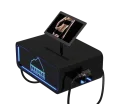
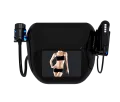

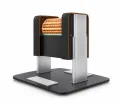
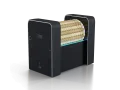




Lymphatic Drainage Massage Machine: When Studios Need Both Chair + Pressotherapy
A lymphatic drainage massage machine is not one piece of equipment. It is a category that includes two distinct tools: pressotherapy systems (dedicated compression suits with air chambers) and massage chairs with compression features (zero-gravity recliners with seat and back air pressure). Many studio owners conflate them. The right combination depends on who your clients are and what revenue model you run.
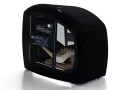
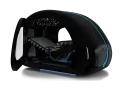
Scope note upfront: Vacuactivus manufactures the De-Stress Lounge zero-gravity massage chair line since 2014 and supplies wellness equipment (chairs, cryotherapy chambers, red light therapy, body rollers, HaloX longevity capsule) to over 200 B2B partners across more than 50 countries. Vacuactivus DOES NOT manufacture pressotherapy machines. This article covers pressotherapy as a third-party market category (Ballancer, Zemits, CarePump, Canta Esthetic and similar third-party manufacturers) to help studio operators make a chair-vs-pressotherapy-vs-both equipment decision honestly. Where third-party brand names appear below, they are cited as market examples, not supplier or partner relationships.
The pragmatic guidance below reflects 12 years of Vacuactivus chair deployments across wellness and recovery studios and direct conversations with over 200 B2B studio operators, many of whom operate pressotherapy machines from third-party manufacturers alongside their chairs. This is a B2B decision guide, not a marketing piece: we include an honest ‘when ONE device is enough’ section because not every studio needs both.
If you operate a wellness studio, recovery center, body contouring spa, or athletic facility, this guide answers four questions: what each tool actually does, which client types each serves, when buying both makes business sense, and the ROI math behind a chair + pressotherapy decision. The TL;DR comparison and client flow diagram below cover the structural answer; the detailed sections cover the buying specs and operations.
Chair vs Pressotherapy at a Glance (TL;DR)
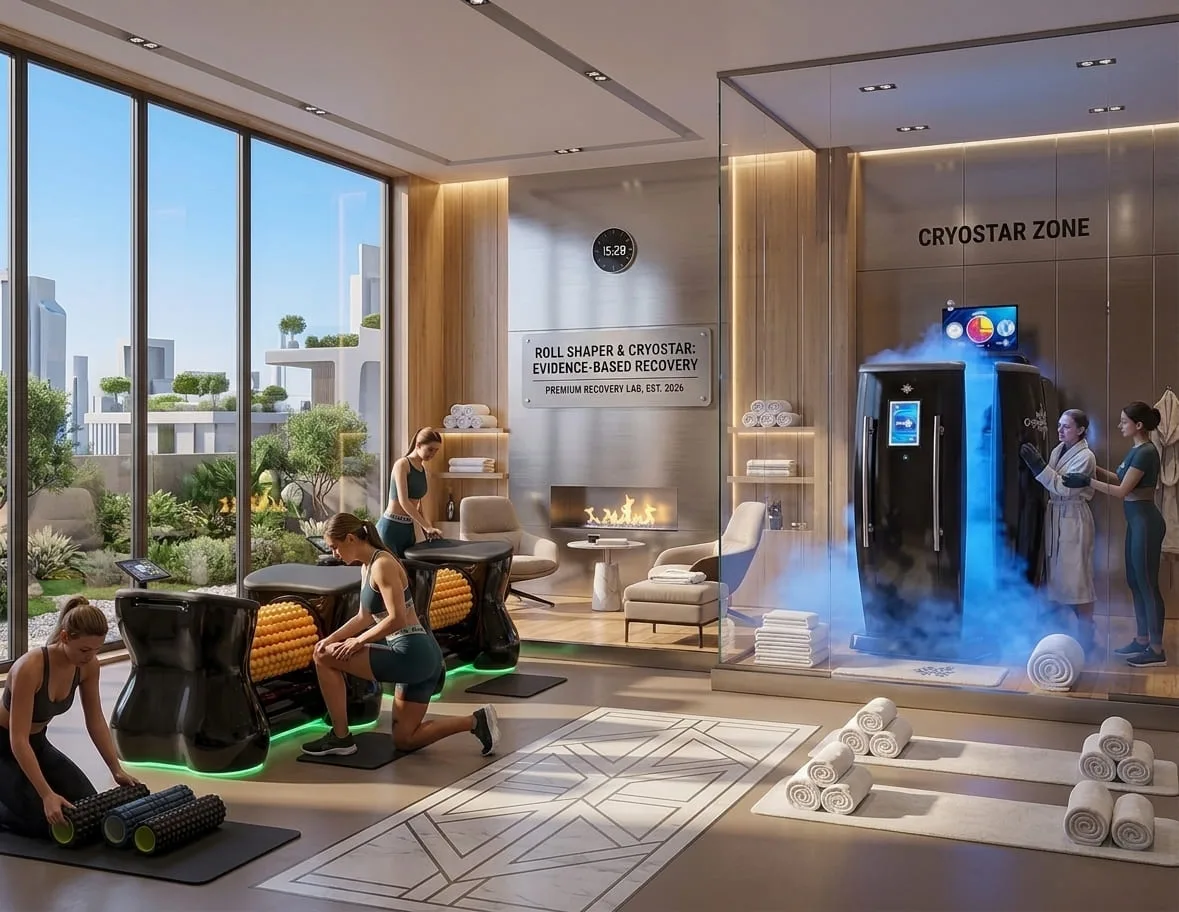
Quick-reference table covering the seven parameters that drive the buyer decision. The left column (chair) is a Vacuactivus product category; the right column (pressotherapy) is a third-party market category cited for comparison. Detailed analysis follows after the table.
| Parameter | Massage Chair w/ Compression (Vacuactivus product) | Pressotherapy System (third-party market) |
|---|---|---|
| Primary use case | Relaxation, stress relief, recovery between sessions | Lymphatic drainage, edema reduction, body contouring, athletic recovery |
| Typical session length | 30-60 minutes | 30-45 minutes (up to 60 for clinical) |
| Equipment price (2026) | $5,000-$20,000 commercial-grade | $3,500-$15,000 (entry to premium 24-chamber) |
| Footprint | 1.2-1.5 sqm + recline clearance | 0.5-1 sqm + garment storage |
| Lymph-drainage focus | Secondary (mild compression effect) | Primary (4 to 24 air chambers, 20-360 mmHg) |
| Best for which client | Stress relief, premium experience, executive wellness | Athletes, body contouring, edema management, post-surgical recovery |
| Per-session price studios charge | $40-$60 (relaxation-tier) | $60-$150 (treatment-tier) |
Two Different Tools, One Category (Quick Definitions)
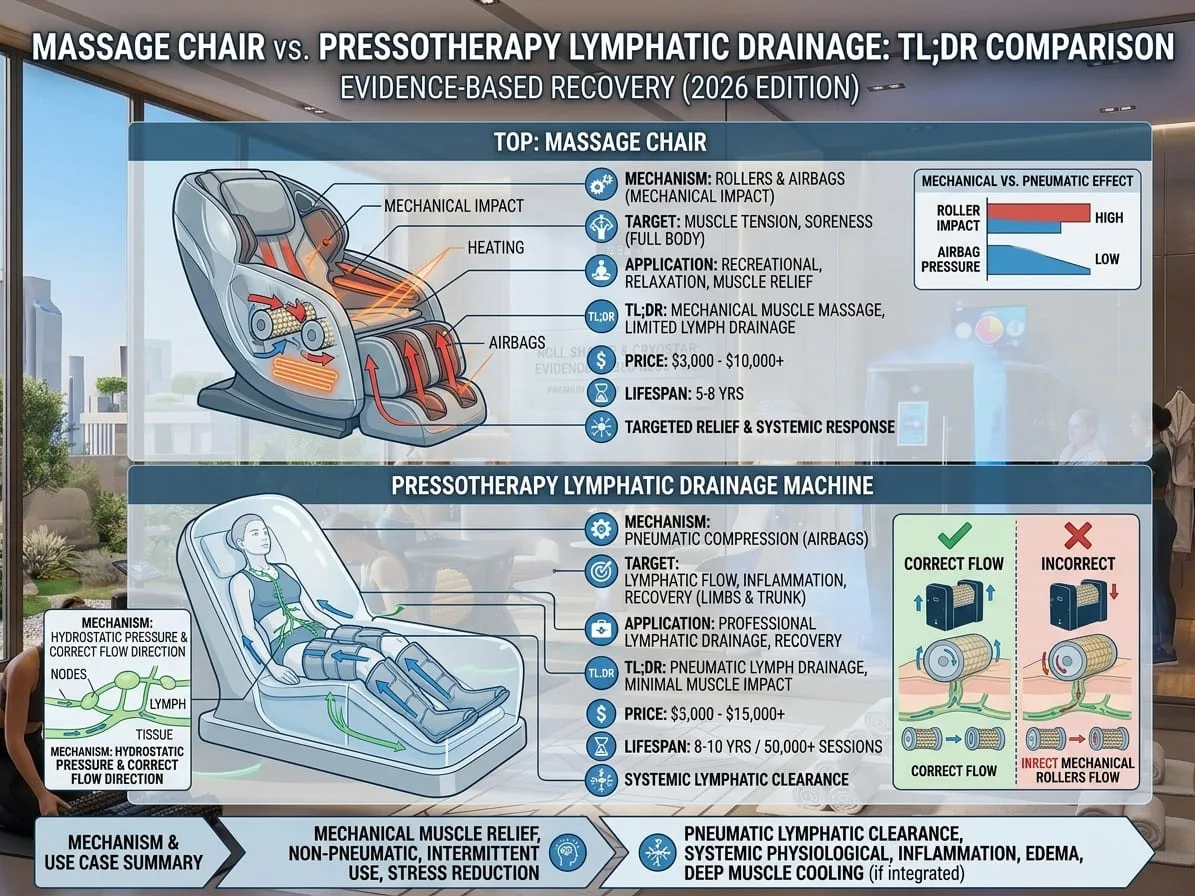
Both pressotherapy machines and massage chairs with compression deliver controlled pressure to body tissues, but they target different physiological pathways and serve different client outcomes. The distinction matters at purchase because it determines client demand fit and revenue per session.
A pressotherapy machine (a category Vacuactivus does not manufacture; the examples cited below are third-party market references) is a dedicated lymphatic drainage system using a compression garment (suit, boots, or sleeves) connected to a programmable air pump. The garment contains 4 to 24 sequential air chambers that inflate in a gradient pattern (bottom-up, distal to proximal), applying pressures of 20 to 360 mmHg over 30 to 45 minute sessions. The mechanical method is rooted in Dr. Emil Vodder’s manual lymphatic drainage (MLD) technique developed in the 1930s; pressotherapy delivers similar physiological effects through machine automation. For the manual-vs-machine alternative in massage-based lymphatic drainage, see Body Roller Machine for Lymphatic Drainage: How It Works which covers wooden-roller mechanical drainage as an alternative Vacuactivus product line. For studios weighing roller-based drainage economics specifically, Roll Shaper Machine: Commercial vs Home compares commercial and residential Roll Shaper deployments.
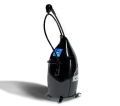
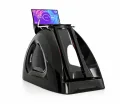
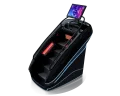
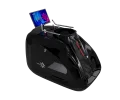
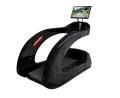
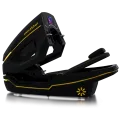
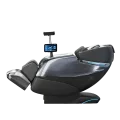
A zero-gravity massage chair with compression is a different category of equipment and is the Vacuactivus product in this space (the De-Stress Lounge line). The chair reclines the body to a position where the legs are above the heart, reducing spinal compression and supporting venous return. Air-pressure massage modules in the seat, back, and calves deliver kneading, shiatsu, and mild compression. While the chair produces a secondary lymphatic effect through calf and seat compression, it is not designed as a primary lymphatic drainage tool. It is designed for stress relief, post-work relaxation, and recovery between training sessions.
How a Pressotherapy Lymphatic Drainage Machine Works
The technical mechanism is straightforward. A control unit pumps air into a multi-chamber garment in a programmed sequence, creating gradient compression that supports lymphatic fluid movement from the extremities toward the lymph nodes in the groin and axilla. The pressure typically ranges from 20 to 360 mmHg adjustable, with most clinical protocols using 40 to 100 mmHg for general wellness and 100 to 200 mmHg for body contouring or post-surgical applications.
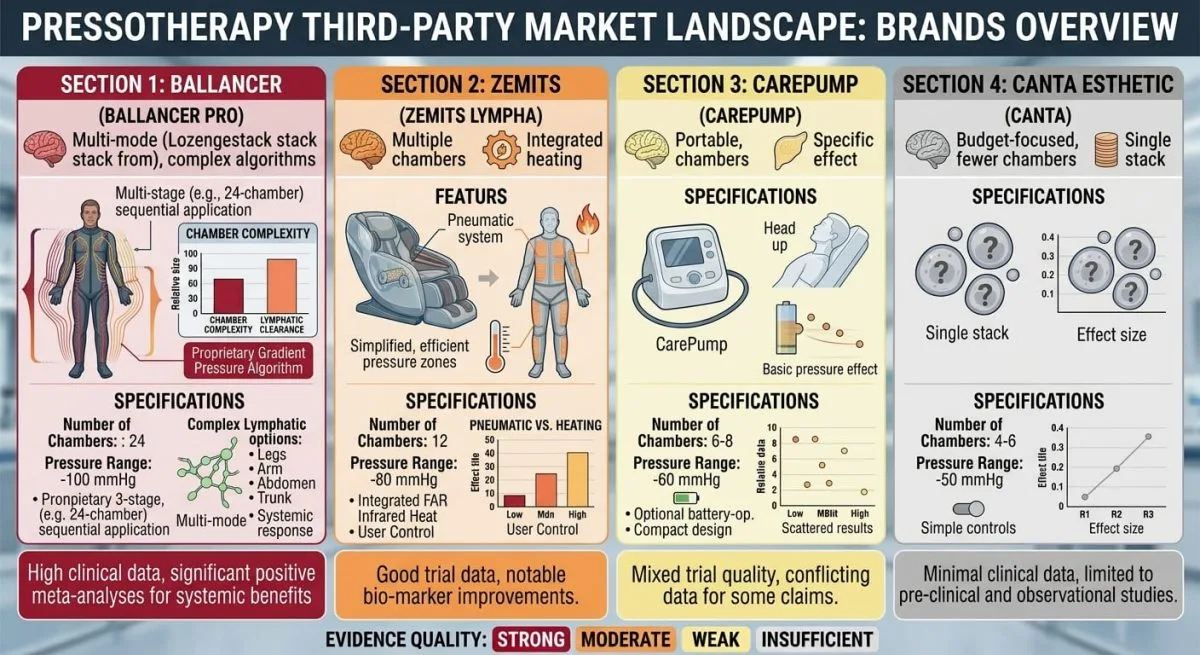
Pressotherapy machines from third-party manufacturers vary by chamber count and feature depth. Entry-level 4-chamber units (around $3,500-$5,000) target leg-focused drainage with basic timing. Mid-tier 8-chamber systems ($5,000-$8,000) cover both legs plus abdomen with gradient programs. Professional 24-chamber systems ($8,000-$15,000) provide fine-grained control across legs, abdomen, and arms; Zemits Sisley 2.0 (third-party market example, not a Vacuactivus product) uses 24 air channels with 4 compression power levels in the body contouring focus. High-end 48-chamber systems exist (iBeautyMachine PD-948 reaches 200,000 Pa with infrared option; another third-party market example) for spas targeting medical-aesthetic clientele.
Healthline’s overview describes the standard pressotherapy session: 30 to 45 minutes with professional administration, the client wearing a space-suit-like garment with tubes connecting to the air pump. Top-tier brands in the third-party pressotherapy market include Ballancer Pro Original (used by professional sports facilities, 40-minute sessions, precision pressure control) and CarePump Expert8 (8-chamber medical-grade with Polish Lymphological Society partnership). Canta Esthetic markets a Professional Pressotherapy Lymphatic Drainage Machine HD with 20-360 mmHg range, 110W power, 60-minute session capacity, 4 selectable modes, and 36-month warranty. All brands listed here are third-party pressotherapy manufacturers cited as market examples; Vacuactivus does not manufacture, distribute, or partner with any of them.
How a Zero-Gravity Massage Chair Differs (Vacuactivus’s Product in This Space)
A commercial massage chair delivers a fundamentally different experience. The zero-gravity recline position elevates the legs above the heart, reducing spinal load and supporting venous return. This position alone provides a mild lymphatic benefit (gravity-assisted venous drainage), separate from the active massage that follows.
Modern commercial chairs combine multiple modalities: 3D or 4D roller systems that traverse an L-track or S-track from neck to glutes, providing kneading, shiatsu, rolling, and tapping; body-scan technology that maps the user’s spine for personalized program adjustment; air-pressure massage modules in the seat, back, and calves; calf compression with adjustable intensity; heat therapy panels in the lumbar zone; and foot reflexology rollers. Premium models add Bluetooth audio, memory user presets, and adjustable recline angles. Sessions typically run 30 to 60 minutes.
Vacuactivus zero-gravity massage chair products (De-Stress Lounge line) combine these features into a commercial-grade chassis built for daily multi-client use in wellness and recovery studios. For studio operators comparing massage chair investment economics specifically, see Massage Chair Cost: True Investment for Wellness and Recovery Studios which covers the full cost analysis.
Do You Need Both? Client Flow Analysis
The honest answer depends on your client mix. Five typical client types appear across wellness studios, each with different equipment needs. The client flow diagram below maps each type to the equipment that serves them best.
Type 1: lymphedema and edema management clients. Third-party pressotherapy is the primary tool; a chair adds nothing clinically meaningful. Type 2: athletes and recovery-focused clients (post-training, post-event). Third-party pressotherapy delivers measurable recovery benefit; a Vacuactivus chair provides relaxation and venous return but is secondary. Type 3: body contouring program clients (cellulite appearance reduction, slimming protocols). Third-party pressotherapy is the primary treatment delivery; chair is optional. Type 4: post-work stress and relaxation clients. A Vacuactivus chair is the primary tool; pressotherapy is overkill and the client may find the garment uncomfortable. Type 5: premium experience seekers (luxury spas, hotel wellness). Chair delivers the experience and brand positioning; pressotherapy is an upsell add-on.
When ONE Device Is Enough
Not every studio needs both. The honest segmentation below saves money and floor space for studios where one tool covers the client base.
Studios That Need Only Pressotherapy (Third-Party Purchase)
Body contouring centers, athletic recovery facilities, lymphedema therapy clinics, and post-surgical recovery practices (cosmetic surgery aftercare) serve clients whose primary need is lymphatic drainage and edema reduction. The treatment value justifies the $60-$150 per-session price point. A massage chair in this context is amenity furniture for the waiting area, not a revenue-generating service. Skip the chair, invest in a higher-tier pressotherapy machine from a third-party manufacturer (24-chamber if budget allows), and focus the floor space on additional pressotherapy stations.
Studios That Need Only a Massage Chair (Vacuactivus Product Fit)
Executive wellness lounges, hotel and resort spas, corporate wellness rooms, and stress-relief-focused day spas serve clients seeking relaxation and premium experience. Pressotherapy is overkill in these contexts; the compression-suit-and-tubes setup conflicts with the polished spa experience these clients expect. Invest in two or three premium zero-gravity chairs from a commercial manufacturer (Vacuactivus De-Stress Lounge line is one such option), train staff on session protocols, and price at $40-$60 per session. The chair revenue model works on volume and ambiance, not treatment depth. For deeper coverage of the chair-specific buyer decision, see Zero Gravity Massage Chair: How Reclined Position Triples Recovery which addresses chair-only studio operations.
When BOTH Make Sense (The Synergy Case)
Studios serving diverse clientele benefit from offering both. The synergy case applies to multi-service wellness centers where one studio captures athletes, body contouring clients, AND stress-relief regulars, often across different appointment slots within the same day.
The operational pattern is straightforward: a client books a 30-minute third-party pressotherapy session (the treatment, charged at $80-$100), then transitions to a 20-minute chair cool-down (the relaxation, charged at $40-$60 as an add-on, often discounted to $30 if bundled). Total ticket per visit increases from $80-$100 (pressotherapy alone) to $120-$160 (combined session). The chair session also frees the pressotherapy station for the next client, improving throughput. Vacuactivus B2B chair-supply partners that ALSO deploy third-party pressotherapy (Ballancer, Zemits, CarePump, or similar) reported to Vacuactivus a 30-40% per-visit revenue uplift when combining the two correctly, with the bundle becoming a signature offering that differentiates the studio in competitive markets.
The synergy also works at scheduling level. Pressotherapy sessions run 30-45 minutes plus 5 minutes setup and 5 minutes cleanup, fitting four to five sessions per day per machine. Chair sessions run 30-60 minutes with minimal setup, fitting six to eight per day per chair. Studios that operate both modalities can balance their staff utilization (one technician supervises pressotherapy while clients use chairs independently after initial training). For studio operators evaluating combined revenue economics, also see Lymphatic Drainage Roller Machine: Replacing Manual Therapy in Wellness Centers which covers a third lymphatic equipment category (rollers) that Vacuactivus also manufactures.
ROI Math: One Device vs Both
Conservative business math using industry-typical assumptions. Real numbers depend on local market pricing, marketing efficiency, and operational discipline.
| Configuration | Investment | Sessions/Day | Revenue/Session | Monthly Revenue (25 days) | Payback (months) |
|---|---|---|---|---|---|
| Chair only (Vacuactivus commercial) | $15,000 | 6 | $60 | $9,000 | 17 |
| Third-party pressotherapy only (mid-tier 8-chamber) | $10,000 | 5 | $100 | $12,500 | 8 |
| Third-party pressotherapy only (premium 24-chamber) | $25,000 | 5 | $120 | $15,000 | 17 |
| Both (Vacuactivus chair + third-party pressotherapy mid-tier) | $25,000 | 5 + 6 = 11 | $60 / $100 mix | $20,000+ | 13 |
The math shows pressotherapy-only typically delivers faster payback than chair-only at moderate utilization, because the per-session price is higher and the client demand for lymphatic drainage at $100/session is reasonably consistent across wellness markets. Adding a chair to a pressotherapy practice extends payback slightly but adds incremental revenue and improves client retention through the synergy effect. For studios planning the full equipment investment math across categories, see How Much Does a Cryotherapy Machine Cost? which covers cryo equipment but uses similar B2B ROI framing.
Equipment Specs to Compare (Buying Guide)
Concrete specifications matter more than brand reputation when comparing equipment in this category. Use the buyer checklist below to evaluate any pressotherapy machine (all third-party in this article) and any commercial massage chair (including Vacuactivus De-Stress Lounge) you consider.
Pressotherapy: Chambers, Pressure Range, Modes
Chamber count drives treatment precision: 4 chambers cover legs only (entry tier), 8 chambers add abdomen, 12 chambers add arms, 24+ chambers deliver fine-grained gradient control. Pressure range 20-360 mmHg is the industry standard for adjustable systems; verify the machine supports both low-pressure (for sensitive clients) and high-pressure (for athletic recovery, body contouring) protocols. Treatment modes (sequential, peristaltic, pulsing, gradient) should number at least 4 for protocol flexibility. Touchscreen vs analog control affects operator efficiency at scale. Warranty: 24-36 months is industry standard for third-party pressotherapy manufacturers; some offer extended service contracts.
Massage Chair: Recline, Rollers, Compression Zones
Zero-gravity recline angle (typically 130-170 degrees) matters for the physiological benefit and client comfort. 3D rollers traverse the body in three dimensions; 4D rollers add speed variability for more natural massage feel. L-track and S-track designs differ in roller path length; S-track covers neck to lower back, L-track extends through glutes and hamstrings. Calf compression zones are present in all commercial chairs; high-tier models add foot reflexology rollers. Body scan technology accuracy varies; premium models adjust within 1 cm of detected spine landmarks. Footprint 1.2-1.5 sqm plus recline clearance (extra 0.5 sqm at full recline). Vacuactivus De-Stress Lounge commercial chairs meet these specs across the current lineup.
Sanitation, Maintenance, and Operations
Day-to-day operations differ meaningfully between the two categories. Pressotherapy requires garment hygiene protocols: wipe-down with antimicrobial spray between every client (5-minute changeover), optional disposable liner inserts for premium-positioning studios (adds $2-$4 per session cost, justifies $10-$15 per-session price increase). Maintenance schedule: annual pump motor service, valve seal inspection, garment material replacement every 18-24 months at heavy use.
Massage chairs are simpler to sanitize: leather or synthetic seat surface wipe-down between clients (2-3 minutes), with deep-cleaning weekly. Maintenance: annual roller and motor check, lubrication of moving parts, electrical inspection. Both require staff training: pressotherapy operators benefit from a 4-8 hour initial training program covering protocols, contraindications (DVT, blood clots, active cancer treatment, pregnancy first trimester, uncontrolled hypertension), and emergency procedures. Chair operations are largely self-service after initial client orientation. For an honest review of contraindications and safety protocols across recovery equipment, see Partial-Body vs Whole-Body Cryotherapy: Side-by-Side Analysis which covers parallel safety frameworks applicable to pressotherapy as well.
Frequently Asked Questions
Q1. What is the difference between pressotherapy and a massage chair?
A pressotherapy machine (a third-party market category; Vacuactivus does not manufacture pressotherapy) is a dedicated lymphatic drainage system that uses a compression garment (covering legs, midsection, or arms) with 4 to 24 air chambers delivering sequential pressure of 20-360 mmHg. A massage chair with compression (Vacuactivus’s De-Stress Lounge is one such product) delivers zero-gravity recline plus air-pressure massage in the seat, back, and calves; it relaxes and gives a mild compression effect but is not designed as primary lymphatic drainage. They serve different client needs and different revenue streams.
Q2. Should a wellness studio offer both massage chair and pressotherapy?
It depends on your client mix. If you serve athletes, body-contouring clients, and lymphedema-management patients, third-party pressotherapy is essential. If your clients are primarily executives, hotel guests, or stress-relief seekers, a premium massage chair (Vacuactivus De-Stress Lounge or equivalent commercial line) covers it. Studios with diverse clientele (recovery + body contouring + relaxation) see 30-40% per-visit revenue uplift from offering both, since clients often combine a 30-min pressotherapy with a 20-min chair cool-down.
Q3. How much does a pressotherapy machine cost?
Professional 8-chamber pressotherapy machines from third-party manufacturers range from $3,500 to $8,000. Premium 24-chamber systems with touchscreen controls and multiple treatment modes run $8,000 to $15,000. Top-tier medical-grade brands like Ballancer Pro or Flowpresso (third-party market examples) start at $15,000 to $25,000+. Most established third-party manufacturers (Canta Esthetic, Zemits, CarePump) include warranties of 24-36 months and operator training.
Q4. What does a lymphatic drainage massage machine do?
A lymphatic drainage massage machine applies controlled compression to body tissues to support lymphatic fluid movement toward lymph nodes for filtration. The mechanical pressure mimics what manual lymphatic drainage (MLD) therapists do by hand, but delivers consistent timing and pressure across multiple body zones simultaneously. Studios use these machines for edema reduction, athletic recovery, body contouring protocols, and post-cosmetic-surgery recovery.
Q5. Is pressotherapy the same as lymphatic drainage massage?
Pressotherapy is a mechanical method of lymphatic drainage massage, so they overlap but are not identical. Manual lymphatic drainage (MLD), developed by Dr. Emil Vodder in the 1930s, is performed by a trained therapist by hand. Pressotherapy delivers similar physiological effects via a compression suit and air pump system. The mechanical version scales more easily for studios; manual MLD remains preferred for clinical lymphedema management.
Q6. How long is a pressotherapy session?
A typical pressotherapy session lasts 30 to 45 minutes. The garment inflates sequentially in cycles, applying gradient pressure that moves lymph from the extremities toward the heart. Most professional third-party machines (Canta Esthetic, Zemits) support session times up to 60 minutes with adjustable intensity. Treatment protocols vary: 30 minutes for general wellness, 45 minutes for body contouring, 60 minutes for clinical recovery.
Q7. What’s the ROI of a pressotherapy machine in a wellness studio?
A $10,000 third-party pressotherapy machine offering $80-$100 sessions, with 4-5 sessions per day, 25 working days per month, generates $8,000-$12,500 monthly. Payback period typically runs 12-18 months at moderate utilization. Adding pressotherapy to a studio that already offers massage chairs (Vacuactivus De-Stress Lounge or equivalent commercial line) lifts per-visit revenue 30-40% when clients combine the two as a single session. Higher-priced 24-chamber systems take 18-24 months to pay back.
Q8. How many pressotherapy sessions do clients need?
For general wellness and lymphatic flow support, 1-2 sessions per week over 4-6 weeks is typical. Body contouring protocols usually run 2-3 sessions per week for 6-10 weeks. Athletic recovery uses single sessions within 24-48 hours of intense training. Clients with diagnosed lymphedema follow medical protocols set by a lymphatic therapist, usually 3-5 sessions per week initially, scaling down to maintenance.
Conclusion
A lymphatic drainage massage machine decision splits into three clear paths. Pressotherapy-only (third-party purchase; Vacuactivus does not manufacture pressotherapy) works for studios serving athletes, body contouring clients, and edema management. Chair-only (Vacuactivus De-Stress Lounge or equivalent commercial line) works for stress-relief-focused spas, hotel wellness, and executive lounges. Both make sense for diverse-clientele wellness centers and recovery-plus-relaxation hybrid models where 30-40% per-visit revenue uplift justifies the dual investment. The right answer depends on client mix, not equipment marketing.
For studios evaluating Vacuactivus commercial zero-gravity chair options, commercial massage chair covers the Vacuactivus product page with 12 years of manufacturing history. For studios evaluating pressotherapy, purchase from a third-party pressotherapy manufacturer (Ballancer, Zemits, CarePump, Canta Esthetic and similar) that fits your target client protocol and budget.


