


















Whole Body Red Light Therapy: ROI for Recovery Studios and Wellness Centers
Whole body red light therapy typically delivers ROI within 3-6 months for a wellness center, breaking even after approximately 150-300 sessions depending on equipment tier and local session pricing. That is the headline from operator-side ROI analyses across the wellness industry in 2025-2026, and this article walks through the math behind it in transparent detail so operators can pressure-test the assumption against their own market rather than accepting it as a marketing claim.
Vacuactivus manufactures commercial red light therapy equipment used across wellness centers, recovery studios, chiropractic clinics, and premium spa environments since 2009 (over 15 years). The numbers below are drawn from industry-reported ranges (session pricing, utilization benchmarks) and named public sources (Bizquest listings for real studio unit economics), with operator experience shaping the framing. This is not a pitch: the aim is to give an operator enough transparent math to run their own scenario, including the downsides.
The audience for this guide is owners and managers of recovery studios, wellness centers, chiropractic clinics, boutique fitness operations considering RLT as a service add-on, and B2B buyers doing capital allocation. The framing is US market as of mid-2026, though the mechanics generalize. Individual studio economics vary substantially by location, clientele, pricing, lease terms, staffing model, and operational execution.
Why Whole Body Red Light Therapy Fits Recovery Studios and Wellness Centers
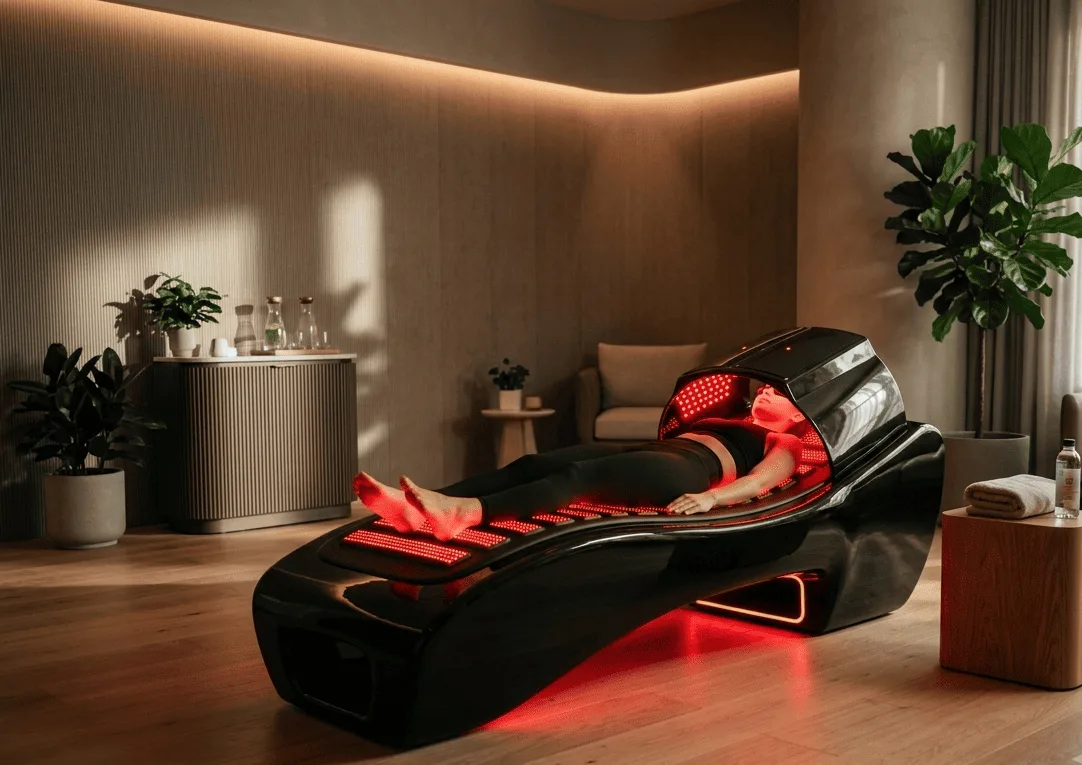
The modality fills a specific service gap that other wellness offerings do not. Sessions run 12-20 minutes, produce visible client comfort with minimal complexity, require no consumables per session (unlike cryotherapy nitrogen refills or floatation tank water changes), and pair naturally with existing membership structures. For studios already running recovery-adjacent services, adding these systems typically raises average revenue per visit rather than cannibalizing existing sessions. The stacking case with cryotherapy is covered separately in Red Light Therapy Combined with Cryotherapy: Stacked Protocol Benefits for operators considering multi-modality builds.
The wellness-tech macro trajectory reinforces the timing. Global Growth Insights April 2026 data on the broader commercial wellness equipment category (using the commercial massage chair market as a directional macro indicator) projected the wellness-equipment segment from $2.86 billion in 2025 to $6.76 billion by 2035 at 8.98% CAGR. To be explicit: the specific commercial massage chair market figure is NOT a red light therapy market forecast and should be read as directional adjacency only, not as an RLT market projection. What it signals is buyer willingness to spend on commercial wellness equipment continuing to compound, which is the demand-side context RLT services sit inside rather than a market-size projection for the modality itself.
How Much Does Commercial Red Light Therapy Equipment Cost?
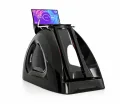
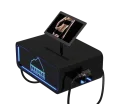
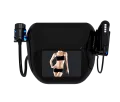
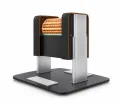
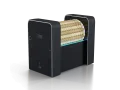
The equipment splits into four practical tiers by form factor and price point. The table below reflects 2026 industry-observed ranges from wellness-industry manufacturer catalogs and operator listings, distilled into tiers rather than brand-by-brand pricing (which changes quarterly).
| Equipment Tier | Typical Investment | Session Capacity | Best Fit |
|---|---|---|---|
| Panel array (wall or free-standing) | $3,000 – $15,000 | Requires 15-25 min per session, one client at a time | Existing clinics adding as an add-on service, chiropractic offices, entry-level RLT service |
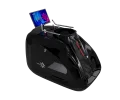
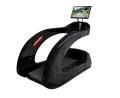
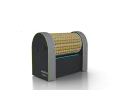
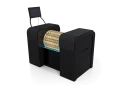
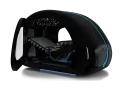
| Horizontal bed (workhorse commercial format) | $15,000 – $50,000 | 20-40 sessions per day at 12-20 min per session | Mainstream wellness studios, recovery centers, medical spas – the standard commercial RLT format |
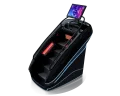
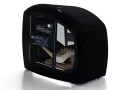
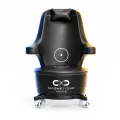
| Vertical pod / stand-up unit | $30,000 – $80,000 | 15-25 sessions per day (shorter sessions typical) | Premium wellness centers, boutique fitness, urban studios with space constraints |
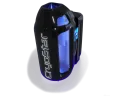
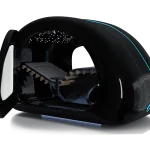
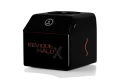
| Walk-in multi-modality cabin (Revique HaloX class) | $50,000 – $120,000+ | Longer sessions, fewer per day but higher-ticket pricing | Premium longevity clinics, wellness centers positioning multi-modality single-visit experience, high-average-ticket buyers |
For an operator, the tier decision is less about the specification sheet and more about the service model. A panel array works as an add-on inside an existing service (chiropractic adjustment plus 15-minute panel session, for example). A horizontal bed is the workhorse standalone service that most mainstream wellness studios build a membership around. A vertical pod suits space-constrained urban studios where floor footprint matters. A multi-modality cabin like the Revique HaloX class serves premium longevity positioning where the single-visit experience combining several modalities is itself the service.
Session Pricing: What Wellness Centers Actually Charge
USA session pricing benchmarks for 2026 fall between $25 and $75 for a single session, with premium urban markets (Los Angeles, New York, San Francisco) consistently commanding the upper end and secondary markets settling at $35-$50. Session length is 12-20 minutes across form factors, and pricing is set per-session or by pack rather than per-minute. Packs of 10 typically sell at 15-20% discount versus the single-session rate; monthly unlimited memberships (covered in the next section) run $99-$249 with $149-$199 as the most common tier in mid-2026 US market data.
The pricing question for a specific operator is not the national range but the local anchor: what do the nearest wellness services charge for adjacent modalities. If a competing chiropractic clinic charges $80 for a 30-minute treatment, a 15-minute RLT session at $45 reads as accessible; if the local market has a Planet Fitness bundling Total Body Enhancement into a $24.99 Black Card tier, a walk-in $45 session competes against that reference. Local benchmarking is the practical pricing exercise; industry ranges are context.
The ROI Math: When Does Equipment Pay for Itself?
Operator-side ROI analyses from wellness-industry sources 2025-2026 established the industry-standard 3-6 month ROI window with breakeven at 150-300 sessions for a mainstream commercial RLT bed. Actual timeline depends on utilization, pricing, and pricing model; the range brackets what most operators see, not what any single operator should assume.
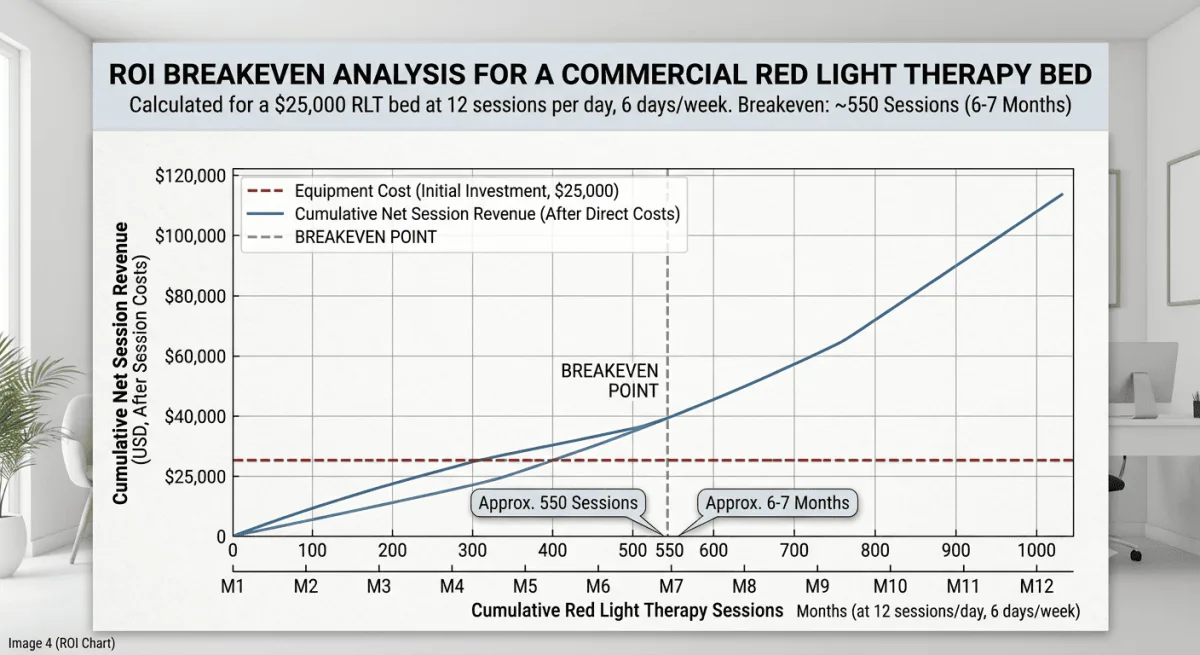
Consider a mainstream commercial RLT bed at approximately $25,000 acquisition cost. Average single-session price of $45 in a mid-market location. Session capacity of 12 sessions per day across 22 operating days per month at 60% utilization equals 158 completed sessions per month. Revenue: 158 × $45 = $7,110 per month gross. Operating expense: electricity roughly $150-$300 per month (a bed drawing 3-6 kWh per session at $0.15/kWh at this utilization), part-time front desk staffing allocation roughly $1,500 per month, rent allocation roughly $800-$1,500 per month for the treatment room, insurance, marketing and other overhead adding roughly $500-$800. Total monthly operating cost roughly $2,950-$4,100. Net monthly contribution: roughly $3,000-$4,500.
Payback calculation: $25,000 equipment cost divided by $3,750 average net monthly contribution equals approximately 6.7 months to full payback. Higher utilization (75%+ against 60%) or membership pricing that raises effective average per-session revenue compresses that window to 4-5 months. Lower utilization (40% or under) or aggressive discounting stretches it to 10-12 months. The 3-6 month industry benchmark assumes the middle-to-upper end of that utilization band; a 40%-utilization studio should model payback closer to 10-12 months and budget accordingly.
Membership Models: Where Recurring Revenue Wins
Multi-modality red light wellness studios that have hit meaningful scale share a common pattern: membership-based revenue. A 2026 Bizquest turnkey wellness studio listing highlighted a business supported by a robust pipeline of over 2,000 prospective clients, illustrating that the client base rather than the equipment is often the real business asset. Franchise concepts including Red Light Method (Reno NV, April 2025 launch) and larger recovery-modality chains like Restore Hyper Wellness have built their unit economics on unlimited monthly membership pricing in the $99-$199 per month range. This shift matters for red light therapy business planning: single-session revenue models work but leave predictability, retention, and LTV on the table.
The membership advantages compound: predictable cash flow (essential for lease and staffing planning), higher LTV per acquired client, lower customer acquisition cost (CAC) per session delivered, and expanded retail add-on opportunity (members buy accessories, supplements, apparel). The downsides are honest to acknowledge: initial customer acquisition is harder for membership than single-session, and pricing pressure from discounts erodes some of the revenue that would otherwise flow at single-session rates. Best practice for new RLT studio operators is a hybrid model that leads with single-session pricing to acquire clients and converts high-frequency users to monthly membership within 3-5 sessions.
Real Revenue Example: A 1,678 sq ft Wellness Studio
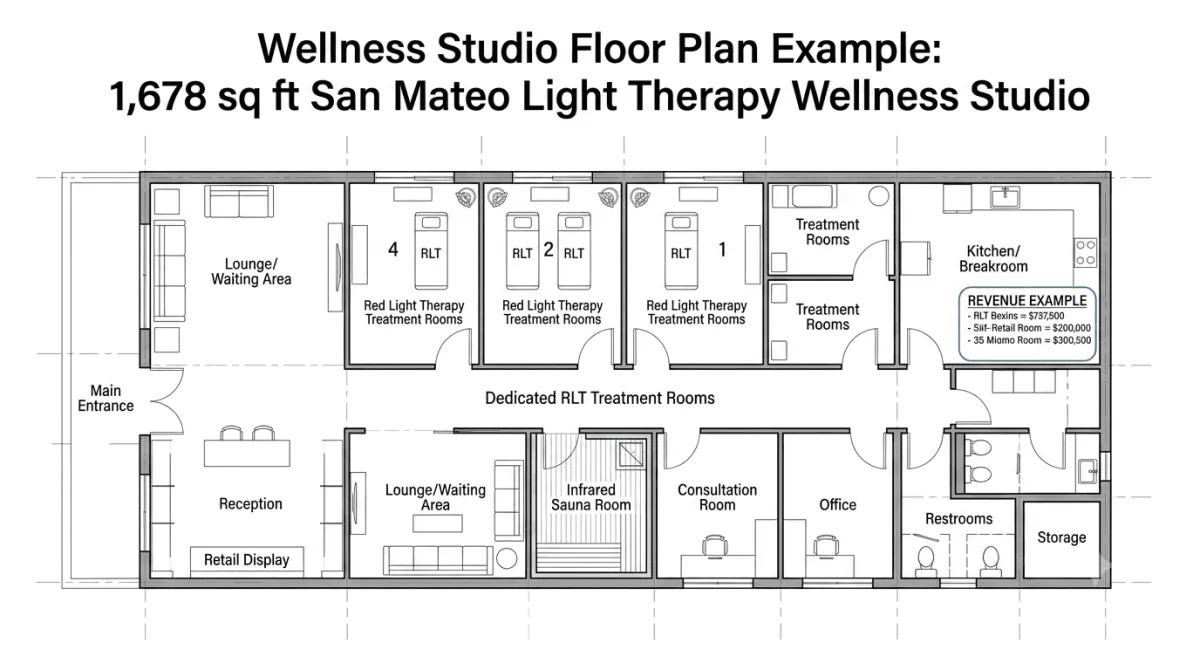
A 2026 Bizquest business listing provides transparent numbers for a working commercial red light therapy operation. The Light Therapy Wellness Studio in San Mateo, California is a 1,678 square foot studio that opened in August 2025, listed at $680,000 asking price against $480,000 annual revenue. The studio runs dedicated red light treatment rooms plus infrared sauna and retail. These numbers reflect seller-stated data from a public Bizquest listing rather than an audited P&L, so treat them as illustrative unit economics rather than a validated benchmark.
The unit economics work at these numbers. $480,000 annual revenue implies $40,000 monthly average across the studio. FF&E (furniture, fixtures, and equipment) amortized over a 5-7 year equipment life allocates roughly $6,000-$8,000 per month in equipment depreciation across the multi-service floor plan. Lease at San Mateo commercial rates estimates at $8,000-$12,000 per month for the 1,678 square feet. Staffing at part-time front desk plus scheduled technicians estimates at $8,000-$12,000. Net monthly contribution before owner compensation lands in the $12,000-$18,000 range – enough to support owner draw while continuing to service equipment financing. The specifics matter less than the shape: a well-run multi-modality studio in a strong metro market at membership-heavy revenue mix demonstrates the model, and the shape is what an operator in a different market can adapt. For the standalone RLT benefits underlying client demand, see Red Light Therapy Benefits Backed by Studies, Not Hype which walks through the evidence base clients search for.
Add-On Services That Multiply RLT Revenue
Standalone whole body red light therapy works, but revenue multiplies significantly when paired with adjacent recovery services and retail products. High-growth wellness studios in the Bizquest 2026 dataset consistently pair the modality with infrared sauna, cryotherapy, compression therapy, salt therapy, and retail (topical LED-related skincare, at-home panel resale). For the panel-specification deep-dive that supports client questions on wavelength selection, see Red Light Therapy Panel: How 660nm + 850nm Wavelengths Heal Tissue.
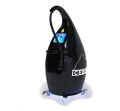
Chiropractic clinics adding the modality typically increase average ticket per visit by $30-$60 through the added service. Sports recovery centers position RLT as a premium tier upgrade above baseline massage or foam-rolling access. Adjacent recovery equipment like the De-Stress Lounge zero-gravity chair pairs naturally as a companion recovery station in the same visit. For a home-buyer resale angle (clients who become panel purchasers), see Best At-Home Red Light Therapy: Why Pros Choose Pro Equipment which explains the specification gap that turns satisfied studio clients into pro-equipment buyers.
Operational Overhead Beyond Equipment Cost
The equipment capital investment is the largest single cost, but ongoing monthly overhead compounds significantly over the 5-7 year equipment life. Honest breakdown of the recurring cost side: electricity on a commercial bed runs $150-$300 monthly at typical utilization, rent on the treatment room allocation typically $800-$1,500 depending on market, insurance $150-$400 monthly for liability coverage, cleaning supplies and eyewear consumables $50-$100 monthly, equipment maintenance and LED replacement reserve $100-$200 monthly averaged across the equipment life.
Front desk staffing (part-time reception, not a per-session therapist) allocates roughly $1,500-$2,500 monthly. Marketing spend varies dramatically by market density: $500-$1,000 monthly for organic-heavy channels, up to $2,000-$3,000 monthly if running paid acquisition at scale. Payment processing and software (booking, memberships, POS) $200-$400 monthly. Total recurring operating cost for a single-room RLT setup lands in the $3,000-$5,500 monthly range – a number that should be modeled honestly before equipment purchase rather than discovered during month four when the membership base has not yet ramped. Explore our commercial red light therapy panels for the full spec range if operator evaluation is at the tier-selection stage.
Frequently Asked Questions
Q1. How much does a commercial whole body red light therapy machine cost?
Commercial equipment ranges from about $3,000 for entry-level panel arrays to $80,000+ for luxury full-body pods and $50,000-$120,000 for walk-in multi-modality cabins. A mainstream RLT bed (the workhorse of most wellness studios) costs $15,000-$50,000. Panel arrays ($3,000-$15,000) work well as add-ons to existing clinical practices. Vertical pods ($30,000-$80,000) suit space-constrained urban studios. The choice depends more on the service model than on the specification sheet – a horizontal bed anchors a standalone membership service; a panel array adds a modality to an existing service; a multi-modality cabin serves premium longevity positioning. Verify current pricing directly with suppliers, since equipment prices move quarterly.
Q2. What is the ROI on red light therapy for a wellness center?
Operator-side ROI analyses from wellness-industry sources 2025-2026 place the typical ROI window at 3-6 months for a mainstream commercial RLT bed, with equipment breaking even after approximately 150-300 sessions. Actual timeline depends on utilization (60%+ compresses the window; sub-40% stretches it to 10-12 months), pricing model (membership base compresses payback vs walk-in only), and market position (urban premium markets support higher session pricing). A $25,000 bed at $45 average session pricing, 60% utilization, and honest operating cost management typically pays back in approximately 6.7 months. Higher utilization or membership-heavy revenue mix compresses to 4-5 months.
Q3. How much can you charge for a red light therapy session?
USA session pricing benchmarks for 2026 fall between $25 and $75 for a single session, with premium urban markets (LA, NYC, SF) commanding the upper range. Packs of 10 typically sell at 15-20% discount to single-session pricing. Monthly unlimited memberships run $99-$249 with $149-$199 as the most common tier in mid-2026 US market data. The right price for a specific operator is the local anchor – what nearest wellness services charge for adjacent modalities – rather than the national range.
Q4. How many sessions to break even on a red light therapy bed?
For a mainstream commercial RLT bed costing around $25,000, breakeven typically occurs between 150 and 300 sessions on a per-session pricing basis, based on 2026 wellness-industry operator data. At 60% utilization (roughly 158 sessions per month at 12 sessions per day across 22 operating days), that means 1-2 months to cross the revenue-covers-equipment-cost line if you ignore operating overhead, or approximately 6-7 months to full payback including realistic operating cost. Lower utilization or heavier discounting stretches the timeline; membership pricing that boosts effective per-session revenue compresses it.
Q5. Whole body red light therapy bed vs panel vs pod – which is best for a wellness studio?
It depends on business model. Beds ($15K-$50K) are the workhorse – horizontal, 12-20 minute sessions, 20-40 sessions per day capacity, best for mainstream studios building a standalone membership. Panel arrays ($3K-$15K) fit clinics adding RLT to existing services rather than as a standalone offering. Pods ($30K-$80K) suit premium urban studios where the vertical footprint and pod aesthetics command higher session pricing. Multi-modality cabins ($50K-$120K, Revique HaloX class) serve premium longevity positioning where single-visit multi-modality is the service. Match the form factor to the operator’s business model, not the reverse.
Q6. What is the average membership price for red light therapy studios?
Monthly unlimited memberships typically range from $99 to $249 in 2026 US market data, with $149-$199 being the most common tier. US franchise wellness concepts operate in this same $99-$199 range. Tiered structures work well: basic tier at $99 for limited sessions, mid-tier at $149-$199 for unlimited RLT, premium at $249+ for multi-modality bundles including infrared sauna or cryotherapy access. Membership-heavy revenue mix is what compresses payback and stabilizes cash flow over volatile single-session walk-in revenue.
Q7. How much electricity does a commercial red light therapy bed use?
A commercial full-body RLT bed typically draws 3-6 kWh per session, translating to roughly $150-$300 monthly at average US electricity rates of $0.15/kWh with normal utilization. This is a real operating cost that should be included in the ROI model, but it is not the dominant cost line – staffing, rent allocation, and marketing typically each exceed electricity cost by a factor of 3-8×. Verify actual power draw with the specific unit’s spec sheet, since draw varies substantially by LED count and irradiance specification.
Q8. Is red light therapy a good business to add to an existing wellness center?
For chiropractic clinics, sports recovery centers, spas, and boutique fitness studios with existing membership bases, adding RLT typically increases average revenue per visit by $30-$60 through the added service, and the fixed monthly overhead spreads across an existing client base rather than requiring standalone acquisition. The math works best when the existing operation already has recovery-adjacent positioning and a client base with disposable income for wellness spending. It works less well as a standalone service in a market with no existing wellness demand infrastructure to draw from. Model the specific studio’s numbers before capital allocation rather than assuming industry benchmarks apply directly.
Conclusion
Whole body red light therapy is a working commercial equipment investment for recovery studios and wellness centers when the unit economics fit the local market. ROI typically lands in the 3-6 month window on a mainstream $25,000 bed at 60% utilization and $45 average session pricing, breaking even after 150-300 sessions. Higher utilization or membership-heavy revenue mix compresses payback to 4-5 months; sub-40% utilization or aggressive discounting stretches it to 10-12 months. The math is transparent because it should be – operators evaluating capital allocation deserve honest inputs rather than marketing framing that hides operating cost.
The path to real ROI runs through utilization above 55-60%, a hybrid single-session-plus-membership pricing model, honest operational cost management (electricity, staffing, insurance, marketing), and integration with adjacent recovery services rather than standalone positioning in a market without recovery demand infrastructure. For the specific tier that fits a particular studio’s business model, explore commercial red light therapy panels for the full spec range, or the Revique HaloX longevity capsule for the multi-modality single-cabin tier serving premium longevity positioning. Apply the ROI math above to a supplier’s specific spec sheet before committing capital – a supplier who cannot furnish transparent operating cost data on request is telling you something.


